
What Does The Failed Istanbul Talks Mean For Pak–Afghan Trade? – OpEd
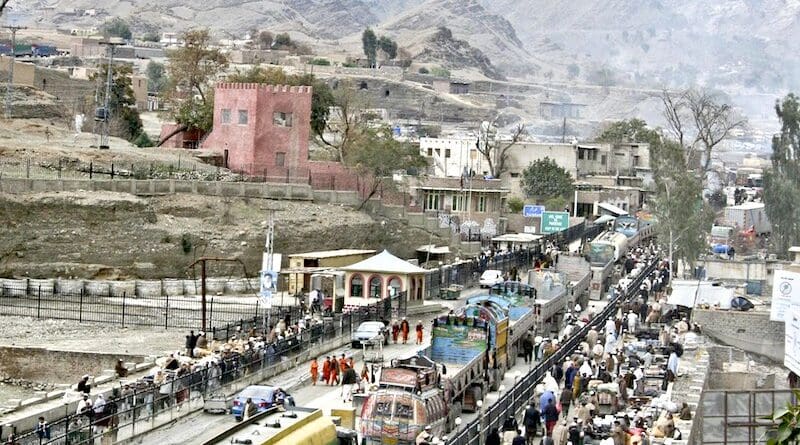
On October 12, 2025, gunfire broke out at the Torkham crossing — Afghanistan’s busiest trade artery. Following an exchange of heavy artillery with Afghan border forces, Pakistan sealed all five major crossings — Torkham, Chaman, Kharlachi, Angoor Adda, and Ghulam Khan. Within hours, movement across the Durand Line came to a standstill, paralyzing trade and exposing Afghanistan’s economic vulnerability.
The closures immediately disrupted trade flows, immobilizing thousands of traders and truckers who depend on the route for their livelihood. A video recorded by Afghan drivers shows long lines of stranded vehicles under the scorching sun, many carrying food and fuel that spoiled before crossing. More than 6,000 trucks were stuck for days, cutting off Afghanistan’s supply of essential goods and underscoring its dependence on Pakistan’s transit routes.
Amid this economic paralysis, diplomats from both countries gathered in Istanbul, Turkey, to negotiate a ceasefire. After four days of negotiations in Istanbul, Turkey, which concluded on October 16, 2025, Pakistan announced that the peace talks with Afghanistan’s Taliban government had failed. The collapse of the talks marked a diplomatic setback that further deepened economic and political uncertainty along the Durand Line.
The failure of the Istanbul talks and Pakistan’s continued border closures reveal that Afghanistan’s economic lifeline remains hostage to political and military calculations in Islamabad. For a landlocked and unrecognized government, the Taliban must now treat border diplomacy as an economic necessity, not a political concession.
The Economic Lifeline at Risk
Afghanistan relies on Pakistan for most of its imports and external trade, with about two-thirds of goods transiting through Karachi and Port Qasim under the Afghanistan–Pakistan Transit Trade Agreement (APTTA). The Torkham and Chaman routes alone handle over USD 700 million in trade every six months. When these gates close, the effects are immediate — prices of flour, fuel, and medicine surge within days.
In southern provinces like Kandahar and Zabul, the closures have stalled fruit exports, causing millions in daily losses. Farmers say their produce is rotting while traders face bankruptcy. The Joint Chamber of Commerce estimates about USD 1 million in daily losses with more than 2,000 trucks stranded. Minister Nooruddin Azizi says Kabul is seeking alternative, though costly, routes through Iran and Central Asia.
Pakistan also faces inflation — tomato prices up 400 percent — though it still maintains a USD 2.3 billion trade surplus. The Institute of Strategic Studies Islamabad says potential trade could reach USD 5 billion, yet politics keeps both economies from realizing it.
Why Doesn’t Pakistan Prioritize This Trade?
The short answer is that Pakistan is governed by generals, not economists. Pakistani authorities cite “security threats” as the reason for closing trade routes, but in reality, military strategists in Pakistan use trade as a tool of pressure.
Even after the recent Doha talks and ceasefire, Pakistan did not reopen the trade routes. According to Dawn, this permission was postponed until the Istanbul meeting on October 26, but as the Istanbul negotiations failed, the future of cross-border trade also remains uncertain.
Although Pakistan benefits economically from trade with Afghanistan, its overall dependency on this trade is minimal. For Islamabad, the loss represents a small dent in domestic production; for Kabul, however, it is a choking of economic arteries — because in this “game,” Pakistan holds the stronger card.
How Afghanistan Views Transit and Trade with Pakistan
For Afghanistan, maintaining open trade with Pakistan has always been crucial. The 1965 agreement granting Afghanistan access to Karachi port was a major achievement, and in 2010, the Afghanistan–Pakistan Transit Trade Agreement (APTTA) was signed primarily through Afghan efforts.
However, this agreement has never been fully implemented. Over the past decade, the frequent closures of Torkham and Chaman crossings and Pakistan’s use of “free trade” as a political weapon have forced Afghanistan to seek alternatives through Iran and Central Asia.
But these alternatives are not ideal. Imports via Bandar Abbas or Chabahar ports are significantly more expensive than those via Gwadar, increasing costs for Afghan consumers and reducing their purchasing power.
The Strategic Game: Who Holds the Cards?
Despite decades of dialogue, Pak–Afghan trade remains hostage to geopolitics. A genuine win–win would allow Afghanistan to trade freely with India and give Pakistan access to Central Asia, but neither side accepts this compromise. Pakistan’s security-driven approach limits Afghan Indian trade, while Afghanistan links transit cooperation to political recognition.
With limited reliance on Afghan markets, Pakistan can afford repeated closures. To offset its lack of direct access to Central Asia, Islamabad has reportedly explored corridor projects through the Wakhan region — illustrating how strategic rivalry still overrides economic sense.
Public Perception and the Currency Puzzle
Among ordinary Afghans and Pakistanis, currency strength has become a matter of national pride. The Afghani’s rise against the rupee is seen as a moral victory by Afghans, yet in trade terms it benefits Pakistan: Afghan exports grow costlier, while Pakistani goods become cheaper.
Islamabad has even urged Afghan coal exporters to trade in rupees, a policy that may reappear in future negotiations. Currency politics, therefore, add another layer to Pakistan’s economic leverage over Kabul and deepen Afghanistan’s dependence on its neighbor’s market.
Kabul’s Realistic Options and Next Steps
Afghanistan’s best path forward is to diversify trade routes via Iran, Turkmenistan, and Uzbekistan to reduce reliance on Pakistan. Yet poor infrastructure and high transport costs make these alternatives limited substitutes.
A practical step is to renegotiate APTTA to include a non-interruption clause ensuring trade continuity during crises. Kabul should also empower private-sector mediation so business chambers can sustain commerce even when diplomacy falters.
Investing in storage and cold-chain logistics could reduce future shocks, though such initiatives remain difficult given fiscal constraints.
Overall, Afghanistan’s economy is shrinking, aid flows are declining, and inflation remains volatile. Each border closure — like Torkham — adds another wound to a fragile system. Unless both sides depoliticize trade and institutionalize dialogue, integration will remain elusive.
For Pakistan, each standoff is an inconvenience; for Afghanistan, it is economic suffocation. The bridge meant to connect the two nations has instead become a fault line — Pakistan may bruise, but Afghanistan will bleed.
About the Authors:
- Hamayun Khan is a US-based independent researcher and award-winning author of “The Death Within.” He is the founder and president of SolaTeach, an online education platform that provides learning opportunities for Afghan youth.
- Jandad Jahani is a former lecturer at Paktia University and an analyst based in Berlin, focusing on Afghanistan’s political economy and education.

Like what you read?
Please consider supporting Eurasia Review. Thank you for your consideration!
