
The Transformative Power Of CPEC – OpEd
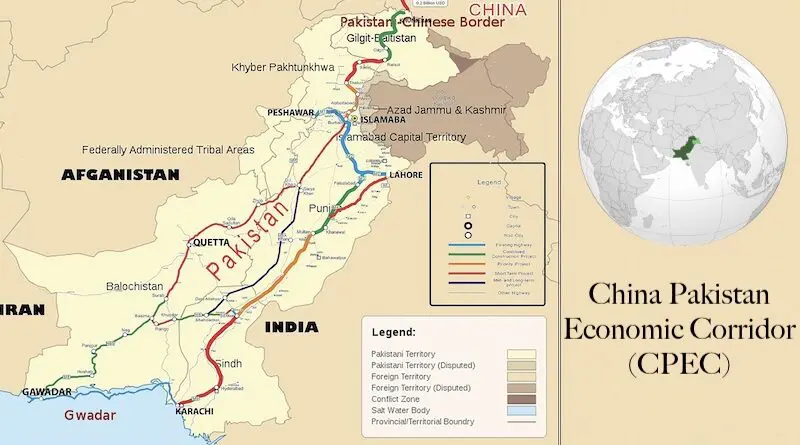
CPEC can be presented as a systemic change that is intended to revitalize Pakistan’s role in South Asia. As the test case for this gargantuan structure, CPEC epitomizes a partnership for development that responds to Pakistan’s developmental dreams, integration and trade connectivity within South, Central Asia, and the Middle East. Connecting missing links and power shortages, the corridor is aimed at positioning the country at the heart of world trade while kick starting Pakistan’s economy.
The progression of the CPEC since its establishment can be described as quite successful, especially because of several outcomes that the project has provided to the overall economy of the country. The authorities have invested over $2 billion and built more than 800 km of highways to enhance transportation facilities in numerous areas of the nation. In energy sector CPEC has brought additional generation capacity of 17,000 MW to overcome energy crises which used to negatively impact industrial growth. Currently, various projects under CPEC are worth $62 billion while the conceived projects of the infrastructure have been started and $25 billion have been successfully completed. Through such interventions, new activities have been initiated which have directly given employment to more than 200 thousand people thus providing additional impetus to the overall economy of Pakistan. In addition, the value of products exchanged through the single preferable corridor rose from $4.8 bln in 2015 to $16 bln by 2023 that proves the efficiency of the initiated measures for increasing trading activity in the region.
Among all these inputs, one of the largest impacts of CPEC is tied up with the major changes in the transportation and energy infrastructure of Pakistan. By 2024, the corridor has brought about development of more than 5,000 km of roads and motorways enhancing both regional and international mobility systems. This infrastructure development has provided direct link of goods from Gwadar to China taking half the time of the previous route which earlier used to cost an expected one billion dollars a year in logistics saving. International export and import with Afghanistan have also increased by 72 percent from the year 2018 to 2024 indicating positive effect of good connectivity in economic integration.
While in the energy sector the CPEC projects have helped a lot in overcoming power crises most effectively and in industrial development. The installed power generation capacity of the country has risen from 24,000 MW to 41,000 MW due to energy investments made under the CPEC. These projects have also eased regional energy trade as evidenced by the Pakistan/Afghanistan power sharing agreement which cut down electricity deficits down by 35 percent in Baluchistan and Khyber Pakhtunkhwa provinces. Further on, more than 50,000 households in the remote areas were connected to electricity between 2020 and 2024 to enhance the quality of people’s lives as well as their economic activity.
CPEC has set up Special Economic Zones (SEZs) have become significant driving forces for industrialization and exports. Nine SEZs will be developed in Pakistan; they will facilitate FDI of more than $8 billion and should generate around 500000 employments. These zones have been partly informative of value addition in the exports of Pakistan; by the year 2025, industries in SEZs make up 15 per cent of the country’s export value.
At the same time, the zones have experienced the transfer of technologies and development of innovations, which can best ensure the groundwork for long-term industrial growth. The emphasis of CPEC on the digital connectivity as well as on the technological development has boosted Pakistan’s economy point to a new high. Fiber optical networks, e-commerce platform and smart cities have boost up the internet organism from 11 percent in 2015 to 54 percent in 2024 to make Pakistan a regional IT service and digital trade center. The IT segment with an estimated annual growth of 35% accounted for export revenue of $3.5 in 2024. Exports from Europe to other regions have also surged, especially in digital goods trade with South Asia and Central Asia, which has tripled from 2020 to 2024. All these advancements prove that the digital infrastructure of these technologies offer to create value and diversify the economy of Pakistan.
Besides the economic outcome of CPEC, the project has been beneficial for the socioeconomic development especial for the less developed area. Modernization of infrastructure and covering basic needs has raised the living conditions of millions of people and equalized inequalities. Baluchistan and Khyber Pakhtunkhwa provinces – as for the development projects under CPEC, many enduring inequalities prevalent in those provinces, while providing a ground for steady advancement and making the region stable. In that sense, keeping in view the importance of economic interdependence as well as sharing critical social problems, CPEC has played an important role in bringing peace and stability for South Asia.
The potential to transform Pakistan into a hub of regional trade and economic operational platform throughout the central part of CPEC is phenomenal. According to the initiatives laid for its execution, the program is anticipated to add nearly 2.5% to the per-annum GDP growth rate of Pakistan—and thus, really put Pakistan on the path of development. Gwadar port, the core component of the corridor is on the brink of emerging as an international trade center which will further boost up Pakistan role in the strategic international trade. Furthermore, prospects of PKRs 230bn corridor in the shape of investments in renewable energy; comprising of solar, wind and hydro united Pakistan with the global climate change vision along the side of energy security and reliability of the system.
The CPEC is also an example of modular win-win cooperation in the framework of the BRI initiative. Bicameral relations between Pakistan and China have been appositely built on mutual understanding and interests for facilitating regional integration and economic cooperation. Being a mega trade connectivity project, the CPEC contributes to global trade institutions and multilateralism’s through connecting Asia with global markets by infrastructure and digital corridors. Besides, the initiative also deals with the problems of international significance, including poverty and climate change, thus serving sustainable development on a large scale. Ultimately, the CPEC represents a groundbreaking effort to reshape Pakistan’s economic and developmental landscape. Its achievements in infrastructure, energy, and industrialization have laid the groundwork for long-term prosperity and regional integration. By fostering connectivity, enhancing trade, and addressing critical socioeconomic challenges, CPEC has the potential to redefine regional dynamics, ensuring shared prosperity for decades to come. As a cornerstone of the BRI, CPEC is not merely a bilateral partnership but a transformative vision for global connectivity and sustainable development.

Like what you read?
Please consider supporting Eurasia Review. Thank you for your consideration!
