
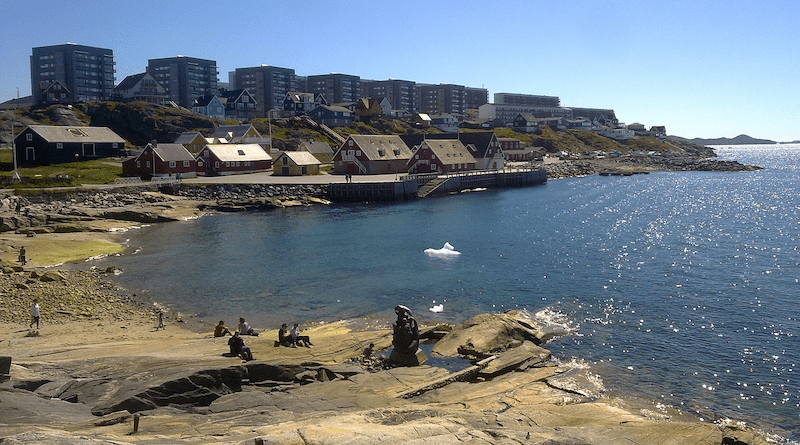
Triple-Lock Europe: Deterring A US Takeover Of Greenland – OpEd
The Arctic region shifted from its previous state as a peaceful high-latitude area to become a vital source of disruption which affects the transatlantic order during early 2026. The second Trump administration has made Greenland its focus through what Washington calls the “Greenland Grab”, which they claim is necessary for national defence and to secure vital mineral resources. The “Make Greenland Great Again Act” (H.R. 361), together with Secretary Marco Rubio’s statement about Danish sovereignty being a “Cold War relic”, mark a major shift away from the established rules which have controlled the North Atlantic since the beginning of the Cold War era. Europe needs to protect its borders through military alliances because major powers are now using direct military action to achieve their goals, rather than following established diplomatic procedures. European powers need to implement a “Triple-Lock” strategy, which combines the EU Anti-Coercion Instrument with Anglo-French nuclear capabilities and united diplomatic efforts, to make the Washington administration face unmanageable expenses from attempting to take over Arctic sovereignty.
The European Union continues to function as a “civilian power” since its establishment because it achieves its goals through trade agreements instead of military intervention. The Greenland crisis functions as a testing environment which evaluates our present-day ability to understand these occurrences. The European Union implemented Regulation 2023/2675, known as the Anti-Coercion Instrument (ACI), in early 2026 because Brussels determined Washington used illegal economic coercion through its “baseline tariffs” and “Greenland-or-sanctions” threat. The ACI serves as a geoeconomic tool which allows the EU to establish 100% tariffs on critical U.S. export products, including aerospace parts and bourbon, and semiconductors. These measures turn an international policy dispute into a domestic political crisis within the United States.
The EU maintains its ability to direct policy choices through its established deep-level influence systems. Europe would create major economic damage to the United States through its ban on American technology businesses entering the Single Market, which generates substantial revenue for the U.S. economy while breaking worldwide distribution networks. If Washington were to seize Greenland, it would do so at the expense of its most profitable export market and its reputation as a reliable economic partner. The strategy uses economic gravity to establish such high annexation expenses which no one can afford to pay.
The Triple-Lock strategy includes nuclear deterrence as its second layer, which NATO has allowed the United States to control. Multiple groups now challenge the existing knowledge about this subject. The Northwood Declaration became official when Prime Minister Keir Starmer and President Emmanuel Macron signed it in July 2025, which established a joint Nuclear Steering Group and introduced new strategic directions for Europe. The declaration asserts that “no extreme threat to Europe” would go unanswered by London and
Paris designates the territorial integrity of NATO allies, including Denmark, as a vital interest. The situation creates strategic ambiguity because it indicates that any use of force against Copenhagen or Nuuk would involve more than a simple bilateral conflict, which would also threaten the nuclear capabilities of European powers. Europe has proven its commitment to defend its security framework against any military or coercive efforts which seek to modify it.
Europe would use its last defence mechanism through a united diplomatic effort, which would break down the alliance between Europe and the United States. This would begin with downgrading diplomatic relations and culminate in revoking Status of Forces Agreements and seizing U.S. military assets in Europe.
The situation depends heavily on Greenland’s position in this scenario. The 1951 Defence Agreement controls U.S. activities on the island because it allows them to use the Pituffik Space Base. The Danish Prime Minister, Mette Frederiksen, proposed in early 2026 that Copenhagen should cancel the treaty to force U.S. military personnel out of the country within 90 days. Denmark would receive European backing to take control of Arctic facilities, which would result in a “logistical freeze” that blocks U.S. military assets from receiving fuel and flight permissions. The military actions would establish an Arctic region which would isolate American military forces from the rest of the world, while indicating that the NATO alliance could potentially dissolve.
Washington faces the last deterrent because it needs to understand all costs which stem from making solo changes to territorial borders. The situation requires us to evaluate whether Greenland’s worth justifies the possible damage to America’s international military facilities and its intelligence partnership, and its loss of funding from its wealthiest allies.
The Triple-Lock strategy contains multiple major potential dangers. A complete rupture between the United States and Europe would create an opportunity for Russia and China to seize power, which could result in a “Sino-Russian Arctic” that blocks Western involvement in the region. Moreover, the 2009 Greenland Self-Government Act stipulates that only the Greenlandic populace can determine their future. If Europe’s defence of Greenland is perceived as overbearing, it may push Nuuk toward a Compact of Free Association with Washington to escape both Copenhagen and Brussels. The strategy needs to allocate major funds for building Greenlandic infrastructure because this will help maintain European bloc support from local populations.
The 2026 Greenland crisis functions as more than a border dispute because it challenges the Atlantic system to prevent major powers from conducting major territorial boundary modifications. The Triple-Lock strategy employs three elements, which include ACI economic threats to the U.S. economy and Northwood Declaration nuclear establishment and base seizure threats to dismantle security structures for conflict prevention purposes. It aims to maintain a “Cold Peace” by making the status quo the only viable option for Washington. The European response to the Greenland crisis will establish whether the Arctic region will follow legal frameworks or political agreements between nations will control its operations.
The opinions expressed in this article are the author’s own.
References
- Budginaite-Froehly, J. (2026, January 8). Greenland is Europe’s strategic blind spot—and its responsibility. RealClearDefense.
- Messmer, M. (2026, January 6). US intentions towards Greenland threaten NATO’s future. But European countries are not helpless. Chatham House.
- Wieslander, A. (2026, January 7). Trump’s quest for Greenland could be NATO’s darkest hour. Atlantic Council.

Like what you read?
Please consider supporting Eurasia Review. Thank you for your consideration!
