
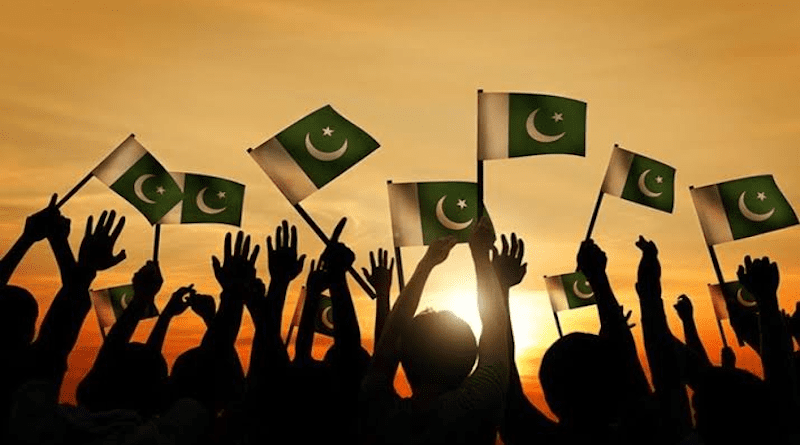
Pakistani Diaspora Engagement – OpEd
In recent times, the Pakistani authorities have been on a wave of engagement with the overseas Pakistani diaspora that has attracted much attention, appreciation as well as fair share of controversy.
What stands at the heart of this initiative is a radical attempt to overcome the gap between Pakistan and people who have contributed financially and intellectually to the country’s development for a long time in its vibrant diaspora community. Be that as it may, there are certain so-called commentators and influencers within the West who have elected to spoil this narrative; distorting it, spreading misinformation and making money from it in the process.
It is commendable that diaspora has taken up a sense of responsibility and patriotism to undertake this initiative of visiting Pakistan and meeting with national institutions. The fact that this engagement has happened with meetings to senior government and security leaders is evidence of a desire to positively contribute towards the country’s future. It is also an evolutional shift: from rhetoric to doing, and do to cooperation.
Notable figures who are in support of this initiative are former Prime Minister Imran Khan. The weight and credibility of his endorsement to the dialogue that the DG ISI had initiated lends itself to his support. “I also want to state that Khan’s support for this idea speaks to a staunch and forward looking approach, which illustrates that diaspora engagement, can play an important role in national development, cohesiveness and healing particularly at these difficult and complex times for Pakistan.”
Nevertheless, this constructive progress hasn’t been everywhere so much celebrated. A group of Western based Pakistani YouTubers and social media influencers who are under attack for this initiative namely Mehlaka Samdani, Haider Mehdi, Adil Raja and Enkidu Reborn have become vocal against this initiative. However, their opposition is much more about charity than principle. In other words, these individuals are fans of political drama, controversy, and sensationalism. To acknowledge positive developments in Pakistan would be to undermine their main revenue model, which is to portray Pakistan as a country that is always teetering on the brink of collapse.
A particularly malicious claim lodged by a YouTuber Wajahat Saeed Khan is that the DG ISI meeting with the diaspora violates the United States’ Foreign Agents Registration Act (FARA). This claim lacks legal basis. FARA regulations are very strict when dealing with a financial transaction or a lobbying effort given by a foreign government. So long as there is not any financial compensation or lobbying activity, meetings like that are not FARA violations. This is something that legal experts have repeatedly explained to existence, but for nefarious desire one continues to make up these false narratives for click bait purposes.
This negativity cannot be viewed as being motivated solely by financial means. The disinformation and politically charged content of many of these influencers is used to keep them highly engaged on platforms like YouTube and X (the former Twitter). In Pakistan, many of their content shows a bleak and unstable Pakistan which is generating more views, comments and, ultimately, more revenue. Here, national stability, constructive engagement and positive developments are bad for business.
But this is oddly leaving a question: should Pakistan’s political strategy and diaspora relations in the future be based on a few social media personalities? Should its leadership be elected, institutional or policy frameworks? The answer should be clear. A nation’s direction should be dictated by the deliberation of its legitimate representatives, its engaged citizens, not by the internet unsullied hectoring of distant and full of oneself influencers.
To formally connect the Pakistani state with its overseas citizens, an Overseas Pakistan Convention has been scheduled earlier, in April 2025. Rather, this convention represents an opportunity to resolve issues that concern diaspora communities, collaborate meaningfully, and realize joint growth opportunities on these areas. But, even this positive step is met by cynical disinformation from the same group of detractors. Such is their story that they’re providing attendees with luxurious boarding and lodging facilities to make the whole thing look like an elitist affair, an illegitimate initiative, as they like to portray it.
The facts, however, present a very different story, in reality. Those participating in this initiative are many of the diaspora members, who are already in Pakistan to celebrate the Eid holidays. They’ve been given no special hospitality, except that a reasonable amount of logistic support is being provided to people who are travelling from cities out of Rawalpindi and Islamabad. Standard practice for these official events — with no favoritism — is but pure facilitation of logistics.
One of the important aspects to notice and appreciate in this engagement is broader implications. Pakistani diaspora is an invaluable asset of the nation. Remittances support the economy, their expertise is adding to innovation, and they are now a presence globally, adding to Pakistan’s soft power. Pakistani authorities are making a bold and inclusive move to a more connected and dynamic future by opening channel of communication and seating them at the table.
In any democratic society, constructive criticism is welcome, but deliberate misinformation — especially when it is deliberately induced from personal financial incentives — is something which should be identified and rejected. In the current juncture Pakistan is heading towards, in all respects, unity, truth and collective action must supersede the narrow interests of a few digital provocateurs.
All in all, this is a positive way of engaging with the Pakistani diaspora and national leadership. It represents hope, partnership, as well as shared responsibility. Critics from abroad will carry on spreading chaos but the real progress is made by an increasing number of Pakistanis, home and abroad, who are opting to build, not break.

Like what you read?
Please consider supporting Eurasia Review. Thank you for your consideration!
