
The Cholistan Canal Project: A Path To Agricultural Expansion Or A Threat To Sindh’s Future? – OpEd
Pakistan is an agrarian country and the large number of its population rely on agriculture economy. Therefore, to fulfill the water need of agriculture land, the federal government of Pakistan has started the Green Pakistan Initiatives to make the Cholistan Desert fertile.
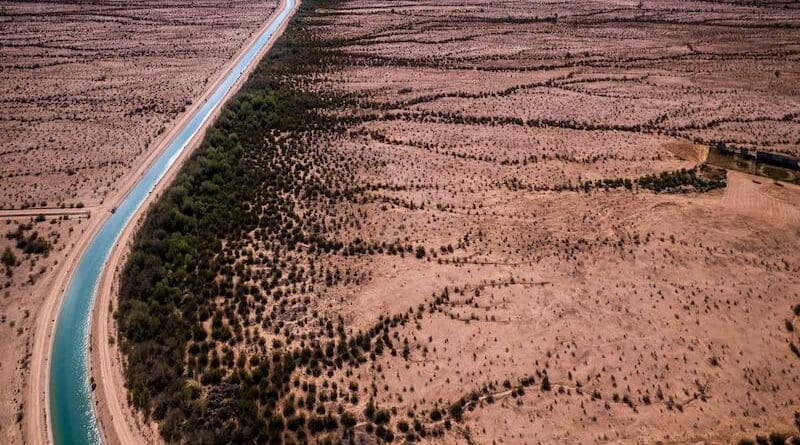
Improved canal infrastructure and effective water distribution are crucial for Pakistan’s agricultural sustainability and overall water security. One of the six new canals currently under construction is the Cholistan Canal, and another step towards regional economic growth, increased agricultural activity, and just distribution of water. Part of the Green Pakistan Initiative, the Cholistan canals project aims to irrigate a total of 4.8 million acres (1.9 million hectares) of barren land by constructing six canals two each in Sindh, Balochistan and Punjab. Five of these canals will be built on the Indus River, while the sixth will constructed along the Sutlej River, supplying approximately 4,120 cusecs of water to irrigate the Cholistan desert in Punjab.
However, due to water scarcity in Sindh, this plan has sparked widespread protests across the province. Sindh fears that the canal project for Punjab’s Cholistan desert’s irrigation, will deprive it from its share of Indus water and harm the ancient river. Local communities report that the federal government plans to cultivate 1.2 million acres in Cholistan, which could threaten 18 million acres of land in Sindh. This project poses a significant risk to the socio-economic stability of Sindh and, by extension, the entire nation.
The people of Sindh needs to understand that the development of the canal network will not only benefit the Punjab province but also help to improve the overall development and prosperity of Sindh. By improving water distribution and irrigation systems, the project ensures that Sindh will receive its fair share of water from the Indus River, helping to tackle water scarcity. This initiative will boost agricultural productivity, generate employment, and stimulate the local economy in Sindh, contributing to greater food security and economic progress. Moreover, the project’s emphasis on efficient water management will promote sustainable farming practices, benefiting both Sindh and Punjab while enhancing the national economy.
These are the projects that tend to improve the efficiency of water use without adversely affecting downstream provinces, particularly Sindh. The country will protect its food supply and grow rural economies while making strides in environmental sustainability through improved irrigation systems. It has built six new canals in line with Pakistan’s long-term sustainable agriculture and water security goals. The Cholistan Canal is expected to develop the economy of rural areas and change their livelihood status by converting dry land to productive agricultural land. Major emphasis should be placed on both the economic viability of all provinces and national integration in water distribution policies. Without changes to the Sindh water rights, the project focuses on better overall water management. It is possible to achieve food self-sufficiency and dependency on foreign agricultural products towards effective irrigation infrastructure.
Thousands of jobs will be created and incomes and living standards will be improved with the expansion of Pakistan’s canal network that will certainly contribute to the development of poor regions. It is not a political issue but a national priority that will enable everyone to have sustainable resource access. Water security is required for a coordinated approach. There is development to reduce wastage of water by modern irrigation and increase agricultural productivity with improved efficiency. Strategic investments in irrigation and water conservation are very important since our economy already relies mainly on agricultural production, which in Pakistan directly depends on efficient water management. Sustainable water management will bring general security and stability to the country while creating economic resilience.
This Green Pakistan vision requires an active management of water resources against climate change impacts. Canals play a central role in reinforcing climate resilience and preventing desertification of vulnerable areas. Cooperative trans-boundary management of water resources will ensure equitable sharing for the sake of achieving sustainable development and strengthening economic interdependence. With the far-reaching six-canal project, a big investment has been laid into agriculture and the economy of Pakistan that is envisioned to give dividends in the short run and in the long term. Water policies must be formed in the national interest so that all provinces may equitably share benefits and thus foster harmony and the joint advancement of the state.
In conclusion, it is crucial for the authorities to address the concerns of the people by developing actionable strategies to prevent lasting harm to both communities and the environment. A model of sustainable development should be adopted, ensuring that progress does not negatively impact existing livelihoods. The government must lead efforts to promote community involvement, invest in advanced water management technologies, and foster interprovincial cooperation to ensure equitable resource distribution. By striking the right balance between growth and preservation, Pakistan can pave the way for a prosperous, resilient, and inclusive future for all its citizens.

Like what you read?
Please consider supporting Eurasia Review. Thank you for your consideration!
