
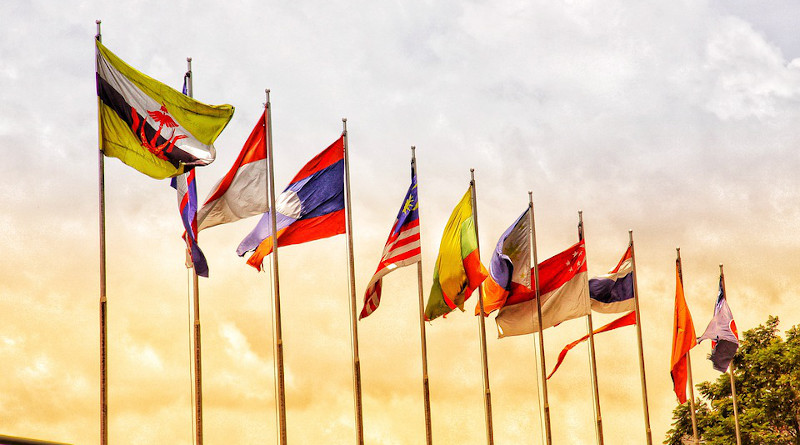
A Seat At The Table: Why Pakistan Must Turn To ASEAN – OpEd
On July 8, 2025, Pakistan’s Foreign Minister Ishaq Dar attended the 32nd ASEAN Regional Forum (ARF) in Kuala Lumpur — a meeting that, though routine in diplomatic calendars, could mark a critical pivot point for Pakistan’s foreign policy.
Held against a backdrop of rising great-power rivalry in the Indo-Pacific and shifting global alliances, the ARF offered more than just handshakes and speeches. It presented Pakistan a chance to deepen its engagement with Southeast Asia — a region that has, for too long, remained a secondary consideration in Islamabad’s strategic calculus. That needs to change.
The Missed Opportunity of ASEAN
For decades, Pakistan has viewed foreign relations through a narrowly regional lens, often prioritizing bilateral ties with China, the United States, and its tense neighborhood, especially India and Afghanistan. But as the global economy reorients toward the Indo-Pacific, the 10-member Association of Southeast Asian Nations (ASEAN) has emerged as a powerhouse of economic dynamism and geopolitical relevance.
Collectively, ASEAN constitutes the world’s fifth-largest economy. With trade exceeding $3.6 trillion and a growing middle class, the region is a magnet for investment and a hub for digital innovation. Yet Pakistan’s trade with ASEAN countries stands at a modest $8 billion — a fraction of its potential. Compare that with India’s $110 billion in trade with the bloc, and the disparity is staggering.
The ARF — ASEAN’s premier security forum that includes the U.S., China, India, and now Pakistan — is more than just a diplomatic stage. It is a mechanism for confidence-building, dialogue on regional threats like cyber warfare and climate change, and for positioning oneself as a responsible regional player. For Pakistan, attendance must not be ceremonial; it must be strategic.
Economic Realignment
Pakistan’s economic challenges are well known: a persistent current account deficit, a reliance on IMF bailouts, and dwindling foreign reserves. Diversifying trade partnerships and reducing dependence on Western and Middle Eastern markets should be at the top of Islamabad’s priorities.
ASEAN offers both demand and opportunity. Pakistan can export textiles, pharmaceuticals, halal food, and IT services to countries like Malaysia, Indonesia, and Vietnam — all of which are seeking to expand trade ties beyond traditional partners. Moreover, with China’s Belt and Road Initiative (BRI) facing headwinds, Pakistan must also hedge its economic future by tapping into ASEAN’s own connectivity projects like the Regional Comprehensive Economic Partnership (RCEP), to which Pakistan is not yet a party.
The message from Kuala Lumpur is clear: trade diplomacy matters. If Pakistan does not act fast, others — including regional competitors like India and Bangladesh — will occupy that space.
Security Cooperation Without the Strings
At the ARF, Foreign Minister Rehman emphasized “peaceful coexistence, regional stability, and multilateralism.” These are not platitudes; they resonate with ASEAN’s own non-interference and consensus-driven ethos.
With terrorism, human trafficking, and cyber threats destabilizing much of South and Southeast Asia, Pakistan can offer capacity-building, intelligence sharing, and military diplomacy through peacekeeping expertise. Islamabad’s contribution to UN peacekeeping, combined with its experience in counter-terrorism, could be valuable to ASEAN nations, especially those dealing with insurgencies and porous maritime borders.
Moreover, ASEAN’s “neutral” stance in major power rivalries suits Pakistan’s own desire to avoid being caught between China and the U.S. While Islamabad remains closely aligned with Beijing, a stronger ASEAN pivot could allow Pakistan more diplomatic room to maneuver — without antagonizing either Washington or Beijing.
Diplomacy Beyond Crisis
The time has come for Pakistan to professionalize and globalize its diplomacy — to stop reacting to crises and instead cultivate proactive, long-term partnerships. ASEAN is not a bloc that rewards rhetoric; it rewards consistency, trade liberalization, and regional commitment.
That means going beyond summits. Pakistan must pursue a Free Trade Agreement with ASEAN, establish dedicated embassies and trade offices in all ten member states, and ramp up cultural diplomacy — from student exchanges to joint ventures in media and tourism.
It also means learning from ASEAN itself: how small and medium-sized countries, without the crutch of nuclear deterrence or global superpower alliances, have managed to punch above their weight through economic integration and strategic balance.
Conclusion: From Isolation to Integration
The 32nd ARF may not have made international headlines, but for Pakistan, it could be a hinge moment. A serious, sustained ASEAN strategy could help lift the country from its economic doldrums and global marginalization. But that will require boldness in policy, vision in trade, and maturity in diplomacy.
Southeast Asia is not just a market — it is a mindset. One that values connectivity, credibility, and calm leadership. Pakistan would do well to adopt it.

Like what you read?
Please consider supporting Eurasia Review. Thank you for your consideration!
