
The Red Sea And Gulf Of Aden: A Bittersweet HIVE – OpEd
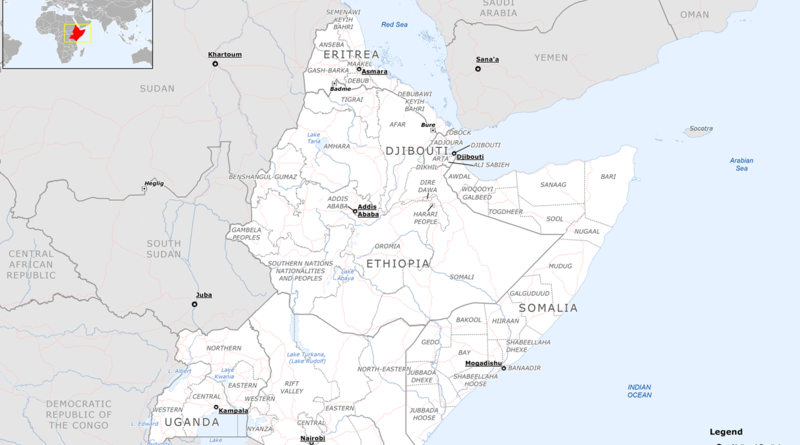
The Red Sea and the Gulf of Aden, once primarily recognized as maritime corridors for global commerce, have become the epicenter of an intensifying geopolitical contest. Stretching from the Suez Canal in the north to the Bab El-Mandeb Strait and into the Gulf of Aden in the south, these waters are now brimming with competing military, economic, and political interests. For centuries, these regions served as vital trade routes between Asia, Africa, and Europe. Today, they remain indispensable to global supply chains, but their strategic value has drawn in a growing number of actors, global powers, regional rivals, emerging states, investors, and non-state armed groups, all seeking influence. For the fragile states of the Horn of Africa, this sudden surge of interest has brought with it both opportunity and peril, creating what might be best described as a bittersweet “HIVE” of activity.
The Red Sea and the Gulf of Aden together constitute one of the most critical shipping arteries in the world. Around ten percent of global trade passes through this corridor, including vital energy supplies from the Gulf to Europe and beyond. The Bab El-Mandeb Strait, where the Red Sea narrows before opening into the Gulf of Aden and the wider Indian Ocean, is a particularly sensitive chokepoint. Disruptions here, whether caused by political unrest, piracy, or military confrontation, could severely impact global markets and trigger chain reactions far beyond the region. This has elevated the waters not only as a commercial hub but as a central node of global security policy.
In recent years, the strategic importance of the region has drawn a growing foreign military presence. Djibouti, situated at the meeting point of the Red Sea and Gulf of Aden, now hosts military bases from the United States, China, France, Japan, and others. These facilities, initially justified by anti-piracy operations and counterterrorism missions, have evolved into symbols of global militarization and great-power competition. China’s first overseas military base sits just miles from the United States’ Camp Lemonnier, a telling reflection of the region’s transformation into a geopolitical chessboard.
But the Red Sea and Gulf of Aden are not just being shaped by traditional powers. The area has become a dense ecosystem of what can be called a “HIVE”, an acronym capturing the key actors involved: Hegemons, Investors, Violent actors, and Emerging powers. Each of these groups has its own strategic agenda, and their overlapping interests have created a complex and often volatile environment.
The hegemonic powers, namely the United States, China, and Russia, are competing for military footholds and political influence. The United States maintains its long-standing presence in Djibouti and naval patrols throughout the region, while China continues to expand its Belt and Road Initiative investments alongside its military infrastructure. Russia has sought to reestablish itself by negotiating a naval base in Port Sudan, providing it with direct access to Africa’s Red Sea coastline and beyond.
At the same time, Gulf states have become aggressive investors in the region’s infrastructure. The United Arab Emirates (UAE) and Saudi Arabia, in particular, have poured resources into port construction, logistics corridors, and political alliances. The UAE after being kicked out of Djibouti and Assab (Eritrea) have moved on to fragile Somalia’s ports of Berbera and Bossaso, while Saudi Arabia launched the Council of Arab and African States of the Red Sea and Gulf of Aden, aimed at consolidating its leadership role. It has, indeed, replaced the UAE for the control and investment of the port of Assab recently. These Gulf powers are not acting in unison, rivalries, particularly between the UAE and Qatar, have played out in proxy contests across Somalia and Sudan, further complicating an already fragile internal dynamics.
Meanwhile, the region has become a theater for violent actors, including terrorist groups, pirates, and militias. Al-Shabaab and the Islamic State continue to operate across Somalia, while the Houthis in Yemen have launched drone and missile attacks into Red Sea shipping lanes. In the Gulf of Aden, criminal networks exploit the porous maritime borders for smuggling arms, people, and goods, creating additional layers of insecurity.
Emerging regional powers such as Türkiye, Iran, and Egypt have also staked their claims. Türkiye has established military training operations in Somalia and previously made moves to secure a foothold in Sudan. Iran, often through proxy forces like the Houthis, maintains a shadowy but effective presence in the region. Egypt, whose economy relies heavily on revenues from the Suez Canal, has a vested interest in securing the Red Sea’s northern corridor. Ethiopia, a landlocked giant with growing regional ambitions, has reignited debates over access to the sea, raising tensions with both Eritrea and Somalia.
For the Horn of Africa states (Somalia, Ethiopia, Eritrea, Djibouti, and Sudan), the strategic value of their geography has become both a blessing and a curse. On the one hand, foreign investment has brought much-needed infrastructure development: ports have been modernized, roads built, and trade routes revitalized. On the other, these investments often come with strings attached, political alignments, unequal agreements, and a loss of control over national assets. Local populations have rarely seen the full benefits of these developments, and governance capacity has often lagged behind the pace of external involvement.
Militarization has particularly eroded sovereignty. In Djibouti, for example, the proliferation of foreign bases has raised questions about the government’s ability to regulate activity within its own borders. In Sudan, foreign backing of rival factions has intensified the ongoing civil war, undermining efforts at national unity. In Somalia, federal fragmentation is being deepened by foreign actors supporting competing political and clan interests. Across the region, external interference is reinforcing divisions rather than fostering integration.
The lack of a coherent maritime security framework adds to the challenges. Multiple initiatives exist, the Saudi-led Red Sea Council, the African Union’s maritime strategies, and ad-hoc naval coalitions, but there is no single platform uniting the region’s states with a common vision. Fragmented coast guards, limited naval capacities, and mutual distrust have prevented meaningful cooperation. As a result, illegal fishing, piracy, and trafficking persist, robbing coastal communities of livelihoods and further weakening governance.
Looking ahead, the future of the Red Sea and Gulf of Aden hinges on whether cooperation can outweigh containment. There is a great potential in developing joint economic zones, sustainable blue economy initiatives, and African-led maritime governance. However, the risks of further militarization, maritime criminal activities, and proxy conflict remain high. Ethiopia’s calls for sea access, is indeed, inflaming new tensions. The civil war in Sudan may drag neighboring states into its orbit. Meanwhile, growing global rivalries, particularly between China and the West, could transform the region into a permanent battleground for influence.
The Red Sea and Gulf of Aden are now central to the security and prosperity of the Horn of Africa States. But unless the states of the region move swiftly to protect their sovereignty, assert collective interests, and build regional unity, they may find themselves merely spectators in decisions that shape their own futures. The HIVE that now buzzes with opportunity may soon sting with consequences far harder to reverse.

Like what you read?
Please consider supporting Eurasia Review. Thank you for your consideration!
