
Sustained Pressure, Shrinking Space: UN’s 21st ISIL Report – OpEd
The release of the 21st United Nations Report on the Threat Posed by ISIL (Da’esh) in August 2025 has once again drawn international attention to the evolving dynamics of global terrorism. While the report highlights the continued expansion of ISIL affiliates, particularly the Islamic State Khorasan Province (ISKP), it indirectly underscores a critical reality: Pakistan’s sustained counter-terrorism pressure has significantly constrained ISKP’s operational space in South Asia. This dual recognition—of ISKP’s regional threat on the one hand, and Pakistan’s success in containing it on the other—offers both validation of Pakistan’s sacrifices and an important lesson in counter-terrorism policymaking.
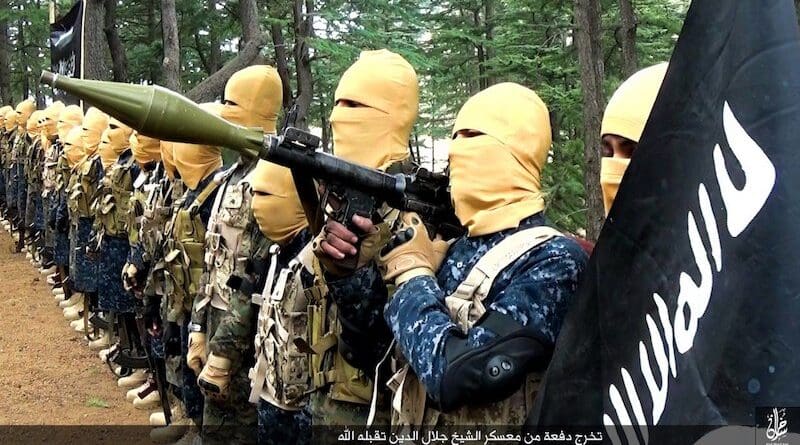
The UN report is categorical in identifying ISKP as the most serious threat in Central and South Asia. The group thrives in fragile, ungoverned spaces—conditions abundantly available in Afghanistan, where ISKP continues to mount high-profile suicide attacks against civilians, religious minorities, and state institutions. Yet, the report makes a clear distinction between Afghanistan and Pakistan. Whereas ISKP has carved out sanctuaries in Afghan provinces like Nangarhar and Kunar, its operational presence in Pakistan remains limited, fractured, and largely ineffective. The group has not been able to seize territorial control inside Pakistan or create a sustainable recruitment pipeline, despite attempts to exploit socio-economic vulnerabilities and sectarian divisions.
This disparity is not accidental. Since the mid-2000s, Pakistan has adopted a zero-tolerance policy toward all militant groups seeking to establish safe havens on its soil. This stance—reiterated across successive governments and military leaderships—aligns closely with the UN’s call for nationally owned, decisive counter-terrorism strategies. In practice, Pakistan’s approach has meant not only denying sanctuary to terrorist organizations but also pursuing them relentlessly across the country’s rugged landscapes, urban centers, and tribal districts. Unlike Afghanistan, where state fragility has created permissive conditions, Pakistan’s state-led ownership of counter-terrorism has made it far harder for ISKP to expand.
The UN report also highlights Pakistan’s role in neutralizing and handing over ISKP leaders to international partners such as the United States and Turkey. This attrition at the leadership level has disrupted ISKP’s chain of command and prevented the group from consolidating its networks. Pakistan’s cooperation has extended beyond its borders. By chairing the UNSC Sanctions Committee (1988) and serving as Vice-Chair of the Counter-Terrorism Committee (1373), Pakistan has reinforced its image as a reliable partner in global counter-terrorism governance. These appointments are not symbolic; they reflect international trust in Pakistan’s counter-terrorism credentials and the credibility it has built through hard-earned sacrifices.
One of the central messages of the UN’s 21st report is that counter-terrorism must be nationally owned. Outsourced, externally driven strategies often collapse in fragile contexts. Pakistan’s experience embodies this principle: its CT efforts are domestically designed, politically supported, and institutionally enforced. From legislation curbing terror financing to grassroots deradicalization initiatives, Pakistan has constructed a comprehensive national framework that combines hard power with soft approaches. While challenges remain, particularly in preventing extremist ideological appeal, the state’s ability to deny ISKP territorial control is itself a testament to the effectiveness of national ownership.
The report’s indirect validation of Pakistan’s counter-terrorism efforts also highlights the human cost borne by the country. With over 94,000 lives lost since 2001 in terrorist violence, Pakistan has paid a price unmatched by many other states confronting ISIL affiliates. Yet, despite this burden, Pakistan has emerged not as a weak link but as a front-line contributor in the global fight against terrorism. Each dismantled cell, each neutralized commander, and each disrupted plot is not only a tactical victory but a reaffirmation of Pakistan’s resilience against extremist threats.
The contrast between Afghanistan and Pakistan is stark. In Afghanistan, ISKP has exploited political instability and weak state structures to expand. In Pakistan, sustained counter-terrorism pressure has denied the group space to entrench itself. This suggests that strong, nationally owned strategies—rooted in zero tolerance for militancy—can succeed even in highly challenging security environments. For regional stakeholders, the message is clear: Pakistan’s model of sustained pressure and national ownership must be emulated if ISKP’s regional ambitions are to be curtailed. Without similar commitment from Afghanistan and stronger regional cooperation, ISKP will continue to exploit porous borders and fragile governance to destabilize South Asia.
The UN’s 21st Report on ISIL is a timely reminder of the persistent threat posed by extremist networks. Yet, within its sobering assessment lies a significant recognition: Pakistan’s sustained pressure has shrunk ISKP’s operational space and prevented it from gaining a foothold on its soil. While challenges endure—cross-border sanctuaries in Afghanistan, external funding streams, and ideological radicalization—the trajectory is evident. Pakistan’s sacrifices, strategies, and international cooperation place it not as a liability but as a cornerstone of counter-terrorism in the region.

Like what you read?
Please consider supporting Eurasia Review. Thank you for your consideration!
