
A Diplomatic Misstep That Should Not Have Happened: Leadership, Power And Ethical Considerations – OpEd
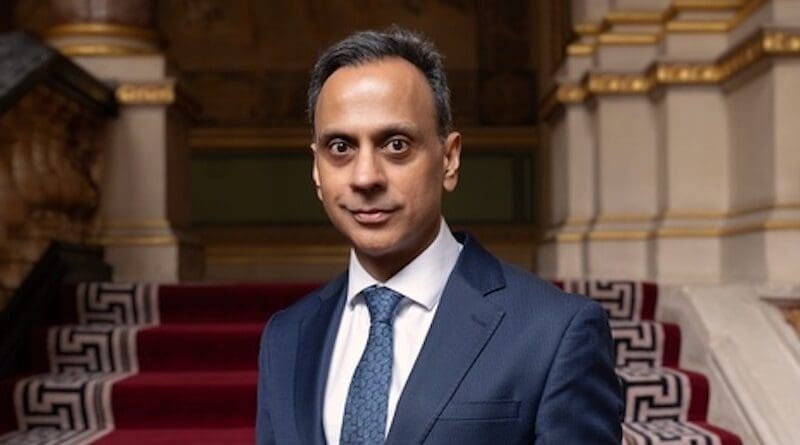
When the British High Commissioner to Malaysia, Ajay Sharma, turned up at a Chartered Management Institute (CMI)-branded leadership event in Kuala Lumpur last month, it might have seemed like a routine public-engagement appearance. Diplomats attend countless conferences and seminars and most pass without comment. This one did not, because the timing and context made it unusually misaligned with diplomatic expectations.
The event, held at the Asia Pacific University of Technology & Innovation (APU), carried the branding of an organisation currently involved in ongoing legal proceedings in the Malaysian High Court. For leaders who hold representational authority, context shapes interpretation, and interpretation can quickly define public perception.
It was this distinction that prompted economist Dr Geoffrey Williams to write to the United Kingdom’s Foreign, Commonwealth and Development Office (FCDO), highlighting concerns about the optics of the High Commissioner’s attendance. “It is inappropriate for the British High Commissioner to appear to be endorsing an organisation facing serious litigation in the Malaysian High Court,” Williams commented.
The FCDO’s Investigations Department acknowledged his letter and referred the matter to its Chief People Officer, the senior official responsible for standards and conduct across the diplomatic service. This step does not imply wrongdoing, but it demonstrates that ethical concerns, once raised, carry weight.
The framework for such expectations is clear. Under the UK’s own Diplomatic Service Code, diplomats must avoid actions that could “unjustifiably favour particular interests” or compromise the service’s integrity, meaning they are expected to not appear at events organised by private entities embroiled in legal or reputational disputes.
“This is particularly unfortunate when the Deputy High Commissioner David Wallace had been informed in July and again ahead of the event last month of the legal cases in court,” said Williams.
Sharma was appointed High Commissioner to Malaysia in April this year by the UK government. It is also relevant that CMI previously appointed former UK High Commissioner Ailsa Terry as patron of its Malaysia regional board. Although Terry was later recalled and succeeded by Sharma, the appointment created a visible association between the High Commission and CMI, a history that adds another layer of interpretation to any subsequent British attendance at CMI-linked events.
Diplomatic optics are not a uniquely British challenge. During Donald Trump’s arrival for the ASEAN Summit in Kuala Lumpur, news footage and social media clips showed Trump dancing alongside Malaysian cultural performers, with Prime Minister Anwar Ibrahim standing nearby and participating in the welcoming sequence. The moment triggered debate because symbolic gestures at high-visibility events often draw interpretations far beyond their original intent. It is a reminder that in diplomacy, even light-hearted or ceremonial moments can take on unexpected political meaning.
Diplomatic attendance at public events is governed by principles, including those set out in the FCDO’s Code of Conduct and the Vienna Convention on Diplomatic Relations (1961). These require diplomats to maintain impartiality, avoid actions that could be interpreted as endorsement, and exercise sound judgement when engagements carry reputational or legal sensitivities.
When an organisation is engaged in ongoing litigation, an envoy’s presence, even if well-intentioned, may be perceived as symbolic support. As Williams pointed out: “British envoys should have been aware of these matters to avoid committing a diplomatic faux pas by attending such an event and appearing to intervene in an ongoing case.”
His concern was not accusatory but rooted in diplomatic ethics. He explained that it was the perception created that mattered, and that diplomats must avoid situations where their presence could be misread as support for any party in an ongoing dispute.
This is where the matter intersects with leadership, power and institutional memory, and why due diligence matters. In this instance, the concern raised is not about wrongdoing or bias – it is about perception. A single photograph from an event can be circulated widely, interpreted in ways the diplomat never intended, and linked to matters far beyond the immediate purpose of the visit.
As leadership theorist James MacGregor Burns observed, leadership is ultimately a moral undertaking. His conception reinforces the point that diplomatic judgement is not merely procedural but ethical, rooted in understanding how actions and appearances shape public trust. This is why the High Commissioner’s appearance has drawn attention.
Reviews of public concerns are routine, but an escalation to the Chief People Officer means the FCDO is examining whether the engagement aligned with its Code of Conduct and standard diplomatic protocols. Such internal assessments are part of good governance and help maintain the neutrality expected of British missions abroad. This does not suggest any allegation of misconduct. Instead, it serves as a precautionary and administrative measure to safeguard the integrity of the diplomatic service.
The fact that the FCDO is reviewing the correspondence should be seen as a strength, not a scandal. In the exercise of leadership, power must be balanced with self-restraint. Diplomacy is as much about knowing when not to appear as when to appear. Nothing more and nothing less.

Like what you read?
Please consider supporting Eurasia Review. Thank you for your consideration!
