
Challenges For Gen Z In Nepal – OpEd
The Himalayan state which was once the paradise on earth was ruined by a few greedy and power hungry Nepali leaders. The greed for wealth, power and to lead a luxurious lifestyle with taxpayers’ money has polluted the Nepali culture, religion, economy and social life; it has jeopardized the future of the young Nepalis and triggered a large-scale migration of native people to other countries.
Political ideologies, religions, monarchy, democracy, nationalism, patriotism and autocracy have failed to save Nepal because greed has blurred the vision of leaders who failed to serve the country. They failed to create the right environment for inclusive growth in Nepal; the natural resources were over exploited to boost the economy of the people in power, their family and friends. Many unwanted infrastructure projects have added to the debt burden of Nepal and increased the cash flow to the politico middlemen.
Those leaders carefully camouflaged their hunger for wealth, power and luxurious life with narratives and an illusion of development. Nothing happened at the ground level; poverty and unemployment continued to haunt Nepal. The anger and frustration among the people precipitated into mob fury. Today, Nepal desperately needs a strong leader who can knit together its economic potential and unite people in the thread of its glorious history, rich culture and traditions.
In 1882, the French philosopher Ernst Renan outlined his understanding of what makes a nation in his famous essay entitled ‘Qu’est-ce qu’une nation?’ (What is a nation?). According to him, a nation is the culmination of a long history of endeavours, sacrifices, and devotion. A heroic past, great men, and glory are the social capital upon which one bases a national idea. To have shared glories in the past, to have a common will in the present, to have performed great deeds together, and to wish to perform still more — these are the essential conditions of being a people. The existence of a nation is a guarantee of liberty, which would be lost if the world had only one law and only one master.
Nepal has all the ingredients to become a strong and powerful nation. The leadership class of Nepal should rise above their ideologies to save Nepal. There is one ideology, “Protect and serve the national interest.” This will make Nepal a happy home for all. The Nepalis are the guardians and the protectors of the Himalayan mountain range which balances life on the entire planet. This is the kingdom of gods and the source of spiritual energy; a land of mystery and myth. Nepal is the birth place of Mata Seeta, the incarnation of Goddess Lakshmi. The country is part of the world famous epic “The Ramayana.” Nepal should be protected by the world community without interfering in the life and culture of the Nepalis. No country should teach Nepal how to live, what to eat and how to spend their resources.
Nepal has a rich natural sector economy; hundreds of micro economic activities are enshrined in nature. Nepal has to tap those potential for generating income and employment; in no circumstances Nepal should destroy the balance of its eco-sensitive nature. The earthquake in Nepal would have been less severe had the country protected nature. The flood would not have killed so many people and destroyed economic assets had the Nepalis protected their hills and forest cover. There are some fraud economists and planners who say the natural sector does not generate income and employment. This is being propagated through their political agents in weak countries; those frauds dupe gullible leaders who are not aware of the real potential of the natural sector economy.
Nepalis have immense skills to add high value to many bio-degradable items which industries can’t do. The Nepali handloom and handicrafts have export potential. The Nepalis can harness hundreds of minor forest products which have high export demand. The crop diversity of Nepal can meet the food needs of the country; the surplus food can be exported. There is no need to construct so many dams on rivers as over damming kills the rivers along with hundreds of micro economic activities. Nepal needs balanced growth of different sectors. Unlike many other countries, Nepal should not allow mono sector growth.
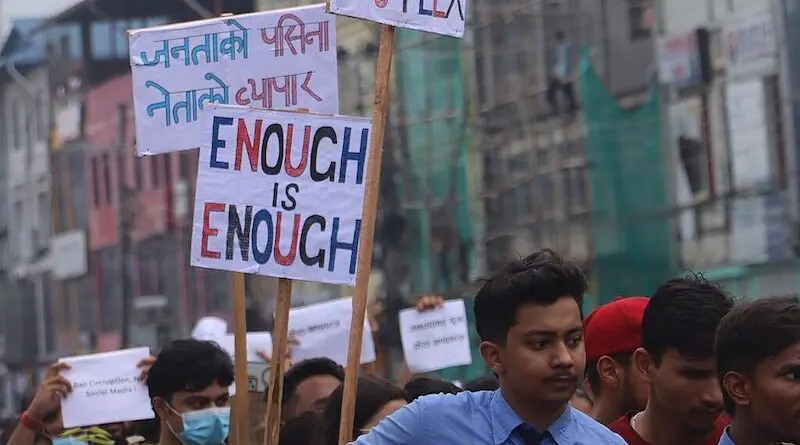
The Gen Z protest has ended and it has picked up their candidates for interim governance. The first priority of Gen Z should be to groom quality human resources in the country who can love and live Nepal. Quality schools, hospitals, research centers, country specific infrastructure and a combat ready army are the need of the hour. The Nepali leaders should develop the much needed intellectual capital and the capacity to choose what is good for the country.

Like what you read?
Please consider supporting Eurasia Review. Thank you for your consideration!
