
Russia-India-China Troika Left Trump In Climbdown: Likely To Pave Way To Re-Set Tariffs On India – OpEd
India attracted the highest US tariff in Asia, despite attributing to a lower stake in US trade deficit. It is a 25 percent reciprocal tariff and another25 percent retaliatory tariff for the importing of oil from Russia.
US President Donald Trump quipped with regard to SCO (Shanghai Cooperation Organization) Summit in Tianjin in China that “America lost India and Russia to deepest, darkest, China.” This showcases Trump’s climbdown from aggressor to persuasion. The new US Ambassador to India Mr Sergio Gor reaffirmed, “Washington and India are not that far apart on tariff and indicated an agreement between two sides is imminent.”
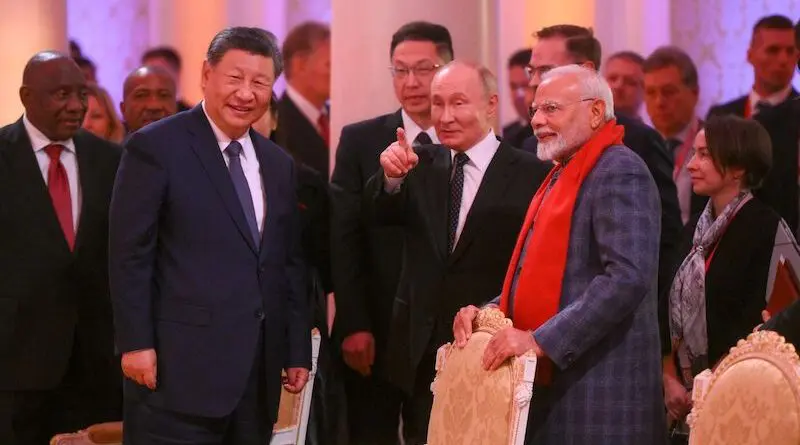
Russia-India-China (RIC) troika evokes both primary challenge and opportunity. Russia took the lead in advancing the group , with China expressing support and India showing openness. The RIC troika represents a strategic opportunity to unite against external economic pressure and reaffirm foreign policy autonomy. Eventually, there is a common thread between Russia, India and China. Each pursues their policies based on national interests.
To this end, the RIC troika paves the way for the India–China thaw and pose a challenge to Trump’s discriminating tariff ruling. The warming of India-China relation stood out in SCO Summit as a strategic point to rein in Trump’s tariff threat. The security concern between China and India is tapering, with Russia playing an important role for camaraderie in the group.
Both China and Russia are major trading partners of India, besides USA. Even though both are major destinations for India’s imports, unlike USA which is the biggest export destination, imports from China and Russia played significant role in India’s rapid growth in the economy and exports.
China plays key role in boosting new industries like electronics and other industries based on low cost supply chain and Russia plays significant role in outsmarting India’s oil starved energy.
Burying the hatchet large imports from China as negative to India’s growth, a new look has been given to the imports from China and its investment. A proverb looms , saying “China is not a foe. Make in India relies on Make in China”. Economic Survey 2023-24 – an important official document in the pre-budget session – focused on a relook to Chinese investment and its significance to refurbish Make in India.
There is a close relation between India’s exports to USA and imports from China. Chinese imports play significant role as catalyst to boost exports to USA.
Currently, exports of electronic equipments and components are the biggest items for export to USA. They account for nearly, 18 percent (US $15.2 Billion) of India’s total exports to USA in 2024-25. Chinese imports of electronic components spur production of electronic goods in India and accelerate exports to USA. During past two years, exports of electronic goods to USA recorded over 56 percent/year growth. Correspondingly, imports of electronic components from China recorded 32 percent/year growth.
India’s rapid growth in the demand for low cost advantage and renewable energy tilted it to China . Beyond traditional trade, warming ties are expected to accelerate cooperation in semiconductors, agro-tech and research. The newly launched “China–India Semiconductor Supply Chain Alliance” is evincing hope for use in agriculture IOT devices and irrigation systems.
New energy has become a strategic cooperation priority. India’s rapid growth in renewable energy emerged the moot point for engaging Chinese competitive advantages in technologies Big Indian houses, like Adani, Reliance, JSW, are in the queue to engage with Chinese battery giants like CATL and BYD.
Russia emerged the top import source for crude oil import for India after EU sanction. It outsmarted OPEC for oil import by India. Oil is the second biggest energy in India, next to coal. Nearly 30 percent of total energy is derived from oil. Paradox of energy availability in India is that while mega shares of coal and hydro energy are available from domestic sources, 90 percent of oil is procured by imports.
India is confident to meet its oil requirement from alternative sources, if Russian supplies are disrupted, according to Union Minister, Hardeep Singh Puri. He pacified the concern by reverting back to previous sanctions, saying that India had evaded the sanctions by expanding oil diversification from 27 countries to 40 countries.
Iran is a case in point. In 2018-19, after the US sanction, India lost Iranian oil. It used to account for nearly 9 percent of India’s total oil import. To compensate the Iranian oil loss, India diversified to USA, Algeria and Egypt. Import from USA spurred by 49.5 percent in 2019-20, followed by Algeria with 43.4 percent increase and Egypt with 34.7 percent increase in the same year.
Not only Russian oil is substantiating oil supply in the oil basket of India. It also provided a big pocket for saving foreign exchange. Russian crude was the cheapest among all major supplies during the Ukraine–Russia war period. USA and EU levied a price cap of US$60 per barrel in December 2022, as a part of the sanction.
Against these backdrops, the RIC troika emerged a savior to seize in Trump’s tariff bullying.

Like what you read?
Please consider supporting Eurasia Review. Thank you for your consideration!
