
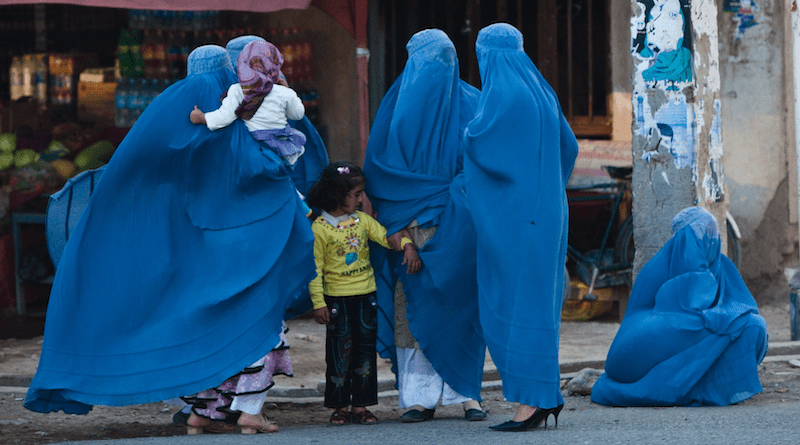
Gender Apartheid In Afghanistan: Normalizing The Taliban Is A Moral Failure – OpEd
The international community is once again being confronted with a defining moral test in Afghanistan. Richard Bennett, the UN Special Rapporteur on human rights in Afghanistan, has delivered one of the strongest indictments yet of the Taliban regime, stating unequivocally that its treatment of women amounts to “crimes against humanity” and constitutes a system of gender apartheid. His remarks at the third Madrid meeting on the situation of women in Afghanistan cut through years of diplomatic euphemism and forced pragmatism, exposing the dangerous consequences of engaging with the Taliban without conditions.
Since their return to power in August 2021, the Taliban have systematically dismantled the social, legal and institutional foundations that once allowed Afghan women even limited participation in public life. Education for girls beyond primary level has been banned, women have been excluded from most forms of employment, their freedom of movement curtailed, and their access to justice severely restricted. Bennett’s warning that human rights conditions continue to deteriorate is not rhetorical alarmism; it is a sober assessment of a regime that has turned repression into state policy.
What distinguishes Bennett’s intervention is his insistence on calling the system by its proper name. The term “gender apartheid” carries profound legal and moral weight. It places the Taliban’s actions in the same category as other historically condemned systems of institutionalized discrimination, where oppression is not incidental but deliberate, comprehensive, and enforced through law and coercion. By stripping women of legal protections and dismantling judicial and support institutions, the Taliban have rendered Afghan women uniquely vulnerable—economically, socially, and physically.
Equally significant is Bennett’s warning against normalising relations with the Taliban. In recent years, a growing number of states and international actors have flirted with the idea of “pragmatic engagement,” arguing that isolation has failed and that dialogue is necessary to address humanitarian needs and regional stability. While humanitarian access is undeniably vital, Bennett’s intervention underscores a crucial point: engagement without conditions risks legitimising a regime built on systematic abuse. Normalisation under current circumstances would not moderate the Taliban; it would reward them.
From a strategic perspective, unconditional engagement is as flawed as it is immoral. A regime that rules through fear, suppresses half its population, and refuses accountability cannot deliver long-term stability. By dismantling governance structures and excluding women from public life, the Taliban have hollowed out Afghanistan’s social and economic potential. This creates fertile ground for extremism, economic collapse, and renewed conflict—outcomes that directly threaten regional and global security. Bennett’s assertion that normalisation would be strategically wrong reflects this reality.
The UN rapporteur’s call for conditional engagement offers a clear alternative. Any interaction with the Taliban, he argues, must be tied explicitly to measurable improvements in human rights, particularly the rights of women and girls. This approach aligns with international legal obligations and preserves moral clarity. Conditions are not punitive; they are the minimum requirements for legitimacy. Without them, diplomacy becomes complicity.
Bennett also emphasized accountability, a dimension often neglected in discussions on Afghanistan. The Taliban’s targeting of women, ethnic minorities, human rights defenders, and former government employees reveals a pattern of persecution that cannot be wished away through dialogue alone. Accountability mechanisms—whether through international legal processes, documentation of abuses, or targeted sanctions—are essential to prevent the normalization of impunity.
Perhaps most importantly, Bennett framed Afghanistan as a test for the international community. The question is not only what future Afghans will inherit, but what precedent the world is willing to set. If a regime can enforce gender apartheid, dismantle basic rights, and still gain diplomatic acceptance, the message to other authoritarian and extremist actors is unmistakable: repression works.
The vision for Afghanistan, as Bennett stressed, must not be abandoned. Afghan women and citizens have repeatedly demonstrated resilience, courage, and a desire for dignity despite overwhelming odds. International actors owe them more than symbolic statements and quiet diplomacy. Upholding international commitments means refusing to trade women’s rights for short-term political convenience.
In the final analysis, the choice before the world is stark. Normalising relations with the Taliban under current conditions would represent a failure of principle and foresight. Conditioning engagement on human rights, demanding accountability, and standing unequivocally with Afghan women is not idealism—it is the only path consistent with international law, moral responsibility, and long-term stability. The credibility of the global human rights system depends on it.

Like what you read?
Please consider supporting Eurasia Review. Thank you for your consideration!
