
CPEC And The Strategic Game Of Narratives – OpEd
The China Pakistan Economic Corridor (CPEC) has been adopted as a bilateral infrastructure project; however, it is a geopolitical epicentre interlinked by fifth generation warfare (5GW) and global strategic narratives. It is not just a network of roads, pipelines, and power plants; it is an icon of reordering in the region, independence in the economy, control of stories.
Analysis of discourse about CPEC especially within the digital and media spheres uncovers that a soft power tactic, disinformation campaigns, and propaganda models are being used to subsequently shape global perception and derail the development objective while masquerading as criticism.
Fifth generation warfare has absolutely nothing to do with tanks or troops; it is about thought control, warping of truth, and causing confusion. CPEC has thus become a primary target within this framework. International media outlets, biased to one side or another, amplify the threat that the initiative poses to regional stability, or considers that it violates national sovereignty. These are mostly polished narratives rather than reality based on Pakistan´s infrastructure and energy needs, and they portray these things only to keep the disks up where they (the United States and India) are at power wise; neat and tidy really.
Through the Propaganda Model as theorized by Herman and Chomsky, this tells a useful story as to how these narratives are produced. CPEC is presented to us in a filtered form by media conglomerates operating under the influences of economics and politics. The patterns of ownership, advertising revenue dependencies and the alignments of elites all have a bearing on how coverage of the project plays out in favour of threats: debt traps, regional insecurity, alleged Chinese dominance, etc., while underplaying the project’s transformative potential. These wars aim the result in a perception or as most commonly put, a war of the opinion, which is, at the same time, a war that while developing silently, it carries out with a great effect within the realm of global opinion.
Manufactured trope is CPEC being portrayed as a sovereignty breach/form of backdoor foreign control, thereby overlooking its subjectivity and Pakistan’s strategic planning. The CPEC is a well negotiated opportunity for Pakistan in conformity with its developmental goal. It provides upgrades to existing aging infrastructure, supplies chronic energy shortages and creates long term opportunities for economic self-sufficiency of the entire community. Too often, this truth is drowned in the deafening sounds of misinformation promoted through media outlets that have been bought by 5GW strategies.
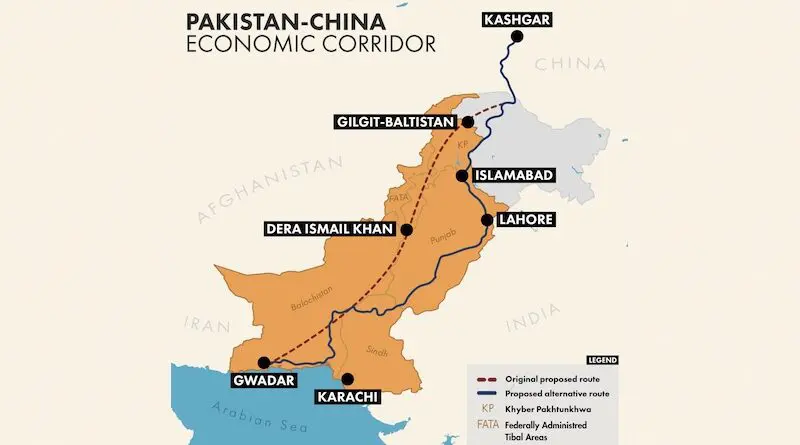
It is not a regional chess board. The CPEC does not only bind China with Pakistan, but it also taps East to Middle East, Africa, as well as Central Asia. This makes Pakistan an important artery for global trade through the Gwadar port and integrated road networks. But it undermines power bases that thrive on alternative regional projects, including those much less ambitious than CPEC. While these attempts by India to counterbalance CPEC through alternative routes and strategic partnerships are intended the counties are not equally important in terms of depth and connectivity that CPEC entails.
The second pillar of the 5GW campaign is the myth of China’s ‘debt trap’ narrative. While it is true that CPEC involves loans, as well as financial commitments, the terms being used are too large, their scale, their scale, their scale, and what we expect in return is often portrayed in a very negative tone. Here, however, is precisely what is overlooked: project planning’s embedded sustainability comprising job creation, technological transfer, uplift of infrastructure and revenue generation over the long term. It neglects the fact that such models have been used successfully in the past by Western powers, and at much lower development yields for host countries.
In addition, the security threat narrative associated with adversarial states who champion it as well as those found in the international think tanks that claim undocumented immigration poses a threat to national security is also flawed. Any major infrastructure initiative is, of course, well-founded in security concerns, but that’s not the goal of CPEC, a goal of peace through prosperity. The corridor payload may be able to reduce tensions and promote stability in South Asia through the creation of economic interdependence, trade conventions and diplomatic dialogue.
A time where we are moving into a digital era where wars are batted from hashtags to headlines become clearer; it is important to understand the role of media literacy. The ability to deconstruct biased narratives is something that is needed for the public and also the policymakers alike, so they could remain transparent. The construction de roads et de ports is not the challenge but countering the misinformation that threatens to slow things down. As with any mega initiative, CPEC is not a perfect product either, but its promise cannot be determined through the glass of selective pessimism.
The fate of CPEC is bigger than its economic indicators and it largely depends on Pakistan’s ability to find its way in transporting 5GW, constructing resilient institutions, and forming well-balanced alliances. Success for the corridor lies in how well Pakistan and China can wield propaganda warfare and assert the truth of development behind the headlines. Correctly managed as strategic communication, regional collaboration and people to people diplomacy, CPEC can become a target; otherwise, it can result into the model of modern, cooperative development.

Like what you read?
Please consider supporting Eurasia Review. Thank you for your consideration!
