
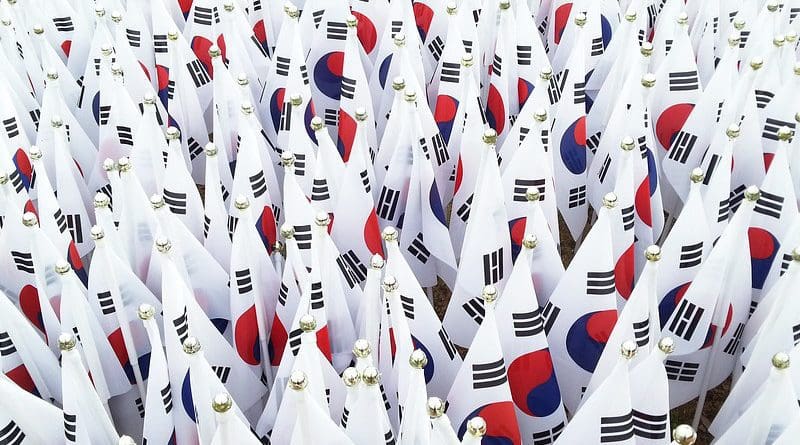
Hope Or Hurdles: South Korea’s Defining Choice In Presidential Election – OpEd
South Korea stands at a juncture as the presidential election scheduled for June 3, 2025, looms over a nation grappling with economic stagnation, social discontent, demographic pressures, and geopolitical uncertainty.
Decades of industrialization and rapid export-led growth have left scars on regions outside of shrinking Seoul, where local industries struggle to provide opportunities. The contest is more than just a routine transfer of power; it embodies the electorate’s ambition for stability, comprehensive reform, and visionary leadership capable of addressing inequalities, revitalizing local economies, and restoring confidence in public institutions.
According to the International Monetary Fund, the nation’s economy grew by only 10 percent in 2025, a significant downgrade from earlier projections and far below the average global growth rate of 28 percent. This situation highlights the challenges posed by sluggish domestic demand and external headwinds. In the first quarter of 2025, GDP declined by 0.1 percent year-on-year as political turmoil subsided, dampening consumer confidence and negatively impacting consumption and investment. With a population of 51.68 million and a nominal GDP of $1.95 trillion, the per capita income is approximately $37,672. However, these aggregate figures conceal significant regional disparities and a high household debt ratio, which increases financial vulnerability.
Unemployment among youth has become a significant source of social frustration, with the rate soaring to 75 percent in March 2025—the highest level since mid-2021. The number of unemployed young people increased to 269,000, reflecting a 2 percent rise from the previous year. This trend underscores the persistent barriers to entry in a competitive labor market. Additionally, long-term unemployment among those aged fifteen to twenty-nine rose to 69,000, marking the first annual increase since 2018. This prolonged job search process further stigmatizes candidates, as each month of unemployment decreases their chances of reemployment by 1.5 percentage points, according to the Bank of Korea.
Housing affordability introduces additional complexity. Although average apartment prices in Seoul increased by 2.3 percent in the first quarter, rising mortgage costs linked to the Bank of Korea’s base rate of 2.75 percent have strained first-time buyers. This situation exacerbates inequality and intensifies public demand for comprehensive housing reform. At the same time, consumer prices increased by 1.8 percent. While this may seem modest, it still exceeded wage growth in key sectors, putting pressure on household budgets and affecting spending on essential services.
A rapidly aging society exacerbates fiscal, social, and economic pressures. By early 2025, one in five South Koreans will be 60 years old or older, making it one of the world’s fastest-aging populations. With fertility rates at just 0.72 children per woman, the decline in the working-age population threatens long-term growth and places significant strain on pension and healthcare systems, unless innovative policies are enacted.
On the global stage, South Korea is navigating a delicate balancing act. Increased tariffs on steel and automobiles, including a 25 percent levy, have undermined export competitiveness. Additionally, slowing demand from China has further reduced outbound shipments, which represent nearly forty percent of GDP. The Bank of Korea has also noted that delayed demand for high-performance semiconductors is an unusual factor impacting growth. Candidates approach North Korea differently: progressives support conditional engagement and humanitarian aid, while conservatives promote stronger sanctions and joint military exercises with the United States.
Against this backdrop, the leading presidential contenders present contrasting visions. The conservative front-runner focuses on strengthening U.S. alliances, promoting fiscal responsibility among large corporations, and protecting manufacturing. In contrast, the progressive challenger advocates for a shift toward small and medium enterprises, the expansion of social welfare, and the goal of achieving forty percent renewable energy by 2030. Camps propose labor market reforms that include targeted job training programs, tax incentives for startups, and incentives for flexible work arrangements. However, skepticism persists due to significant shortcomings in past policies.
Civic engagement has surged, particularly among younger voters mobilized through digital platforms. They are demanding transparency, accountability, and inclusive policymaking. Polls conducted in late May project a turnout exceeding seventy-five percent, which is seen as a hopeful sign of democratic vitality despite ongoing polarization. Civil society groups have organized more than one hundred and twelve forums, both local and national, to foster dialogue and reflect the evolving political culture. The widespread presence of social media in public discourse drives campaigns to address misinformation and bridge the digital divide between urban and rural communities.
The June 3 election serves as a test of South Korea’s resilience and a referendum on its socioeconomic model. The international community—including the United States, China, Japan, ASEAN, and the European Union—will closely watch the results to evaluate their implications for security, regional agreements, trade, multilateral cooperation on climate change, and supply chain resilience. A narrow victory could worsen polarization and hinder legislative progress, while a decisive mandate would enable the incoming president to pursue bold reforms, including restructuring pension and childcare incentives, investing in renewable energy, and advancing technology development.
In conclusion, as South Koreans prepare to cast their ballots, they encounter a choice between differing perspectives and solutions for the nation’s numerous challenges. The new president must reconcile economic growth with equity, demographic changes with social solidarity, and alliance commitments with diplomatic flexibility. While hope is on the horizon, it must translate into concrete policies and collective action to ensure a prosperous, cohesive, and secure future for all citizens.
The opinions expressed in this article are the author’s own.
References
- Reuters. 2025. “Who Are the Top Contenders for South Korea’s Presidential Election?” Reuters, April 4, 2025.
- Reuters. 2025. “South Korea Sets Snap Presidential Election for June 3, 2025.” Reuters, April 8, 2025.
- Reuters. 2025. “South Korea’s Former PM Han Drops Presidential Bid, Ending Rift among Conservatives.” Reuters, May 11, 2025.

Like what you read?
Please consider supporting Eurasia Review. Thank you for your consideration!
