
Pakistan: Humanitarian Outreach In Action – OpEd
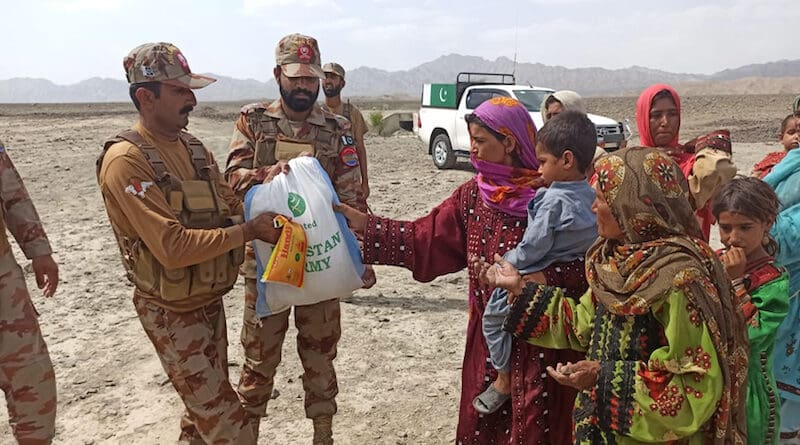
In April 2025, FC Balochistan South launched an important humanitarian and health care drive by holding 279 free medical camps in the most remote and underserved southern Balochistan areas. The FC Balochistan South is a federal paramilitary force in Pakistan, operating in the southwestern part of the province.
This joint venture translates not only the commitment of the FC on its part to mitigate the healthcare disparities in the area but also the overall vision of contributing to the wellbeing of communities that get left behind because of the lack of accessibility through geographical or infrastructural lapses. These camps, first intended to be 257, which were then finally expanded to become 279, were strategically located in incredibly remote and underdeveloped areas such as Dasht, Panjgur, Kharan, Mand, Mashkel, and Awaran, regions that have historically not had even fundaments of medical infrastructure and human resources.
During the month of April, the medical camps collectively treated over 10,000 residents, exactly 10,155 patients, offering them free and all-round medical attention. The program was implemented under the guidance of trained specialist doctors and highly qualified paramedical staff, so high-quality and professional healthcare services could be provided. This covered a whole range of medical services including routine check-ups, diagnostic lab tests and in-site treatment. Notably free medicines were also being given out to the patients which eliminated a major hindrance that usually deters people from such economically impoverished areas from attending to their needed treatments.
The inclusivity and specialized care were at the fore during the camps by the FC Balochistan South. The organisation was able to identify the unique and unmet healthcare needs of the women in conservative and remote areas and sent female gynaecologists from the Pakistan Army to work in such areas. This thoughtful measure did not only offer the much needed reproductive and maternal health care but also encouraged more women to come into the camps to seek care knowing that they would receive care in a culturally sensitized and respecting manner.
The particular attention was also given to healthcare needs of children and elderly – the two vulnerable groups which usually suffer most from absence of reliable healthcare. Pediatric services, vaccinations, nutritional consultation, and geriatric care were an important aspect of the activities offered at the camps. Via offering an all-inclusive medical package FC Balochistan South did not only cater for immediate health needs but ensured that it was used in the early diagnosis of chronic diseases and future health management strategies.
The initiative gained tremendous appreciation from the local populations in all the covered areas. People appreciated the services and singled out the bravery and compassion of the medical teams. Several community members, many of whom must travel long distances for basic medical attentions, noted that this was the first time they had received such extensive and expert attention right in their own villages. The logistical issue of moving medical personnel and supplies into such remote locations was enormous, yet the FC’s resolve and cooperation delivered the result.
The achievement of the April 2025 medical camps can reflect the effects of concentrated public service efforts in the deprived areas. It also deploys the necessity of the collaboration of military institutions and civil healthcare providers in the elimination of the chronic health service gaps in areas such as Balochistan. Although government healthcare systems are usually unable to extend their services in these regions due to inadequacy in resources and security, FC’s operational capacity was such to bring in much-needed services into the problem areas.
In addition, the initiative was a significant confidence-building measure between the state and the local communities. In areas where people commonly feel isolated form national structures and disregarded by the centralized ruling, undertakings of this nature contribute towards earning the trust and help send messages of inclusion and concern. These free medical camps not only provided cure to ailments but also narrowed the divide between remote villages and the rest of the nation, making people feel united and focused to a common goal.
The hope of the people for continuation of such efforts in future attest to the unmet healthcare needs of the region. It is a crier for prolonged and arranged as well as scalable interventions. Although the short terms medical camps are useful in filling up an urgent need in healthcare, long-term approaches should include permanent medical facilities, regular mobile clinics, education plans for local health workers, infrastructure development.
The April 2025 organization of 279 free medical camps by FC Balochistan South therefore remains a watershed moment as far as outreach in public health in Balochistan is concerned. It becomes an example of effective service delivery in challenging terrains and emphasizes the importance of mult-institutional cooperation that can help ease the inequalities in the provision of healthcare within the premises of Pakistan. Going forward, institutionalizing such ventures and continuing this momentum may lead to the more extensive and permanent enhancement of access and results in healthcare among the people of southern Balochistan.

Like what you read?
Please consider supporting Eurasia Review. Thank you for your consideration!
