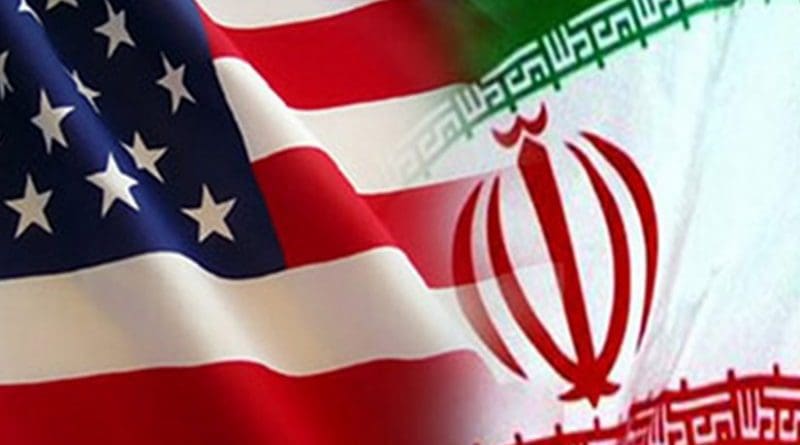
U.S.-Iran Peace Deal: Iran Stood Its Ground And Imposed Its Own Timeline And Conditions – Analysis
White smoke has emerged from the Middle East. Three and a half months after the United States and Israel launched a war against Iran, Washington and Tehran finally concluded a memorandum of understanding on Sunday, June 14, aimed at ending the conflict.
The agreement includes the reopening of the Strait of Hormuz, the lifting of the U.S. blockade against Iran, and the immediate cessation of military operations on all fronts, including in Lebanon. The agreement is largely favorable to Tehran. This will occur prior to 60 days of “technical talks” aimed at resolving other contentious issues, particularly the nuclear question and the lifting of sanctions demanded by Iran.
Iran in a Position of Strength
In theory, both sides had every interest in ending this war. Donald Trump wants to extricate himself from a conflict that has become politically costly and economically dangerous, especially with the U.S. midterm elections looming on the horizon. Iran, for its part, needs to regain access to international markets and loosen the stranglehold on its economy.
Although the exact terms of the memorandum of understanding set to be signed Friday, June 19, in Switzerland have not been officially disclosed, several details suggest Iran has the upper hand in these negotiations. For example, although Donald Trump claims to have secured the reopening of the Strait of Hormuz without tolls, Tehran has reportedly managed to control this strategic waterway. Before the war, the Strait of Hormuz accounted for 20% of global maritime oil traffic.
According to the Iranian news agency Fars, Tehran added a last-minute clause to the talks regarding the imposition of fees for managing maritime traffic through the Strait of Hormuz. While transit through the strait was previously uncontrolled, Tehran now expects to regulate it in collaboration with Oman, another country bordering the strait. On Friday, Iranian Foreign Minister Abbas Araghtchi warned that “management of the Strait of Hormuz would no longer be the same as before,” asserting that the waterway would remain a “deterrent” for Iran.
Tehran also succeeded in securing the “immediate and permanent cessation of military operations on all fronts, including in Lebanon,” in the words of Pakistani Prime Minister Shehbaz Sharif, who mediated the issue. This represents “a significant victory for Iran, as it was a red line the country had drawn.” Washington’s Israeli ally perceived this as a cold shower and warned that it would not withdraw its troops from Lebanon “despite all existing and future pressures.”
Finally, the nuclear issue, which Donald Trump had made the central focus of the war, will be addressed during the 60-day renegotiation phase that is now set to begin. Regarding this matter, anything is possible. The war has officially ended. The threat of U.S. military force in the Persian Gulf and the Arabian Sea will no longer exist during these negotiations, thus strengthening Iran’s bargaining power.
Trump made a huge mistake by tearing up the 2015 Iran nuclear deal, which placed the International Atomic Energy Agency (IAEA) at the heart of an intrusive monitoring mechanism for the nuclear program. Since then, there has been no clarity whatsoever. It’s easy to tear up an agreement, but what good does it do? Now, everything must be rebuilt.
War of Narratives
Unsurprisingly, this framework agreement has paved the way for a new war—a war of narratives—between Washington and Tehran. Iran boasted, “We have ‘imposed our divine and iron will on our humiliated American and Zionist enemies… The enemy has no choice but to accept defeat and surrender,” boasted the Iranian military leadership in a statement broadcast on state television.
Trump, for his part, once again cast himself as the savior, seizing the opportunity to disparage his predecessors. “For the first time, leaders in the region have found a president capable of helping them establish true peace,” the White House occupant declared on his Truth Social network… “Ships from around the world, start your engines. Let the oil flow freely!” he boasted.
The war began on a very optimistic note for the U.S., with the elimination of Supreme Leader Ali Khamenei. After the success in Venezuela, the United States believed that the operation in Iran would be relatively easy, but the reality turned out to be quite different. Since the April 7, 2026, ceasefire agreement, Donald Trump, who had bet on a short war, has made a series of contradictory statements, announcing an agreement would be signed some forty times without ever achieving it.
In Iran, this agreement will be viewed as a major victory. The country successfully resisted two nuclear powers, the United States and Israel, imposing its own timeline and conditions on them. In these negotiations, Tehran first demonstrated that military force could not impose anything. This is essential in terms of principles.
This memorandum of understanding restores Iran’s status as a regional power. The Gulf states, especially the United Arab Emirates, Kuwait, and Qatar, must now take this into account. This marks a seismic shift in Middle Eastern geopolitics. It is a personal defeat for Donald Trump, but more importantly, it is a defeat for the United States as a superpower, whose credibility in the region will be permanently damaged.