
Military Operations In Bajaur: TTP And ISKP Present A Joint Challenge To Pakistan – OpEd
Pakistan security forces have launched clearance operations in Bajaur district of Khyber Pakhtunkhwa after TTP terrorists attacked a militayr vehicle, causing the death of five people.
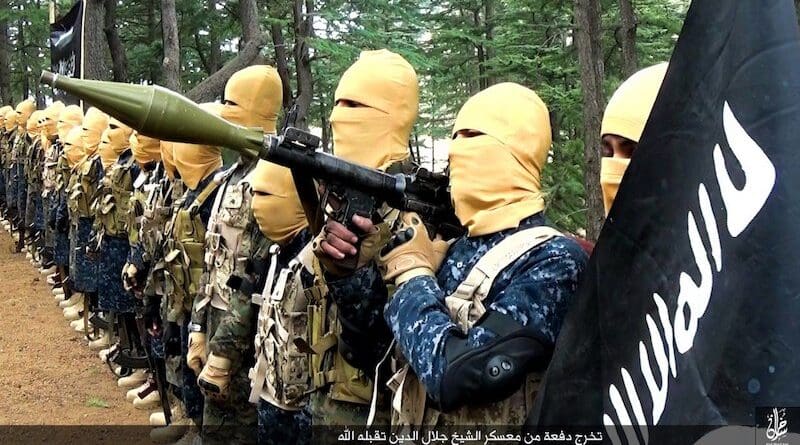
The terrorist attack in Bajaur, that claimed the lives of an assistant commissioner and four other government officials, is a grim reminder of the dangerous convergence between Tehrik-e-Taliban Pakistan (TTP) and the Islamic State Khorasan Province (ISKP). Both groups have claimed responsibility, albeit with different versions of the attack: TTP referred to it as a vehicle blast, while ISKP, through its Amaq media outlet, reported it as a motorcycle bomb. This discrepancy is not an accident; it is a deliberate demonstration of how these groups operate with strategic ambiguity, masking their coordination behind seemingly separate identities.
This tactic of shared ownership and contradictory narratives is emblematic of the deeper ideological and operational alliance between the two most violent groups threatening Pakistan’s internal security. While they wear different banners, their goals, methods, and sources of support are disturbingly similar. Their convergence is not accidental; it is a planned, strategic alignment that blurs the lines between their brands but amplifies the impact of their terror.
ISKP has previously targeted polio workers and tribal elders in South Waziristan—civilian symbols of Pakistani resilience and governance. TTP has long targeted security forces and soft targets across Khyber Pakhtunkhwa and Balochistan. The timing and locations of these attacks often overlap, hinting at a deeper coordination mechanism. They are not competing for territory; they are cooperating to destabilize it.
At the core of their alliance lies the Khawariji ideology—a distorted interpretation of Islam that has been rejected outright by the consensus of Pakistan’s religious scholars under the Paigham-e-Pakistan initiative. This radical doctrine is used by both TTP and ISKP to legitimize their acts of barbarism against innocent Muslims, civilians, and state officials. When terrorism wears the mask of faith, it becomes even more dangerous, corrupting religion to serve political violence.
The ideological connection is matched by historical ties. Hafiz Saeed Khan, ISKP’s founding leader, was formerly a senior commander within TTP. His transition from one group to another underscores the porous leadership boundaries and shared recruitment pipelines. This mobility of leadership further exposes the illusion that these groups are separate entities. In reality, they are two brands of the same menace, often sharing manpower, resources, and even safe havens.
What is even more telling is their strategic silence about one another’s actions. ISKP has frequently condemned the Afghan Taliban but remains silent on the TTP’s activities. Likewise, TTP never criticizes ISKP, despite its indiscriminate attacks on mosques, minorities, and public places. This mutual non-aggression pact is not coincidental. It signals a behind-the-scenes arrangement that allows both groups to coexist and execute distinct roles in their shared mission of chaos.
Their division of labor further strengthens this observation. ISKP often conducts high-profile, high-casualty attacks on religious gatherings and public institutions, while TTP targets security forces and government officials. This strategic role allocation enables TTP to maintain a facade of ideological purpose, while ISKP performs acts of pure terrorism to instill fear. The recent Bajaur attack is a case in point—one attack, two claims, but one aim: destabilize Pakistan.
This collaboration is not limited to ideology and tactics. Both TTP and ISKP function as proxies in a wider geopolitical agenda. Intelligence assessments and counterterrorism reports suggest deep involvement of hostile foreign agencies—notably the Indian Research and Analysis Wing (RAW) and elements of the Afghan General Directorate of Intelligence (GDI)—in financing, training, and directing these outfits. Their goal is to bleed Pakistan through a thousand cuts, destabilizing its governance, economy, and social cohesion.
Far from being autonomous warriors of faith, these terrorists are tools in a global proxy war. Their operations are bankrolled by foreign powers seeking to use militancy as a weapon of strategic pressure. The porous border with Afghanistan provides them sanctuary, and the weak enforcement of counterterrorism in Afghan territory makes it a breeding ground for future recruits.
The answer to this evolving threat lies in unified recognition and response. Pakistan must treat both TTP and ISKP as different manifestations of the same insurgent threat. Counterterrorism strategies should no longer compartmentalize them. Intelligence efforts must reflect their convergence, targeting shared networks and financing routes. Public messaging must also emphasize this unity of evil to build societal consensus.
TTP and ISKP are not enemies of each other. They are enemies of the people, enemies of peace, and enemies of Islam. They thrive on confusion and chaos. The sooner we understand that their differences are only superficial, the sooner we can strike at the heart of the coordinated threat they pose. These terrorists wear different masks, but their face is the same—and it must be unmasked and defeated with resolve and unity.

Like what you read?
Please consider supporting Eurasia Review. Thank you for your consideration!
