
Operation Baam: A Stark Warning That Demands A Cohesive National Response – OpEd
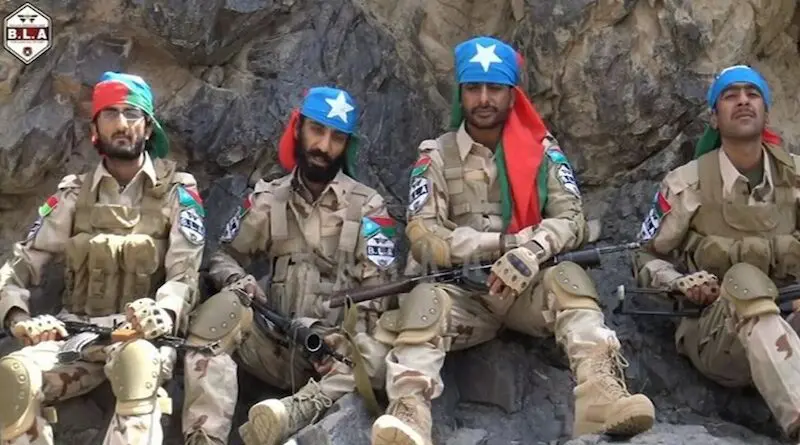
The launch of Operation Baam by the Balochistan Liberation Front (BLF) in July 2025 marks a dangerous and defining moment in Pakistan’s long-running battle against separatist insurgency in Balochistan.
Far from being a routine episode of sporadic militancy, Operation Baam is a well-coordinated, multi-target campaign aimed not only at disrupting state operations but also at undermining national security and territorial cohesion. The gravity of this escalation demands an urgent and united policy response from the federal and provincial governments.
Launched on July 9–10, the BLF’s Operation Baam struck with a level of synchronization and strategic planning rarely seen before in the province’s conflict history. In what the group describes as a demonstration of operational capacity, militants executed simultaneous attacks on military installations, police checkpoints, telecommunications infrastructure, and administrative offices across several districts, including Kech, Panjgur, Surab, and Kharan.
The implications of this operation are profound. Not only did these attacks disrupt essential communications and instill fear among local populations, but they also showcased an evolved insurgent strategy aimed at asserting control over swathes of territory while undermining the state’s reach. The BLF’s official statement, which boasts about the insurgency entering a “new phase,” is not mere propaganda—it signals a shift in both ambition and capability.
Pakistan’s internal security framework must now confront the uncomfortable reality that Baloch separatist groups are becoming more sophisticated, emboldened, and connected. Operation Baam is not an isolated incident but rather a manifestation of years of neglected governance, fragmented counterterrorism strategies, and political indifference toward Balochistan’s grievances. What was once a peripheral insurgency is now becoming a threat with national and possibly regional implications.
The Pakistani state’s immediate response—military patrols, roadblocks, and drone surveillance—is necessary but not sufficient. Tactical containment cannot substitute for strategic foresight. What Pakistan needs is a cohesive, multidimensional policy that addresses both the kinetic and non-kinetic aspects of the insurgency. This must include:
Enhanced Intelligence Coordination: The scale and coordination of Operation Baam suggest that the militants enjoyed high levels of logistical planning and local support. Intelligence agencies must improve inter-agency collaboration and invest in both human and technological intelligence to preempt such attacks in the future.
Security Infrastructure Overhaul: The destruction of telecom towers, which paralyzed both civilian and military communication, underscores a critical vulnerability. Balochistan’s security infrastructure must be modernized and hardened to withstand insurgent sabotage. Strategic communication hubs must be decentralized and protected with layered defenses.
Addressing Political Disenfranchisement: At the heart of Balochistan’s unrest lies a deeply rooted sense of alienation. The government must engage credible local leaders in dialogue, offering legitimate platforms for political expression and grievance redressal. Economic initiatives must be coupled with accountability to ensure that development is inclusive and not merely extractive.
Counter-Narrative and Media Strategy: The BLF’s ability to project its message through well-crafted statements and online platforms allows it to control the narrative. Pakistan must invest in effective counter-narratives, highlighting the human cost of insurgency and showcasing state-led development projects. Winning the information war is as important as winning the ground war.
Legal and Institutional Reforms: Counterterrorism efforts in Balochistan suffer from a lack of unified legal frameworks and jurisdictional clarity. Pakistan needs a robust institutional mechanism that can harmonize military, intelligence, and civilian operations under a single chain of command, governed by constitutional oversight.
While Balochistan’s insurgency has simmered for decades, the emergence of high-profile, coordinated campaigns like Operation Baam underscores the urgency of long-term solutions. Ignoring the scale and symbolism of this attack would be a grave miscalculation. The BLF’s messaging is clear: they aim to demonstrate not only resilience but strategic coherence. Pakistan must respond in kind.
Equally concerning is the federal government’s muted response. The absence of a formal statement acknowledging the scale of the attack signals a dangerous underestimation of the threat. Silence in the face of coordinated terrorism undermines public confidence and weakens morale within security forces on the frontlines.
Moreover, the international community is watching. An unchecked insurgency in Balochistan has implications beyond Pakistan’s borders. It threatens regional connectivity projects like CPEC, destabilizes investment climates, and opens opportunities for hostile intelligence agencies to exploit local grievances. Operation Baam, therefore, is not just a national issue; it is a regional security concern.
Pakistan must shed the ad-hocism that has plagued its Balochistan policy for decades. A reactive security-first approach will not suffice. The time has come for Islamabad to demonstrate political will, institutional coherence, and strategic depth in dealing with the insurgency. Failure to do so risks allowing militant groups to shape the narrative, control the battlefield, and redefine the limits of Pakistan’s sovereign control.

Like what you read?
Please consider supporting Eurasia Review. Thank you for your consideration!
