
The Climate Disaster: Anomalies Of Global Concern – OpEd
As the 80th session of the United Nations General Assembly (UNGA) opens under the theme “Better together: 80 years and more for peace, development and human rights”, the rhetoric of shared responsibility will once again dominate the global stage. Yet, for Pakistan, the session is less about lofty aspirations and more about survival. Climate change, a crisis Pakistan did not cause, has become the single greatest threat to its security, stability, and development. Unless the international community matches words with action, the UNGA’s promises will remain hollow.
Pakistan contributes less than 1% of global greenhouse gas emissions, yet it consistently ranks among the ten most climate-vulnerable countries in the world. This stark asymmetry captures the essence of climate injustice. The 2022 floods remain etched in national memory: one-third of the country submerged, 33 million people affected, 2 million homes destroyed, 4.4 million acres of crops ruined, 1,700 lives lost, and economic damages estimated at $30 billion. The scale was not a natural disaster alone but the compounded effect of climate change supercharging monsoons, glacial melt, and extreme weather.
The crisis has not receded. In 2025, heavier-than-normal monsoon rains and sudden cloudburst floods have already killed over 800 people since late June. Scientists affirm that climate change is altering monsoon patterns in South Asia, raising fears of a repeat of the devastation of 2022. Alongside floods, Pakistan endures record-breaking heatwaves exceeding 50°C, leaving vulnerable communities grappling with dehydration, heatstroke, and mortality.
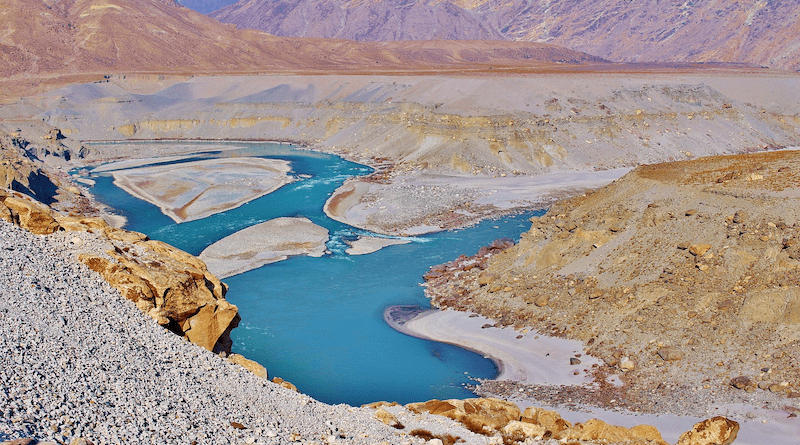
Beyond monsoons, another silent catastrophe looms. Pakistan is home to over 7,000 glaciers, the largest concentration outside the poles. These glaciers feed the Indus Basin — the lifeline for agriculture, food security, and drinking water for tens of millions. Accelerated glacial melting poses a dual threat: in the short term, flash floods devastate valleys and displace communities; in the long term, diminished glacial reserves threaten water scarcity for generations. Pakistan is thus caught in a vicious cycle — too much water today, too little tomorrow.
What makes Pakistan’s predicament especially tragic is the profound injustice at its core. Countries responsible for the bulk of global emissions continue to debate incremental targets and distant net-zero pledges, while frontline states like Pakistan pay the price in lives, livelihoods, and lost development. This is not charity, nor a matter of benevolence. It is a question of climate reparations and global justice.
When Pakistan calls for dedicated international funding for adaptation, resilience, and loss and damage, it is not asking for aid. It is demanding that the polluters who caused this crisis shoulder their fair share of responsibility. Anything less makes a mockery of the UNGA’s theme of “better together.”
The credibility of multilateralism is on trial. UN forums have long acknowledged the principle of “common but differentiated responsibilities.” Yet, implementation lags. The much-publicized Loss and Damage Fund, pledged at COP27, remains underfunded and bogged down in procedural delays. Pakistan’s experience demonstrates that climate injustice cannot be solved by promises that remain on paper.
Shared responsibility must translate into:
- Predictable climate financing, not ad-hoc pledges.
- Debt restructuring and relief for climate-vulnerable countries, so they can invest in resilience rather than debt servicing.
- Technology transfer to enable climate-smart agriculture, renewable energy, and disaster forecasting.
- Regional cooperation in South Asia for early warning systems, water management, and cross-border climate action.
Pakistan’s plight is not unique but emblematic. From island states sinking under rising seas to African nations devastated by drought, climate injustice is a global story. But Pakistan offers a vivid test case of whether the world is serious about the principles it proclaims. If a country that contributes almost nothing to global warming is left to drown under its effects, then the UN’s promise of “peace, development and human rights” rings hollow.
As world leaders gather at the 80th UNGA, Pakistan will not just be speaking for itself but for all climate-vulnerable nations whose voices often go unheard. The demand is simple: climate action must reflect justice, not just ambition. For Pakistan, survival is at stake. For the international community, credibility is on the line. The question is not whether we can be “better together.” The question is whether those most responsible are willing to bear their share of the burden.

Like what you read?
Please consider supporting Eurasia Review. Thank you for your consideration!
