
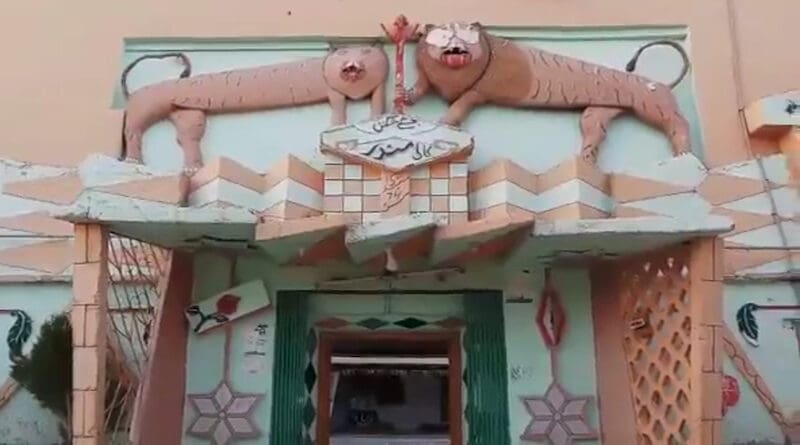
Balochistan’s Kali Mata Festival: A Living Portrait Of Coexistence – OpEd
In the rugged landscapes of Balochistan, where deserts meet the sea, faith finds its most vibrant expression.
Every October, the Kali Mata Festival transforms a modest temple into a hub of devotion, culture and unity. Thousands of Hindus from across Pakistan and increasingly from abroad gather to celebrate their centuries-old tradition. In a region often portrayed through the lens of hardship, this festival offers a strikingly different story: one of inclusion, resilience and shared heritage.
The upcoming celebration at the Kali Mata Temple on October 20 captures more than devotion alone. It symbolizes the spirit of coexistence that defines Pakistan’s social mosaic, especially in Balochistan, where diverse communities have long shared cultural and spiritual bonds. The temple, draped in color and echoing with chants, becomes a space where devotion transcends borders and faith unites hearts.
What makes the Kali Mata Festival remarkable is not just the religious fervor but the social fabric it strengthens. Muslims from nearby towns assist in the arrangements, traders from Quetta and Karachi set up stalls, and visitors from India and the Gulf join in to witness the rituals. It is a living example of Pakistan’s inclusive traditions; ones that are often overshadowed by conflict-focused narratives.
Pakistan, like many nations, has faced criticism over the treatment of religious minorities. Some incidents have indeed raised concern, but they are not the defining feature of its society. Much like Europe’s own struggles with migration or the Gulf’s journey towards expanding interfaith dialogue, Pakistan’s experience shows a society in transition – seeking balance between faith, identity and modernity. The exceptions that do occur are reminders of challenges faced worldwide, not proof of institutional intolerance.
The government’s increasing support for the Kali Mata Festival represents an important shift in how Pakistan views its diverse spiritual heritage. By incorporating such events into its broader framework for religious tourism, Islamabad is promoting a narrative of coexistence that aligns well with the global call for interfaith respect. The restoration of the Hinglaj Mata Temple in Lasbela, the opening of the Kartarpur Corridor for Sikh pilgrims and the preservation of Christian and Buddhist sites all reflect a growing recognition that Pakistan’s cultural strength lies in its diversity.
This approach resonates strongly with audiences in the Gulf and Europe. In recent years, the UAE, Saudi Arabia and Qatar have made significant efforts to foster interreligious harmony, while European countries have deepened their commitment to cultural pluralism. Pakistan’s embrace of its minority heritage, therefore, offers a meaningful point of connection. It shows how Muslim-majority societies can champion diversity without compromising their core identity.
The rituals at the Kali Mata Festival, like lighting lamps, offering prayers and sharing communal meals, are more than acts of worship. They are expressions of belonging that connect modern Pakistanis with centuries-old South Asian traditions. This continuity of culture challenges narrow portrayals of the country and presents a softer, more nuanced image in which spirituality, art and community coexist.
For Pakistan, such events carry both symbolic and strategic importance. They help foster national unity, attract regional tourism and strengthen people-to-people ties across borders. For international observers, the message is equally clear: Pakistan is more than its political headlines. It is a nation with a plural identity, striving to reclaim the narrative of tolerance that has long defined its civilization.
In the end, the Kali Mata Festival is not just a Hindu celebration, it is a Pakistani story. A story of ordinary people preserving extraordinary traditions of communities finding strength in coexistence and of a country rediscovering its inclusive soul.
In Balochistan’s temple courtyards, as lamps flicker against the desert night, one can see the truest reflection of Pakistan: a land where faith is personal but harmony is shared, where diversity is not a weakness but a quiet, enduring strength.

Like what you read?
Please consider supporting Eurasia Review. Thank you for your consideration!
