
Beyond The Borderlines: The Politics Of Misdirection In South Asia’s Terror Matrix – OpEd
The mountains of South Asia have long echoed with the whispers of unfinished wars and fractured loyalties. Amidst these rugged landscapes, where borders blur into the wind and ideologies intertwine like tangled vines, Pakistan finds itself confronting not just armed groups, but a war of narratives, one that extends beyond its terrain into the realm of perception and propaganda.
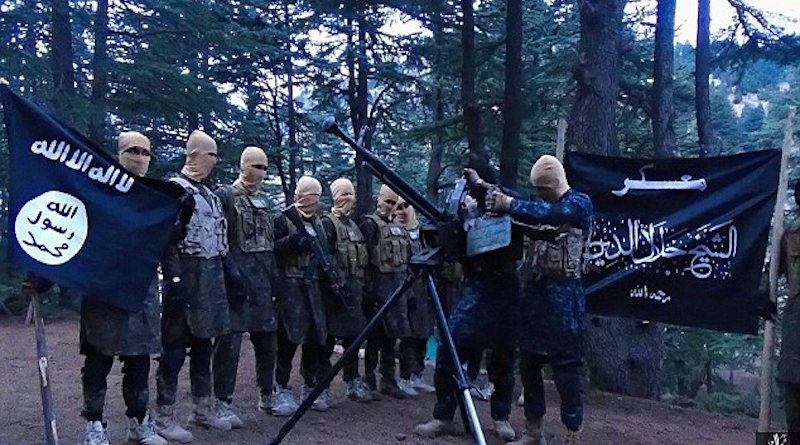
The recent rebuttal issued by the Islamic State Pakistan Province (ISPP) against Afghan-linked media assertions has once again illuminated the complex undercurrents shaping terrorism and politics in the region. In denying Al-Mirsaad Media’s claim that its fighters were killed in Pakistani security operations, and admitting instead that they perished in clashes with Baloch-origin terrorists in Mastung, ISPP inadvertently exposed a crucial truth: terrorism in this region is not a self-contained flame, but a wildfire fed by cross-border winds.
This confrontation, terrorists fighting terrorists, unmasks the layered deceit behind the narrative crafted by certain Afghan intelligence-linked outlets. By attempting to project Pakistan as a hub of ISKP’s operations, these sources have sought to deflect attention from the real geography of terror: Afghanistan’s own ungoverned eastern provinces. The ISPP’s statement, paradoxically, dismantled the very fiction that its adversaries constructed, and in doing so, revealed the fractures within militant ecosystems operating from Afghan soil. Mastung was not merely a battleground; it was a metaphor for the wider regional disorder, a theatre where the puppets of proxy warfare cut each other’s strings.
The Afghan intelligence apparatus, through networks such as Al-Mirsaad, appears intent on exporting blame as a strategic instrument. These narratives are not accidental misjudgments; they are calibrated moves in an information war designed to dilute scrutiny of Afghanistan’s failure to contain the Islamic State Khorasan Province (ISKP). Reports from the United Nations Security Council from 2023 to 2025 consistently reaffirm that ISKP’s leadership, training camps, and logistical bases remain entrenched within Afghanistan’s Nangarhar, Kunar, and Paktika provinces. Yet, despite this clarity, the Afghan establishment’s disinformation strategy persists, portraying Pakistan as the epicenter of instability while its own territory incubates the threat.
Patterns within intelligence assessments suggest that ISKP maintains safe houses, facilitators, and funding corridors across Afghanistan’s porous eastern belt. Such an ecosystem thrives not because of Pakistan’s complicity, but because of Kabul’s inability, or unwillingness, to dismantle it. The misdirection, therefore, is deliberate: a magician’s trick performed for the international audience to mask internal dysfunction. It is far easier to conjure an external enemy than to confront the specter within one’s own house.
The situation has grown even more volatile with recent cross-border provocations. Afghan forces, under the guise of targeting supposed “ISKP hideouts” near the Kunar and Nuristan districts, have launched unprovoked fire into Pakistani territory. The irony is striking: they claim to attack militants who, by all credible accounts, operate from within their own borders. Multiple UN assessments have documented the presence of up to 4,000 Daesh fighters inside Afghanistan, not Pakistan, confirming where the real threat nests. Yet these manufactured skirmishes serve another purpose: to deflect domestic frustration, consolidate internal power through external hostility, and curry favor with regional patrons. It is no coincidence that such escalations coincide with high-profile Afghan diplomatic overtures in New Delhi. The choreography is too precise, the timing too deliberate. The message is not one of defiance but of obedience, to the unspoken alignments that shape the geopolitics of South Asia.
The regional web grows denser when the role of India enters the frame. New Delhi’s strategic courtship of Kabul is not merely diplomatic theater but part of a broader effort to encircle Pakistan within a ring of instability. The synchrony between Afghan provocations and Indian narratives amplifying anti-Pakistan rhetoric suggests a convergence of interests that benefits from Pakistan’s distraction and discredit. The pattern of proxy engagement, through support to dissident Baloch factions, informational manipulation, and tacit endorsement of cross-border hostility, has been noted by global observers. The United States and the United Nations have both designated the Balochistan Liberation Army (BLA) and its Majeed Brigade as terrorist entities, validating Pakistan’s long-standing assertion that such groups are externally abetted instruments masquerading as nationalist movements. Terrorism, in this context, becomes the currency of geopolitics, a tool wielded by those who wish to bleed Pakistan without bearing the stain of open confrontation.
Amid this orchestrated turbulence, Pakistan’s posture remains measured and principled. Islamabad has neither sought escalation nor indulged in reciprocal rhetoric. Instead, it continues to advocate dialogue and regional cooperation as the only sustainable path toward peace. The statements from figures like Zalmay Khalilzad, which attempt to portray Pakistan as an aggressor or enabler of ISKP, collapse under the weight of verified facts and Pakistan’s own record of counterterrorism achievements. Through intelligence-based operations and relentless security initiatives, Pakistan has neutralized hundreds of militants and dismantled numerous terror cells that threatened not just its sovereignty but regional stability itself.
The true challenge, however, lies across the border, within Afghanistan’s ungoverned spaces where the Tehrik-e-Taliban Pakistan (TTP) and ISKP continue to operate freely, launching attacks that martyr Pakistani soldiers and civilians alike. Islamabad has consistently shared evidence with Kabul and international partners, seeking a cooperative framework rather than a confrontation. Yet, when dialogue is drowned out by propaganda, and sincerity is met with hostility, the calculus of peace becomes precarious.
Still, Pakistan stands by its commitment to diplomacy, not as a sign of weakness, but as an assertion of moral strength. Its patience should not be mistaken for passivity. Like a fortress battered by storms yet unyielding in its foundations, Pakistan will defend its borders, protect its people, and expose the proxies that threaten its peace. The path forward lies not in blame, but in truth; not in orchestrated hostility, but in structured dialogue. Only when Kabul acknowledges the sanctuaries that lie within its own mountains can both nations hope to silence the echoes of guns and let the winds of their shared valleys carry a different sound, the quiet promise of stability restored.

Like what you read?
Please consider supporting Eurasia Review. Thank you for your consideration!
