
Pakistan–Afghanistan Border Clash: Through The Lens Of Hans J. Morgenthau’s Perspective – OpEd
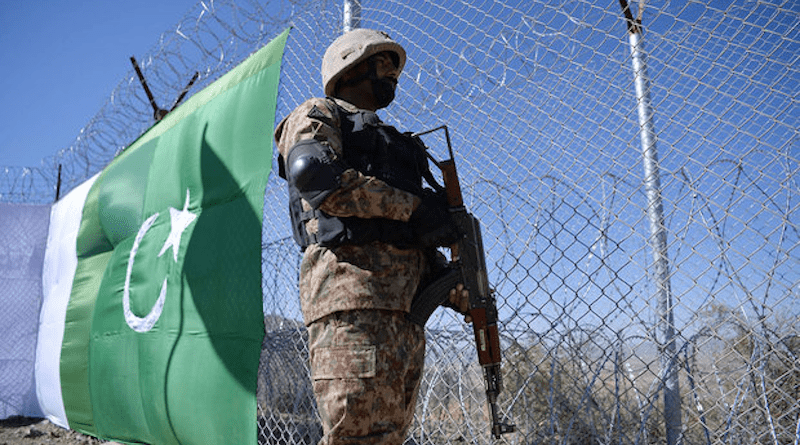
The recent border clash between the security forces of Pakistan and Afghanistan once again pointed to the fragile state of relations between the two neighbours. There were reports of casualties on both sides; the interim authorities in Afghanistan claimed to have taken Pakistani soldiers captive and accused Pakistan of violations of the border. The response of the armed forces of Pakistan, however, was one of poise and professionalism and adherence to the Standard Operating Procedures (SOPs) which govern conduct during hostilities.
The Afghan claims of the desecration of the corpses of soldiers widely circulated in social media were condemned and dismissed by regional observers. The Pakistani military dismissed these claims and suggested that it was following the rules of international humanitarian law. Historically, with regard to the rules of war in line with adhering to the principles of honourable conduct, Pakistan has evinced a steady commitment to respecting the dignity of both its own element and of enemy combatants, as is reflected in its adherence to the Geneva Conventions and its operational record with other engagements in prior conflicts.
In terms of a Realist perspective, this circumstance reflects the classical dynamics of power, security and survival which defines the actions of states in an anarchic international state system. Realism has been articulated by writers such as Hans Morgenthau and Kenneth Waltz, and possesses a point of view which indicates that at the absence of global authority, states have to evince their own capacity to ensure survival. This theoretical perspective assists in understanding why Pakistan, after exhibiting self-control, then acquires a focus once its own sovereignty and the dignified sanctity of its own personnel was threatened.
For hours the Pakistani forces held their defensive position under continued provocation from the other side of the border, and this was not an indication of any weakness but rather discipline still existing in our institutions and respect for international boundaries, but when the breaking of humanity and professional touch on the part of the Afghans by their violations and support of the militia on Afghan soil came about, the Pakistan Government decided to put forth a vigorous opposition. The sending forth of the MI-17 HELICOPTERS of the Pakistan Army Aviation to strike the militia safe haven in Afghanistan was an indication of all of these things, along with their capabilities. This move by the Pakistan Army Aviation was against their compounds whose occupants go under the name of foreign terrorists, who have long used Afghan soil to strike a blow at Pakistan’s western border. Subsequently, reports were to the effect that the IAG were seeking a cease-fire through underhand channels which would indicate that they were unable to stand a long fight with the Pakistan Military. This was in keeping with one of the fundamental principles of Realism: all states act rationally when the cost of the war outweighs the potential gains. The interim authorities of Afghanistan, with no international position and struggling to obtain internal legitimacy, realized that it would be impossible to obtain their long term aims to increase hostilities against a conventionally superior power such as Pakistan.
In another theater of its conflict, the information domain that is, the theater of hybrid warfare and fifth-generation warfare (5GW); the social media of India and Afghanistan were deluged by disinformation old clips and doctored photographs of the Pakistani armed forces as aggressors. The purpose of the campaign was to sully the reputation of Pakistan abroad and create dissatisfaction at home. Pakistan’s institutional mechanisms for combating disinformation, such as fact-check organizations and independent journalism, largely neutralized these narratives. Through communication based on evidence, Pakistan was able to expose multiple false pieces of information that had large currency at one time, reputation being of great import to both its national and international credibility.
This information war is an important manifestation of the new nature of diplomacy: wars are not only fought on battlefields, but on the territory of narratives, perceptions and digital warfare. The theory of Realism is congruent with this evolution, because the power struggle and the struggle for survival expands from military might to informational control and reputation. The response of Pakistan, delivered in a voice of calm, factual rebuttal, and not of emotional responses, reinforced its position as a responsible state actor interested in stability and truth.
Traditionally, Pakistan has adopted a defensive strategy, using the military only when provoked. From the Operation Zarb-e-Azb against the terrorists of North Waziristan to its measured response on the occasion of the Balakot crisis and Marka e Haq, Pakistan’s actions have indicated strategic restraint in a calculated way, followed by a precise proportionate reaction. This is in line with the Realist concept of “defensive realism,” which suggests that states pursue enough power to guarantee their security, but shy away from unnecessary expansion or aggression. However, when compelled to action, Pakistan’s swift, professional response has repeatedly astonished enemies and provided credibility to its deterrence.
The clash on the Pakistan-Afghan border reminds one that stability in South Asia is still vulnerable to misperceptions and provocations. For the Afghan state, the path to legitimacy and recognition lies in responsible state behaviour, in respecting borders, and in suppressing non-state actors who operate actively within its borders. For Pakistan, the challenge lies in maintaining strategic patience, while it ensures that its sovereignty and citizens are safeguarded against the cross-border threats they face.
After all, Realism provides a convincing explanation of both restraint and action. Pakistan’s conduct reflects the behaviour of a state not governed by emotion, but by calculation, professionalism and national interest. The clash, if regrettable, reaffirmed the fact that strength consists not only in fire power but in discipline, restraint and moral authority to act only when compelled to do so. In a region cursed with instability and mistrust, Pakistan’s professional military conduct is represented as a stabilising force, pointing out that it is even in conflict that principles can provide a counter to provocation.

Like what you read?
Please consider supporting Eurasia Review. Thank you for your consideration!
