
From Semiconductors To UPI: Deepening India–Malaysia Tech Ties – OpEd
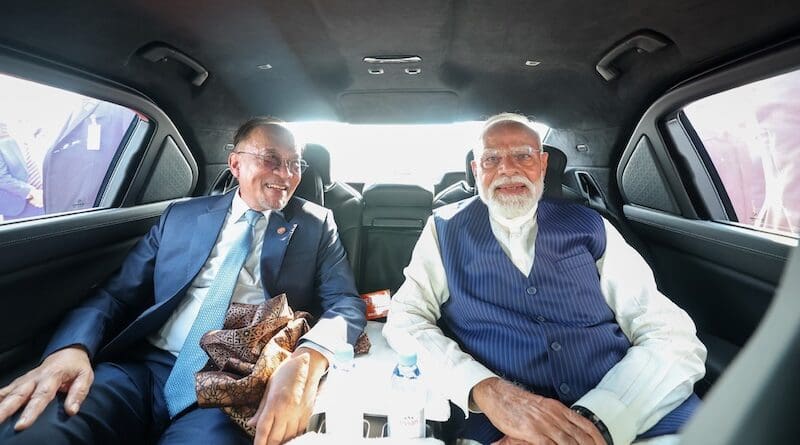
The grand optics of PM Modi’s visit to Malaysia painted a picture of a long-standing relationship steeped in shared heritage, cultural ties, and an association built on personal trust. Yet behind the bonhomie, the Bharatanatyam spectacle and nostalgia, a strong partnership is being systematically rebuilt on digital foundations.
While Malaysia has over five decades of semiconductor expertise handling 30% of global chip testing and packaging, India is racing to build a $110 billion semiconductor industry by 2030. Both nations have complementary capabilities, and what they’re forging could be Asia’s most strategic technology alliance.
This visit is expected to further solidify bilateral cooperation in a wide spectrum of areas from security to semiconductors. A calculated convergence of complementary strengths, these MoUs deserve analysis beyond the ceremonial fanfare that this diplomatic visit has brought. I feel the tech and digital collaboration is the real story worth examining, as it is the renewed investment in technology that will lay the stronger foundations that would stand the test of time.
Today, India is Malaysia’s 3rd largest ASEAN trading partner, and Malaysia is India’s 16th largest global partner. If these 2026 signed MoUs are well implemented, I believe that India-Malaysia bilateral relations could see transformative growth across trade, technology, and digital cooperation through 2046.
The relationship has deep roots. The 2011 economic framework, the Malaysia-India Comprehensive Economic Cooperation Agreement (MICECA), provided a framework for bilateral trade. During PM Modi’s 2015 visit to Malaysia, both countries’ bilateral relations were elevated to Enhanced Strategic Partnership. Joint Working Groups on Science and Technology and Information Technology were established well before the recent elevation to Comprehensive Strategic Partnership (CSP). PM Anwar’s visit to India in 2024 saw further strengthening of ties to CSP. Thanks to various initiatives, the bilateral trade between the two nations has now blossomed from $12.5 billion in 2011 to over $20 billion today.
Digital Public Infrastructure (DPI) has massive potential. India has already showcased its success through the India Stack biometric identification system (Aadhaar), Unified Payments Interface (UPI), DigiLocker, and other e-governance initiatives. Malaysia has shown interest in learning from India’s DPI success. In addition, digital B2B partnerships, quantum computing, cloud computing, digital capacity building, emerging technologies like 5G, and Internet of Things could further accelerate collaboration in the digital space.
Based on my analysis, if channels such as semiconductor joint ventures and supply chain integration, local currency settlements, and growing people-to-people connectivity go as planned, trade could potentially grow as much as 9x in the next 20 years. India’s global share of the semiconductor consumption market is 6.5% in 2025, while Malaysia’s semiconductor ecosystem is robust. Just in the next 5 years, Malaysian expertise to Indian fabs could bring $15 to $20 billion in economic impact. By 2046, once full ecosystem integration happens, there are projections that this number could swell to as much as $200 billion.
Malaysia’s adoption of the DPI model may remain at foundational level till 2028. However, as innovation and expansion happen in this field, India-Malaysia digital standards could become the ASEAN norm, bringing joint technology exports to the Global South. Assuming projected adoption rates and market expansion, the economic impact of this could be well in the range of another $100 billion over the next two decades.
These projections based on my analysis are ambitious. Significant hurdles must be overcome for these numbers to fructify. There is need for sustained investment in Research and Development and regulatory harmonization across ASEAN markets. To protect innovation and enable smooth transfer of knowledge, intellectual property frameworks need to be strengthened. The initiatives announced during PM Modi’s visit must quickly transition from MoUs to bankable projects that have clear timelines, funding commitments, as well as performance metrics.
History will judge PM Modi’s visit not by the festivities but by chips that get built or fabs that get manufactured. Hence the real test lies ahead. If both nations could sustain political will and translate diplomatic promises into commercial reality, the partnership has the potential to reshape Asia’s technology.

Like what you read?
Please consider supporting Eurasia Review. Thank you for your consideration!
