
Footsteps Of New Order: Tariff War, China’s Strategic Response, And Redefinition Of Global Economic System – OpEd
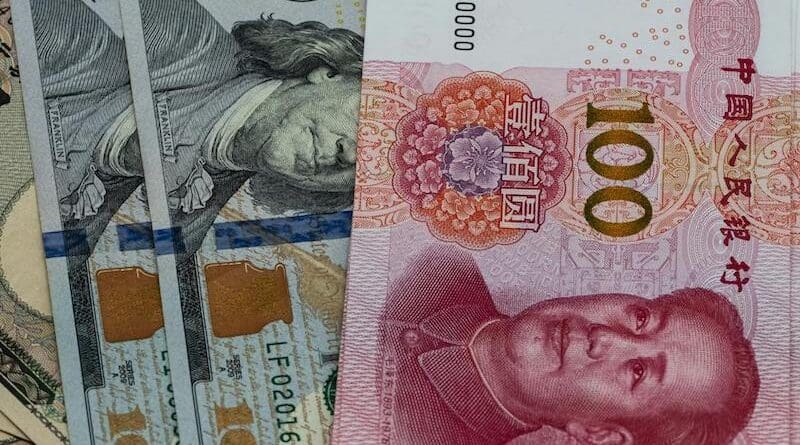
In recent years, the rivalry between China and the United States has become one of the defining features of the international order. This competition has expanded beyond military or geopolitical realms and has now penetrated the core of the global economy. Tools such as trade tariffs have emerged as one of its most prominent expressions.
With Donald Trump’s return to the U.S. political stage, the tariff war between Washington and Beijing has reemerged as a central axis of geo-economic tensions. The imposition of severe tariffs on Chinese goods not only continues the policies of Trump’s first term but is now being pursued with greater clarity and strategic structure. China, in turn, has responded with a series of retaliatory and structural measures, including tariffs on selected American products—signaling its firm resolve to counter this pressure. Meanwhile, the European Union is attempting to strike a fragile yet crucial balance between its strategic commitments to the United States and its economic interests in China.
Tariffs may appear to be purely economic tools, but in practice they have become among the most effective levers of geostrategic competition. This rivalry is shaping the future of the international order and introducing a new form of bipolarization in the global economy. The central question is whether the U.S.–China tariff war is merely a tactical tool in a power struggle or a sign of transition toward a more multipolar and complex global order.
The Tariff War as a Strategic Tool
Contrary to earlier assumptions that tariffs are immediate and purely economic reactions, it has now become clear that they have evolved into a strategic instrument of U.S. foreign policy. The goal is not merely to correct trade imbalances but to weaken China’s competitive edge in key sectors such as advanced technology, global supply chains, and international standards. By imposing tariffs on Chinese products, the United States exerts direct economic pressure and simultaneously encourages multinational corporations to reconsider their supply chains and reduce their dependence on China.
Trump’s economic team, led by conservative economist Stephen Miran, believes that the global trade system of past decades has worked against U.S. interests and favored China and other emerging powers. From this perspective, tariffs are a tool to restore “strategic balance” in the global economic structure—transforming the U.S. from a mere architect of the global order to a demanding actor seeking to reclaim its relative advantages.
China, however, has not remained passive. Beijing has countered by adopting protective policies, providing substantial subsidies to domestic industries, and encouraging consumption of locally produced goods to neutralize the impact of tariffs. In parallel, China is expanding its economic relations with the Global South and the European Union to reduce its dependence on the American market. The use of tariffs thus reflects a form of economic deterrence logic unique to the rivalry between major powers.
China: From Sanction Target to Architect of an Alternative Order
In the long term, China has sought to turn American pressure into an opportunity to reshape its international role. Beijing’s overarching strategy involves moving from a reactive stance to becoming an active player in redefining the global order. Projects such as the Belt and Road Initiative, the signing of free trade agreements with Asian, African, and even some European countries, and an increasingly assertive role in institutions like the Asian Infrastructure Investment Bank (AIIB), all reflect China’s effort to build parallel institutions and alternative trade routes.
From China’s perspective, the tariff war is not just an economic dispute but a manifestation of America’s desire to maintain its hegemonic position in the global system. In contrast, China is promoting a multipolar world order and seeking to lay the foundations for a new system in which American dominance is weakened and the rules of the game are redefined.
Europe: A Player Caught Between Two Pressures
The European Union faces a complex dilemma. On one hand, the United States remains Europe’s key security and strategic partner, and any tension in transatlantic relations could have significant geopolitical consequences. On the other hand, China is one of Europe’s most important trading partners, and major European economies such as Germany are deeply intertwined with the Chinese market.
At the same time, Europe has not been immune to Trump’s tariff policies and has been subject to similar threats—such as tariffs on European cars and French agricultural products—which have fueled mistrust toward Washington’s approach.
Europe’s response so far has been largely cautious: attempting to maintain balance, advancing trade negotiations with China based on mutual interests, and preserving a degree of coordination with the U.S. on security and technological matters. However, if the current situation persists, the EU may eventually be forced to choose: either reinforce the transatlantic alliance at the expense of economic costs or move toward greater geo-economic independence, even at the risk of weakening strategic cohesion with the U.S.
The Tariff War and the Global Order
At a broader level, the U.S.–China tariff war should be seen as a symptom of the crisis afflicting the post–World War II liberal order. This order—built on international institutions, free trade, and undisputed American leadership—is now facing fundamental challenges. Tariffs, once considered illegitimate and contrary to the principles of the World Trade Organization, have become a standard policy tool for great powers.
The rise of protectionist policies, the shift in priorities from globalization to localized production, and declining mutual trust among major powers are all signs of a conceptual and practical reordering of the global system. Mid-sized actors such as Europe, India, Japan, and even some Gulf states now face new opportunities for agency, yet they are simultaneously under pressure to align with one of the competing blocs.
Conclusion
Amid structural competition between China and the United States, current developments must be understood as the prelude to the formation of a new global order. This emerging order is not based on traditional bipolarity but on a multilayered, fluid, and diverse architecture. The U.S. is redefining its role as a conditional power. China is striving to play a central role in an alternative system. Europe finds itself at a crossroads.
The tariff war marks the beginning of a process to redraw the global order—an order in which previous rules are losing legitimacy and states are striving to secure their positions. The world is on the verge of a major reshaping, and tariffs are the sound of its approaching footsteps.

Like what you read?
Please consider supporting Eurasia Review. Thank you for your consideration!
