
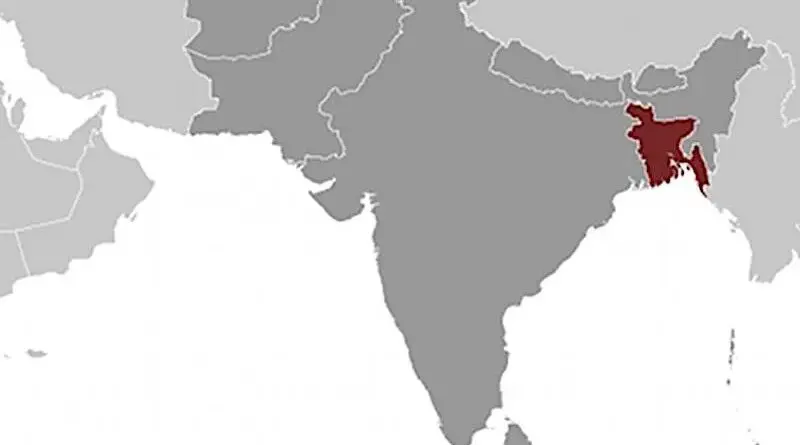
Bangladesh Court Lets Off Convicts Charged With Weapons Smuggling – OpEd
The Bangladesh High Court let off a former minister and five officials convicted for illegally attempting to import a huge consignment of weapons meant for arming Islamist radicals in the country and separatist rebels in neighbouring India.
The court also reduced the sentence for Indian separatist leader Paresh Barua to life sentence from the death sentence he had been awarded earlier.
The high court acquitted former state minister for home affairs Lutfozzaman Babar of the Bangladesh Nationalist Party ( BNP)nd five others, who were sentenced to death, for trying to bring in ten truckloads of automatic weapons and assorted ammunition in April 2004 through the port of Chittagong.
The five others, who were also accquited, are former director of Directorate General of Forces Intelligence (DGFI) Maj Gen (retd) Rezzakul Haider Chowdhury, ex-CUFL managing director Mohsin Talukder, former CUFL general manager (admin) Enamul Hoque, former additional secretary of industries ministry Nurul Amin and Jamaat leader Motiur Rahman Nizami, who was Industry minister at that time.
Nizami was later executed in May, 2016 for crimes against humanity committed during the Liberation War in 1971 when his party, Jamaat-e-Islami sided with the Pakistan army in a genocidal campaign against the Bengalis seeking independence.
The high court also commuted the death sentence of Paresh Barua , military wing chief of the United Liberation Front of Asom ( ULFA) to life imprisonment. The ULFA , formed in 1979, seeks independence for India’s northeastern states of Assam.
The two-member High Court bench led by Justice Mostafa Zaman Islam pronounced the verdict.
Earlier on December 11, Babar sought acquittal in the case.
On January 30, 2014, the Chittagong Metropolitan Special Tribunal-1 handed down the death penalty to 14 people, including Motiur Rahman Nizami and Lutfozzaman Babar, for smuggling 10 truckloads of firearms.
The Awami League government at that time maintained that the BNP-JAMAAT coalition government in 2004 had misused office to smuggle in this huge weapons consignment to arm Islamist radicals in Bangladesh to eliminate secular political elements and also Northeast Indian separatists to create disturbance in neighbouring India.
Within few months of this massive arms haul in Chittagong, an Awami League rally in Dhaka addressed by senior leaders was targeted by assailants armed with Pakistan-made Argus grenades that killed dozens.
Party supremo and later Prime Minister Sheikh Hasina barely escaped the explosions.
After Hasina’s ouster following student protests in August this year, the interim government of Mohammed Yunus have moved rapidly to effect huge changes in the judiciary and then cases against Hasina’s political opponents have been dropped. This includes those convicted of trying to kill her in the August 2004 grenade attack .

Like what you read?
Please consider supporting Eurasia Review. Thank you for your consideration!
