
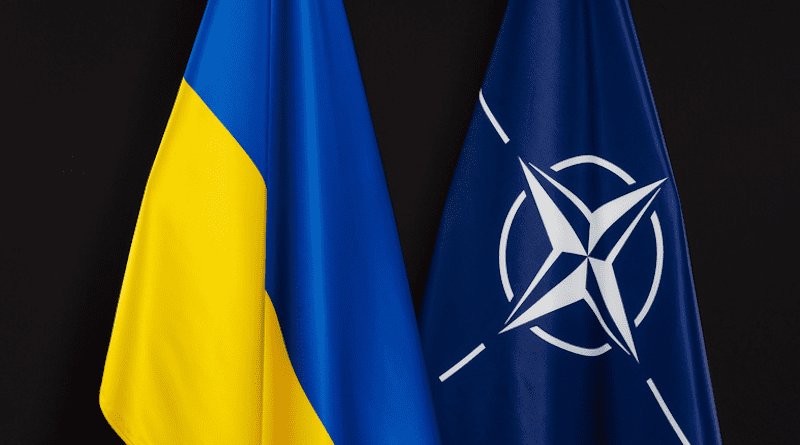
NATO’s Stance: Ukraine Conflict – OpEd
NATO and Russia relations have been strained for decades, especially since the Cold War. The conflict in Ukraine War has further complicated these relations. NATO condemns Russia’s unprovoked invasion of Ukraine in the strongest possible terms.
NATO and Allies led by the US continue to provide Ukraine with unprecedented levels of support in the form of weapons, training, and sanctions against Russia. Russia, in turn, has blamed NATO for its actions as direct threats to its security and strengthening its military posturing and President Putin has repeatedly been rhetoric on the issue.
The complex situation now is a geopolitical reality where differing priorities, alliances, and leadership styles will shape the global discourse with former US President, now President elect Donald Trump assuming the leadership from 20 January 2025.
NATO’s Stance
NATO’s stance in the ongoing conflict involving Russia, particularly in the context of Ukraine, reflects a complex interplay of geopolitical, security, and ideological differences. NATO views Russia’s invasion of Ukraine as a blatant violation of international law, specifically the sovereignty and territorial integrity of a nation-state. Supporting Ukraine aligns with NATO’s principles of defending democratic nations against aggression, as allowing Russia’s actions to stand without challenge could embolden similar actions elsewhere.
- Containing Russia is critical to ensuring the security of NATO member states, particularly those in Eastern Europe that share borders with Russia and fear potential aggression. NATO sees Russia’s actions in Ukraine as part of a broader pattern of aggressive behavior (e.g., the annexation of Crimea in 2014, interference in Georgia in 2008).
- NATO’s support for Ukraine demonstrates its commitment to collective security and deterring adversaries. A passive stance could weaken NATO’s credibility and erode trust among its member states, especially those on its eastern flank like Poland and the Baltic states.
- NATO sees Ukraine in the present state as a buffer state between NATO and Russia, and its alignment with Western values and institutions is strategically advantageous for NATO.
- NATO member states, particularly in Europe, are working to reduce dependence on Russian energy and maintain stable economies, which are indirectly tied to the conflict’s outcome. The conflict affects global trade, energy supplies, and economic stability.
- NATO along with US sees the conflict as a battle between authoritarianism (Russia) and democracy (Ukraine and its allies).Supporting Ukraine underscores NATO’s commitment to promoting democratic values and resisting authoritarian influence in Europe and beyond.
Trump Factor
The election of former US President-elect Donald Trump has introduced uncertainties regarding future support for NATO and Ukraine. Trump has criticized the US aid to Ukraine and previously questioned NATO’s relevance, suggesting potential shifts in US foreign policy that could impact NATO’s unified stance. In response to these developments, NATO allies are emphasizing the importance of increased defense spending and preparedness.
Suggestions about deploying foreign peacekeepers in Ukraine have also cropped up including by Ukrainian President Zelensky highlighting the need for strengthened security measures in light of the evolving geopolitical landscape.
As NATO faces these complexities, the alliance remains focused on supporting Ukraine’s sovereignty and territorial integrity, while adapting to potential policy changes stemming from the incoming US administration.
NATO’s “Keen Interest” in Continued Conflict?
NATO’s continued solid support to Ukraine prolongs the conflict rather than fostering peace:
- Military-Industry. Western arms manufacturers benefit from prolonged conflict, as NATO countries supply weapons to Ukraine. According to the latest report by SIPRI released March 11, US arms exports grew by 17 per cent between 2014–18 and 2019–23, and its share of total global arms exports rose from 34 per cent to 42 per cent. The US has continued to maintain its pre-eminent role as the world’s biggest single arms supplier. The US delivered major arms to 107 states in 2019–23, more than it has in any previous five-year period and far more than any other arms exporter. The US and states in Western Europe together accounted for 72 per cent of all arms exports in 2019–23, compared with 62 per cent in 2014–18.
- NATO led by the US is using Ukraine as a proxy to weaken Russia without directly engaging in a war. While NATO supports Ukraine’s sovereignty there is little or no effort towards diplomacy to end the war instead the present NATO Chief is asking NATO members to prepare and be ready for a future conflict with Russia.
- NATO maintains that its actions are defensive, not provocative, and driven by the need to ensure peace and stability in Europe. The alliance argues that the war was instigated by Russia’s unprovoked aggression and that peace can only be achieved if Ukraine’s territorial integrity is restored.
Donald Trump Talking About Peace
Donald Trump has often criticized current US leadership for its handling of foreign policy, including the Ukraine war. He has floated the idea of negotiating peace between Russia and Ukraine, emphasizing his perceived ability to broker deals. Some view this as pragmatic, while others see it as oversimplifying a complex conflict.
The “Anomaly” may lie in the disconnect between NATO’s and Russia’s war readiness and Trump’s push for peace. While NATO and Russia focus on military strategies, Trump’s rhetoric introduces a different dynamic: direct diplomacy, albeit controversial.
NATO Must Switch to Wartime Mindset: Russia
NATO’s new Secretary General Mark Rutte in his first major speech since becoming secretary general in October has said it is time to “Shift to a Wartime Mindset”, warning the members that they were not spending enough to prepare for the threat of a future conflict with Russia. He said Moscow was “Preparing for Long-Term Confrontation with Ukraine and with us (NATO)”. “My plea here is if you have children, grandchildren, if you think our way of life should be preserved, democracy, our values, then we have to prioritise defence.” And if we don’t, in four or five years we are in real difficulty.” He also warned that the Russian President Putin wants to “Wipe Ukraine Off the Map” and could come after other parts of Europe next as Russia might try to use “swarms of drones”.
“How many more wake-up calls do we need? He added that “freedom does not come for free” to the estimated 1 billion people living in the Euro-Atlantic area. “If we don’t spend more together now to prevent war, we will pay a much, much, much higher price later to fight it.
In order to prevent the Russia-Ukraine War from turning into a NATO-Russia War, NATO maintains its cautious attitude. The aid provided by NATO members to Ukraine and the political and economic sanctions imposed on Russia were effective in the course of the war. Although NATO’s support is very important in preventing Russia from achieving its military objectives over Ukraine and in the resistance that Ukraine has shown in its defence, it is seen as insufficient by Ukraine.
The European members of NATO, who are heavily dependent on Russia for natural gas, oil and grain products, want the war to end for them as soon as possible. However, NATO’s failure to provide full diplomatic support to the parties and to offer solution plans, in short, its behaviour shows the opposite. In this context, NATO is experiencing a dilemma within itself. This is because NATO wants to increase Ukraine’s resilience in order to prevent Russia from emerging victorious from the war, while limiting its assistance to Ukraine in order to prevent the war from progressing further.
Russian President Vladimir Putin, who believes that NATO cannot go any further, is increasing the violence against Ukraine every day in order to be on the winning side in the war. In order for the war between Ukraine and Russia to end as soon as possible, for the peoples of both countries not to be harmed, and for peace and stability to come to the region as soon as possible, it is important for NATO to take part in diplomatic and political dialogues beyond being a military institution and to implement them. But the new NATO Secretary General Mark Rutte in his first major in October has said it is time to “Shift to a Wartime Mindset”. Indicating he is not interested in any early Peace Dialogue. The world now looks forward to President elect Donald Trump to end the Russia-Ukraine war as he has often claimed to end on becoming the US President. He is assuming the leadership from 20 January 2025 so all eyes to end this avoidable war after three years of devastation.

Like what you read?
Please consider supporting Eurasia Review. Thank you for your consideration!
