
Indonesia Strengthens Frontier Defense, Deepens Ties With Neighbors
By Gusty Da Costa
Indonesia is implementing a dual-track strategy linking security at its remote frontiers with an unprecedented expansion of defense diplomacy with neighbors such as Australia and Timor-Leste.
As the world’s largest archipelagic state, with more than 17,000 islands and about 5.8 million square kilometers of maritime territory, Indonesia faces a formidable surveillance challenge. Thousands of its islands are uninhabited, leaving them vulnerable to security threats such as unauthorized incursions by foreign vessels.
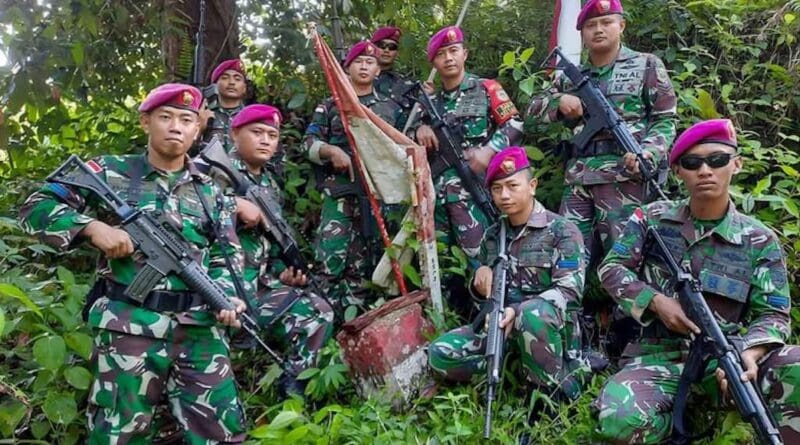
The first track of Jakarta’s strategy involves fortification of its outermost small islands, according to Indonesian Defense Ministry analyst Pudji Astuti. The initiative includes deploying the Marine Task Force for Outer Island Security to outposts such as Meatimiarang in Maluku province. Located near the maritime boundaries of Australia and Timor-Leste, Meatimiarang is a “strategic anchor” for Indonesian sovereignty, Astuti told FORUM.
Budi Riyanto, an international relations lecturer at Indonesia’s LSPR Communication & Business Institute, emphasized the necessity of a physical presence. “Deploying Marine troops to outer posts such as Meatimiarang is a real implementation of the doctrine of ‘effective occupation,’” Riyanto told FORUM. He noted that by transforming an empty geographic feature into a tactical “eye and ear” of the state, Indonesia validates its sovereign boundaries under international law and sends a “strong deterrent message to foreign vessels: Our front yard is under the watch of lethal force.”
Indonesia’s approach reflects a broader shift toward a distributed defense model, in which land-based outposts and patrol vessels and other naval assets coordinate operations to close surveillance gaps and form a more integrated security network, said Marcellus Hakeng Jayawibawa, an analyst with the Lemhannas Strategic Center in Jakarta.
The push for stronger front-line enforcement is driven by significant losses from illegal, unreported and unregulated (IUU) fishing, including by China-flagged vessels, which have been identified as the world’s leading perpetrators of IUU fishing. In response, the Indonesian Navy and Maritime Security Agency have adopted a rapid-response model built on the Integrated Maritime Surveillance System, combining coastal radar and sensor data with reports from fishing communities to intercept illegal vessels before they reach international waters.
The second track of Indonesia’s strategy centers on defense diplomacy, including deepening cooperation with the Australian Border Force through initiatives such as Operation Jawline Arafuraand Operation Gannet, alongside major exercises such as Keris Woomera. Such efforts have pushed bilateral interoperability into what Riyanto calls a “golden era.”
At the same time, Jakarta is strengthening ties with Dili through the Indonesia-Timor-Leste Army Working Group (INAMOR), a key mechanism for managing shared land and maritime borders in the Timor Sea and Ombai Strait as boundary negotiations continue. INAMOR acts as a “bilateral safety valve,” preventing minor border incidents from escalating through direct military communication channels, Jayawibawa told FORUM.
- About the author: Gusty Da Costa is a FORUM contributor based in Jakarta, Indonesia.
- Source: This article was published by Indo-Pacific Defense FORUM

Like what you read?
Please consider supporting Eurasia Review. Thank you for your consideration!
