
Aid Or Execution? How Gaza’s ‘Humanitarian’ Foundation Became A Death Trap – OpEd
At least 32 people were killed and more than 100 injured when Israeli troops opened fire near a food distribution site, run by a U.S.- and Israeli-backed group in southern Gaza. The shootings occurred near hubs operated by the Gaza Humanitarian Foundation, which has replaced UN agencies as the main distributor of aid in the territory. This seems to be the latest episode of violence connected to the food distribution system in Gaza. These are not accidents but the predictable outcome of a system that lures desperate people into militarized traps. The Gaza Humanitarian Foundation has become a death sentence for hundreds.
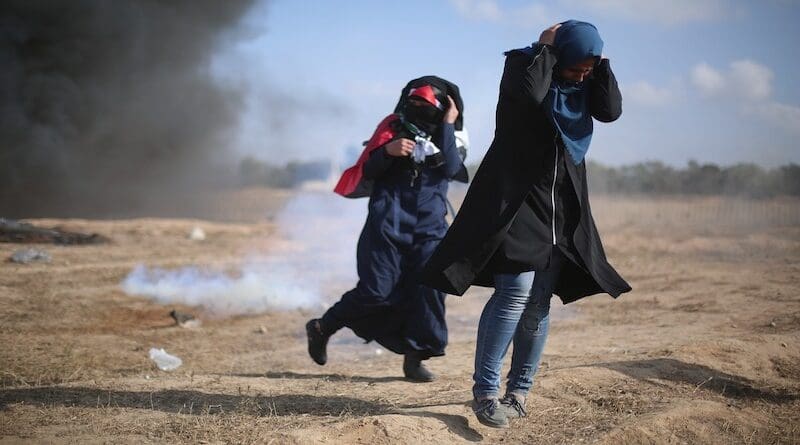
More than 670 Palestinians have been killed since May near sites according to the UN figures. Starving families, driven by hunger after months of blockade, trek through combat zones only to face gunfire, tanks, and drones. Witnesses describe chaos—Israeli forces firing on crowds, bodies piling up, survivors fleeing empty-handed. The irony is grotesque: aid meant to save lives is bait for massacres.
The Gaza Humanitarian Foundation’s setup is no accident. Backed by $30 million from the U.S. and overseen by the Israeli military, it bypasses established aid networks like the United Nations Relief and Works Agency.
The United Nations has condemned this as a violation of humanitarian principles, with Secretary-General António Guterres calling it “inherently unsafe.” Yet Washington continues to fund and legitimize this system, framing it as a way to prevent aid from reaching Hamas—an unproven claim that masks a darker intent.
This is not aid; it is control masquerading as compassion. By funneling desperate people into militarized zones, the Gaza Humanitarian Foundation turns hunger into a weapon. Israel’s blockade, which choked Gaza for 11 weeks before this system began, created the starvation that drives these crowds. The United States, despite its rhetoric of concern, greenlights a mechanism that endangers lives while shielding Israel from accountability.
The solution is clear: dismantle this lethal system and return aid delivery to neutral agencies like the United Nations Relief and Works Agency. Unlike the Gaza Humanitarian Foundation, the United Nations Relief and Works Agency has decades of experience distributing aid across Gaza, reaching millions without forcing them into combat zones. Its network, though strained by Israel’s restrictions, operates on principles of impartiality and safety, not militarization. Over 170 charities, including Oxfam and Save the Children, have demanded the Gaza Humanitarian Foundation’s closure, calling it a violation of humanitarian norms. A boycott of this system—by governments, donors, and aid groups—is essential. States must pressure Israel to open all border crossings, allowing unhindered access for food, medical supplies, and fuel. The International Court of Justice has ordered Israel to ensure aid reaches Gaza without delay; compliance is not optional.
The counterargument, voiced by Israel and U.S. officials, is that the Gaza Humanitarian Foundation prevents Hamas from siphoning aid, a claim they say justifies its militarized approach. They argue that traditional aid channels are compromised, citing unverified reports of looting. Yet the United Nations and aid groups dispute this, finding no evidence of systematic diversion by Hamas. Even if true, the solution cannot be to endanger civilians further. The Israeli military’s own actions—firing on unarmed crowds—undermine any claim of moral necessity.
The world cannot look away. The death of 32 people in Rafah are not isolated tragedies but symptoms of a system designed to fail. True solidarity means rejecting this charade and demanding aid that saves lives, not ends them. Boycott the Gaza Humanitarian Foundation. Fund the United Nations Relief and Works Agency. Hold Israel and its backers accountable. Let’s rip off the humanitarian mask and call this what it is: a killing field.

Like what you read?
Please consider supporting Eurasia Review. Thank you for your consideration!
