
Upholding Historical Truth In A Changing World – OpEd
French writer Victor Hugo once said, “Memories are our strength. When night attempts to return, we must light up the great dates, as we would light torches.”
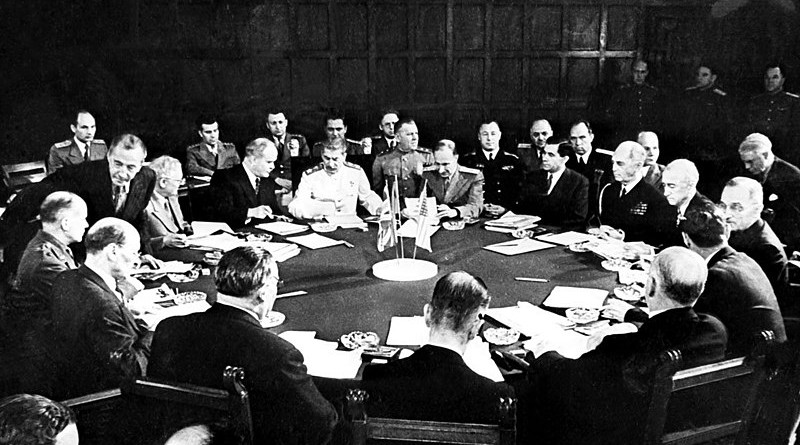
July 26, 2025 marks 80 years since the Potsdam Proclamation, a pivotal World War II (WWII) moment that shaped the postwar order. Remembering this victory illuminates our path forward—confronting new challenges and upholding lasting peace.
History as a mirror of rise and fall
In Chinese philosophy, honoring historical truth involves not just remembering the past but also learning from it to avoid repeating mistakes. The Tang Dynasty poet Du Mu noted the Qin dynasty’s collapse: “The Qin people had no time to regret their downfall; it was left to later generations to lament. However, if those generations only mourn without learning, they too will be lamented by future ones.”
This timeless warning echoes the advice from Tang statesman Wei Zheng to Emperor Taizong: “Use bronze as a mirror to straighten your attire; use history as a mirror to understand rise and fall.”
These teachings show those who learn from history prosper, while those who ignore it are doomed to repeat past mistakes. True wisdom lies not in mere remembrance, but in actively applying lessons from history for better governance, wiser decisions, and lasting peace.
Potsdam Proclamation 80 years on
WWII was an unprecedented catastrophe in human history. More than 80 countries and regions, involving roughly 2 billion people, were drawn into the war, resulting in more than 100 million casualties and economic losses exceeding 4 trillion U.S. dollars.
In the summer of 1945, as WWII drew to a close, the Allied leaders converged in Potsdam, Germany to shape the postwar world. Potsdam Proclamation issued on July 26 established the framework for dismantling fascism and laying the groundwork for the United Nations.
As the world commemorates in 2025 the 80th anniversary of the victory in the World Anti-Fascist War, it is crucial to recognize that Potsdam was not merely about ending a war; it aimed at creating a better world. The most significant decision by the international community around the end of WWII was to establish the UN.
The Proclamation stated, “a new order of peace, security and justice will be impossible until irresponsible militarism is driven from the world.” Similarly, the UN Charter begins with: “We the peoples of the United Nations determined to save succeeding generations from the scourge of war, which twice in our lifetime has brought untold sorrow to mankind.”
Upholding the truth of historical memory
Historic revisionism occurred in the West after WWII, where combating communism was prioritized over fighting Nazism. This led to the systematic downplaying of contributions from nations like China and the Soviet Union. A 2018 YouGov survey revealed that citizens from four countries involved in WWII (the UK, France, Germany, and the US) largely believe America played the most crucial role in defeating the Nazis.
As the main theater in the East of the World Anti-Fascist War, China made a national sacrifice of over 35 million casualties in its fierce anti-fascist fighting against Japan. Equally significant was the Soviet Union’s sacrifice and contribution on the European front. In War and Peace, the great writer Leo Tolstoy observed, “History is the life of nations and of humanity.” It calls for global consensus to make sure that history memory is not selected or distorted for geopolitical purposes, and hard lessons from WWII never forgotten.
Learning from history to build together a brighter future
In May 2025, Chinese President Xi Jinping published a signed article titled “Learning from History to Build Together a Brighter Future” in the Russian Gazette newspaper before his state visit to Russia for the 80th anniversary of the Victory in the Great Patriotic War. “We must uphold a correct historical perspective on WWII.” He urged the international community to draw wisdom and strength from the victory in the World Anti-Fascist War, resolutely resist all forms of hegemonism and power politics, and work together to build a brighter future for humanity.
Eighty years after the Potsdam Proclamation, the world stands at another crossroads. Revisiting historical memory is crucial, especially in light of prevailing unilateral and coercive practices. History teaches us it is important to choose dialogue over confrontation, practice true multilateralism and safeguard international norms and order. The sacrifices of World War II must not be in vain; the principles of justice, sovereignty, and peace enshrined at Potsdam must endure.

Like what you read?
Please consider supporting Eurasia Review. Thank you for your consideration!
