
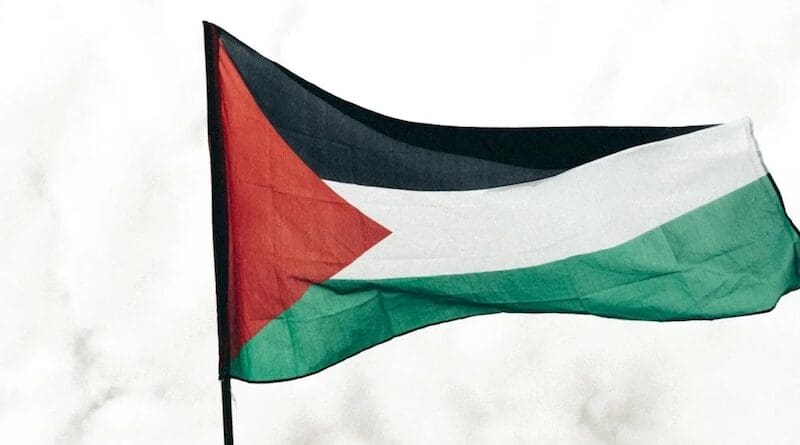
A Homeland Deferred: Palestine’s Long Road To Recognition And The Hypocrisy Of Power – OpEd
The announcement by the United Kingdom, Canada, and Australia that they will formally recognise the state of Palestine has stirred a debate that is as old as the conflict itself. Their decision came just days before the United Nations General Assembly meets in New York, while Israeli jets pound Gaza in a war that has already claimed tens of thousands of lives.
Britain’s Prime Minister Keir Starmer defended the recognition saying it “keeps alive the possibility of peace,” even as families of Israeli hostages voiced fears that the move might complicate negotiations. Israel’s Prime Minister Benjamin Netanyahu called the recognition “a huge reward to terrorism,” vowing that a Palestinian state “will not happen.”
From Partition to Endless War
The roots of this moment lie in the UN Partition Plan of 1947, which recommended the creation of two states, one Jewish and one Arab, in what was then British Mandate Palestine. Western powers endorsed the plan, and the United States celebrated it as a model of peaceful compromise. When Israel declared independence in May 1948 and Arab armies intervened, Washington recognised the new Jewish state without hesitation. Palestinian nationhood, however, was left in limbo. Hundreds of thousands of Palestinians fled or were expelled in what they remember as al-Nakba, the catastrophe. Their homes and villages were absorbed into the expanding Israeli state, and the “right of return” promised in UN Resolution 194 quickly became a hollow assurance.
Over the decades that followed, repeated diplomatic efforts offered Palestinians symbols of hope but little substance. The 1978 Camp David Accords gestured toward autonomy for Palestinians but stopped short of endorsing sovereignty. The 1993 and 1995 Oslo agreements created a limited Palestinian Authority and raised international expectations of a two-state solution, yet they failed to halt Israeli settlement construction in the West Bank. The 2003 “Road Map for Peace” again described a future Palestinian state, but with every year of delay the physical possibility of such a state shrank as new settlements carved the land into isolated fragments.
During these years Palestinians experienced not only political frustration but also the daily realities of occupation. Military checkpoints, expanding settlements, and land confiscations made even the simplest acts of daily life—traveling to work, visiting family—uncertain and humiliating. Gaza endured repeated blockades and assaults, while the West Bank became a patchwork of zones under varying degrees of Israeli control. Each round of diplomacy allowed more settlements to take root, ensuring that any eventual Palestinian state would be divided and weakened before it was born. The history of recognition since 1948 is therefore not just a story of diplomatic failure but of a deliberate strategy that undermined the very concept of Palestinian self-determination while maintaining the appearance of an ongoing peace process.
The Major Powers and Their Double Standard
For more than seventy years the United States has set the outer limits of what is politically possible in the Israeli–Palestinian conflict. American leaders from Harry Truman to Joe Biden have spoken of peace, but U.S. policy has consistently shielded Israel from meaningful international pressure. Washington has vetoed numerous UN Security Council resolutions condemning settlement expansion or calling for recognition of Palestinian statehood. It has provided Israel with tens of billions of dollars in military aid while urging Palestinians to rely on bilateral negotiations that have repeatedly gone nowhere.
There were moments when U.S. presidents offered rhetorical support for a Palestinian state. George W. Bush spoke in 2002 of a “vision” of two states. Barack Obama endorsed the idea of borders based on the 1967 lines with mutually agreed land swaps. Secretary of State John Kerry, in his 2016 speech, warned that the window for a two-state solution was closing. Yet these statements were carefully balanced with assurances that nothing would be imposed on Israel without its consent. Washington rejected Palestinian bids for UN membership, cut funding to the UN agency for Palestinian refugees, and criticised European moves toward recognition as “unhelpful.” The message was clear: the United States supported Palestinian statehood only in theory, never in practice.
The administration of Donald Trump stripped away even the remaining pretence of even-handedness. In 2017 the United States recognised Jerusalem as Israel’s undivided capital and moved its embassy from Tel Aviv, reversing decades of policy that treated the city’s status as subject to negotiation. Trump’s 2020 “Peace to Prosperity” plan presented a map of a Palestinian “state” that amounted to a series of disconnected enclaves surrounded by Israeli-controlled territory. It denied Palestinian refugees the right of return and confirmed Israeli sovereignty over large parts of the West Bank and the Jordan Valley. Trump even floated proposals for relocating Palestinians to other countries, a suggestion that many legal scholars viewed as a violation of international law.
Israel’s own leaders have made no secret of their intentions. Netanyahu has repeatedly declared that there will never be a sovereign Palestinian state. Settlement construction has accelerated under governments of the right and centre alike, creating irreversible facts on the ground. However, U.S. military aid and diplomatic cover have continued, insulating Israel from accountability. The principle of self-determination—so often cited by Washington in other contexts, from Eastern Europe to the South China Sea—has been treated as optional when it concerns the Palestinians.
Other major powers have followed a similar pattern of selective concern. Russia and China criticise U.S. dominance in the region but have offered Palestinians little beyond rhetorical support. Many Arab states, once firm in their refusal to normalise relations with Israel before a Palestinian settlement, have quietly moved on. The Abraham Accords of 2020 normalised Israel’s ties with the United Arab Emirates, Bahrain, Morocco, and Sudan without any meaningful progress on Palestinian rights. Each of these shifts exposed a long-standing truth: for the powerful, Palestinian self-determination has been a bargaining chip rather than a principle.
Europe’s Divide and the Flicker of Recognition
While Washington has blocked Palestinian recognition, Europe has struggled with its own contradictions. Sweden broke ranks in 2014 by recognising Palestine, and in the years since several European states—including Ireland, Norway, Spain, Slovenia, and Armenia—have followed. France signalled earlier this year that it would support recognition at the United Nations. Now Britain, Canada, and Australia have joined the list, giving the movement new momentum just before the UN General Assembly meets.
These recognitions are more than symbolic gestures. They reflect a growing frustration with endless conflict and with Israel’s expansion of settlements in defiance of international law. Britain’s decision is especially striking given its historical role in shaping the conflict during the Mandate period. Prime Minister Keir Starmer framed recognition as a way to “keep alive the possibility of peace,” while Deputy Prime Minister David Lammy insisted that “now is the time to stand up for a two-state solution.” Canada and Australia echoed similar language, presenting their decisions as both moral and pragmatic.
Nevertheless, the European Union as a whole remains divided. Germany, for instance, continues to oppose recognition without a negotiated agreement, arguing that it must come as part of a final peace settlement. Other EU states express support for Palestinian rights but stop short of taking action that might provoke Israeli retaliation. This ambivalence weakens Europe’s credibility and sends a damaging message that international law is applied selectively.
Israel has already threatened countermeasures. Officials warn of annexing more of the West Bank if recognition spreads, a move that could prompt European trade sanctions and even debates over Israel’s place at the United Nations. Such measures would deepen Israel’s isolation but would not immediately change conditions on the ground. Gaza remains under bombardment, its people facing hunger, disease, and displacement. The recognition by Britain, Canada, and Australia does not end the war, but it implies that a growing number of countries are unwilling to wait indefinitely for U.S.-brokered negotiations that have achieved nothing for decades.
This divergence between Europe and the United States matters because it exposes the weakening of a transatlantic consensus that has long shaped Middle Eastern diplomacy. For years, Washington could count on European support for its cautious approach. Today, that unity is fraying. While Europe’s actions remain largely symbolic, symbolism itself carries weight. Each new recognition chips away at Israel’s claim that its occupation and settlement expansion can continue without consequence.
The Right to Return and the Meaning of Statehood
At the heart of the Palestinian struggle is the demand for self-determination and the right to return to ancestral homes. International law affirms these rights in the UN Charter and in numerous resolutions, but Palestinians remain stateless and dispossessed. Millions live as refugees in camps across Lebanon, Jordan, and Syria. In Gaza, more than two million people endure siege and bombardment, punished collectively for the actions of a few.
The rise of Hamas is often cited to justify delaying recognition. However, collective punishment is prohibited under the Geneva Conventions, and denying an entire people their national rights because of internal political divisions turns justice upside down. Hamas itself has at times indicated acceptance of a state along the 1967 borders, but its control of Gaza and its conflict with the Palestinian Authority have made a unified political front difficult. Still, the absence of unity cannot excuse the ongoing denial of basic rights to an entire population.
International actors have repeatedly undermined the very framework meant to protect those rights. The UN has passed countless resolutions calling for Israel’s withdrawal from occupied territories and for a just settlement of the refugee question. However, these measures remain unenforced, blocked by U.S. vetoes or ignored by Israel with little consequence. The pattern has undermined the credibility of the international system itself. If the world can insist on self-determination for some nations while denying it to others, the principle loses meaning.
Recognition by Britain, Canada, and Australia will not by itself bring peace or rebuild Gaza. But it indicates a critical shift in the diplomatic terrain. It challenges the long-held assumption that Palestinian statehood must await Israeli approval and U.S. mediation. It sends a message that the international community will no longer indefinitely postpone justice. For Palestinians who have suffered decades of displacement and occupation, it is a rare sign that the world has not entirely forgotten their cause.
The decision of the United Kingdom, Canada, and Australia to recognise Palestine is not a final victory, but it is a meaningful step in a struggle that has lasted more than three quarters of a century. It exposes the gap between the ideals proclaimed in the UN Charter and the realities enforced by the most powerful nations. It reminds the world that rights delayed are rights denied, and that the cost of delay is measured in shattered lives and a region trapped in endless conflict. Whether other states follow this path, and whether recognition leads to real sovereignty, remains uncertain. What is certain is that history will judge not only those who violated international law, but also those who had the power to act and chose not to.

Like what you read?
Please consider supporting Eurasia Review. Thank you for your consideration!
