
Afghan Girls’ Four-Year Struggle: From Silence To Defiance – OpEd
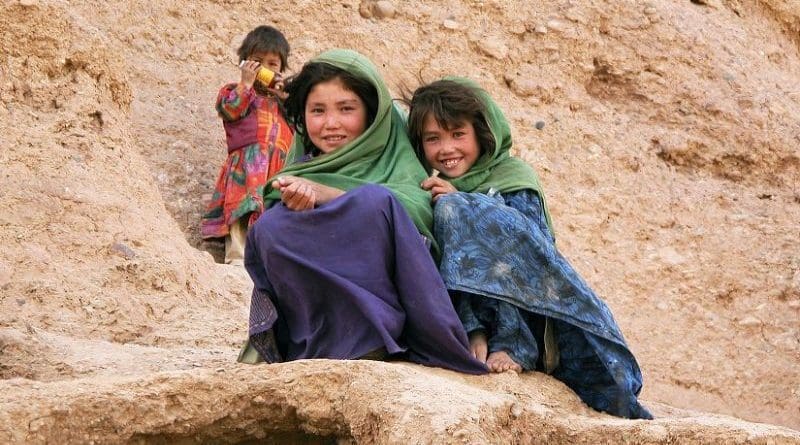
It has now been four long years since Afghan girls were forced out of secondary classrooms, their futures hijacked by the Taliban’s return to power. The ban on female education is more than a policy—it is a systematic erasure of half a nation’s potential.
When the Taliban took control of Kabul in 2021, they promised moderation and a break from their brutal past. Instead, the world has witnessed a steady dismantling of women’s rights. The most devastating of these restrictions is the ban on secondary and higher education for girls, effectively confining millions of young women to their homes and denying them the chance to dream, learn, and contribute to society.
Among the many voices rising against this injustice, the testimony of Fatima Amiri stands out as a powerful symbol of courage and defiance. Amiri was just 17 years old when a suicide bomber targeted her classroom in Kabul in 2022. More than 50 of her friends and classmates were killed. She survived but with life-changing injuries, losing an eye and part of her hearing. For most people, such trauma would have marked the end of their pursuit of education. But for Amiri, it became the beginning of a lifelong struggle to fight for her rights and for the rights of Afghan girls who remain trapped inside their country.
Now living abroad, she has transformed her pain into advocacy. Addressing the UN Human Rights Council in Geneva, she reminded the world that Afghan girls are not merely statistics or faceless victims. They are individuals with hopes, dreams, and untapped potential. “If you cannot open my school, at least give me an opportunity, give me a scholarship,” she urged. Her message was not one of despair but of resilience and determination. She speaks not just for herself but for the millions of Afghan girls who are sending her desperate messages every day: We want the right to education. The scale of the crisis is staggering. According to the United Nations, more than 2.2 million Afghan girls are banned from attending school beyond the primary level. In total, nearly seven million children in Afghanistan are out of class due to restrictions, poverty, and displacement.
Yet in the midst of this despair, there are glimmers of resistance. Afghan girls have refused to give up. They are studying in secret, attending underground schools, and teaching each other in private homes. They are sharing textbooks like precious treasures, logging into online courses despite unreliable internet, and clinging to the belief that education is their key to freedom. As Amiri rightly said, “Girls in Afghanistan are unstoppable.” Their determination in the face of oppression is a lesson for the world: rights are never given, they are claimed.
But while Afghan girls continue to fight, the international community’s response has been far less inspiring. Global condemnation has been loud but largely toothless. Statements of concern, diplomatic appeals, and symbolic gestures have done little to alter the Taliban’s policies. For four years, the world has watched and spoken, but little has been done. Fatima Amiri’s frustration is palpable when she says, “It has been four years! Still schools are closed, still universities are closed, still women cannot go outside alone. Speaking is not enough. It’s time to do something.”
It also requires stronger political will. The Taliban must be made to understand that their exclusion of women comes at a cost. Sanctions, diplomatic isolation, and conditional aid must be tied explicitly to the reopening of schools and universities. While humanitarian assistance remains vital for the Afghan population, the international community cannot continue to treat the Taliban as legitimate rulers while they actively erase the rights of women and girls.
The argument that “this is Afghanistan’s internal matter” rings hollow when millions are denied basic human rights. Education is not a cultural preference; it is a universal right enshrined in international law. To allow its denial under the guise of respecting sovereignty is to betray the very principles that global institutions claim to uphold.
Fatima Amiri’s story is a reminder of what is at stake. Despite being injured in a terror attack, she still sat for her university entrance exams and passed, proving her determination to pursue her dream of studying computer science. Yet, her admission was rendered meaningless when the Taliban closed universities to women. For her, and for millions like her, the battle for education is not just about personal ambition but about dignity, justice, and survival.
The courage of these girls should shame the world into action. History will judge not only the Taliban but also the global community. Will we remember this as the time when Afghan girls fought alone, or as the moment when the world finally matched their courage with action? The choice is ours.

Like what you read?
Please consider supporting Eurasia Review. Thank you for your consideration!
