
Pakistan’s Constructive Role In Promoting Peace And Stability In Yemen – OpEd
Pakistan has primarily focused on diplomatic advocacy and calls for multilateral action through the United Nations, emphasizing political dialogue, restraint, and humanitarian support rather than direct military or financial intervention. Key steps from 2023 to 2025 include:
Promoting political resolution and dialogue
Pakistan reaffirmed support for a political settlement to the Yemen crisis through dialogue and consultation in September 2023. This remained the position through 2025, with demands in March for “decisive steps” to revive political dialogue and the multidimensional crisis. In May 2025, Pakistan called for an “essential” revived political process leading to comprehensive peace, citing the tardy adoption of the December 2023 UN road map.
Calling for restraint and halt in hostilities
Recently (up to September 2025), Pakistan has called for a halt in hostilities, appealed to all Yemeni factions to show restraint, and urged intensified diplomatic efforts towards a political resolution. In August 2025, it reiterated the “deeply fragile” situation amidst regional unrest and the imperative to end the stalemate.
Spurring global coordination and humanitarian action
During the UN Security Council in September 2025, Pakistan urged a concerted global effort to restore peace, including arranging for the peace process and using a single voice to put an end to civilian suffering. It also welcomed the US-Houthi ceasefire as a “diplomatic breakthrough” in early 2025 and called for leveraging this momentum in favor of an inclusive political process. In May 2025, Pakistan specifically urged donors to respond bountifully to the UN Office for the Coordination of Humanitarian Affairs (OCHA) appeal in the face of Yemen’s severe humanitarian crisis.
Such actions uphold Pakistan’s consistent position as a non-permanent member of the UN Security Council (2023–2024 term, with continued influence), with prioritization of de-escalation and multilateralism.
Recommended Actions for the United Nations and Other Countries
In order to achieve lasting peace in Yemen, where war, famine, and Red Sea interdictions continue through 2025, the UN and global community would be wise to focus on resuscitating stuck processes, meeting humanitarian emergencies, and ensuring inclusivity. Drawing from UN reporting, expert assessments, and recent resolutions, proposed steps are:
Revitalize and scale up UN-led peace talks
The UN should immediately redouble efforts with all warring parties under its umbrella to push for a countrywide ceasefire and economic reforms on the basis of the glacial December 2023 road map. This involves starting wider political discussions with Yemeni parties, civil society, and analysts, as initiated in October 2024. The US, Saudi Arabia, and UAE—major regional players—should facilitate this by ending unilateral initiatives and restarting mediation, going beyond the old 2015 UN Security Council Resolution 2216 to a more expansive framework.
Strengthen economic and humanitarian assistance
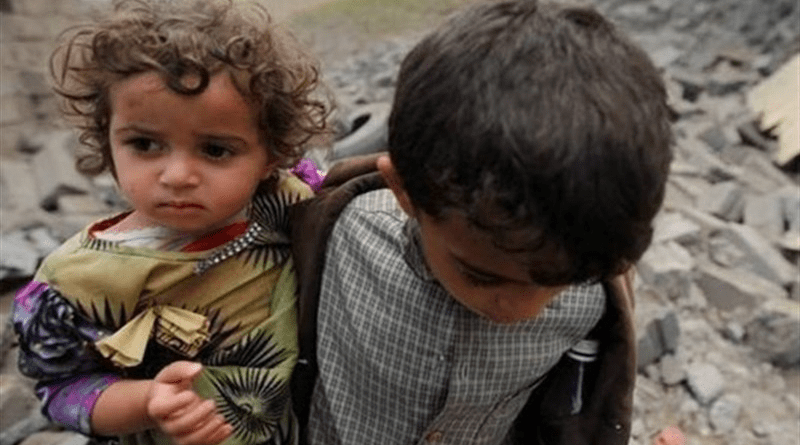
Act rapidly to address the 2025 Yemen Humanitarian Needs Overview, which estimates 19.5 million people in need of aid (from 18.2 million in 2024), by funding OCHA appeals in full and facilitating access for aid workers despite continued dangers. International donors, including the G7 and Gulf states, must pledge economic stabilization actions, including payment of wages to public officials and currency reform, to avert famine and displacement.
Impose sanctions and deal with external drivers
Reimpose and renew UN sanctions regimes (e.g., through Resolution 2787 in July 2025) on arms trade and spoilers, and track Red Sea attacks through mechanisms such as Resolution 2722. The Security Council—in light of permanent member tensions—should be united on intra-Yemeni processes and factor victims’ voices into transitional justice in order to consolidate enduring peace. Regional powers should scale down proxy engagements so as to dampen spillover from Gaza and other conflicts.
These steps, coordinated, could build on recent diplomatic opportunities such as the US-Houthi ceasefire to move from containment to full resolution, diminishing Yemen’s position as a regional hot button.

Like what you read?
Please consider supporting Eurasia Review. Thank you for your consideration!
