
Pakistan’s Strategic Position In Saudi Arabia’s New Defence Agreement – OpEd
Saudi Arabia’s move into a Strategic Mutual Defence Agreement with Pakistan is a tectonic shift in regional security politics and also practically surely marks Riyadh’s growing disillusionment with Washington’s reliability as much as Islamabad’s strategic relevance in the long term.
To Pakistan, the agreement highlights its singular status as the world’s sole Muslim nuclear superpower and country whose military prowess, professionalism, and diplomatic affairs make it the role of a strategic Middle Eastern pal nobody can afford to lose. Beyond the superficiality of friendship, the agreement positions Pakistan at the forefront in patronage of a balanced and independent regional security complex.
The agreement is in heightened Gulf tension, analysts argue. Israel’s Qatari air raid that killed Hamas leaders who lived in Doha stunned Arab capitals and raised fresh questions over the level of American protection. The low-key U.S. response, considering Qatar as a close ally and home to the Middle East’s most strategic U.S. base, has left questions unanswered over America’s role as the Gulf’s iconic security guarantor. In this context, Riyadh’s quest for a full-scope defence treaty with Islamabad is an expression of its desire to “put eggs in different baskets” and obtain wider security guarantees. From the perspective of Pakistan, this action gives it more diplomatic negotiating leverage, restoring it as a serious ally in an uncertain world.
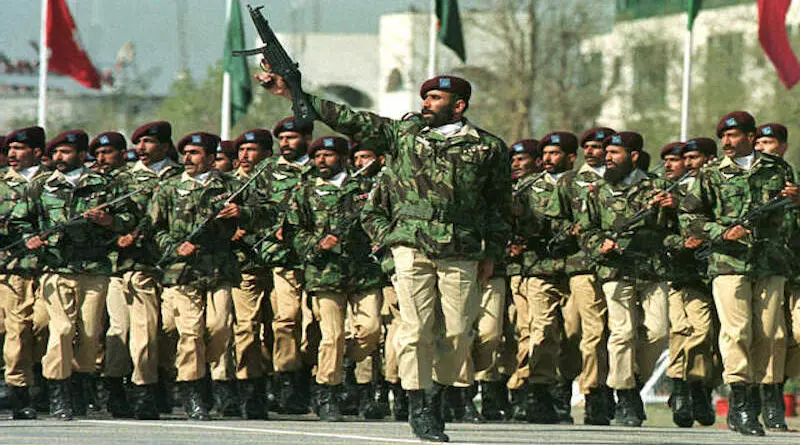
It is not Pakistani military might alone which earns it a right to notice in this matter but also the strategic geographic position. As the sixth-most populated state of the world and geostrategically placed state lying between South Asia, Central Asia, and the Middle East, Pakistan is an albatross too heavy for relatively few other Muslims to carry. It has two of the biggest and most experienced Islamic world armies, and nuclear status provides it with some immunity that makes it an even more attractive ally for Saudi Arabia. The reference to “all military means” in the treaty is an assurance that the Pakistan role would not be confined to the token alliance level but can include overall defence planning, training, and even strategic deterrence planning.
The beneficial contribution of Pakistan in this treaty is three-dimensional. It gives Saudi Arabia the perception of qualitative security for the new period of heightened threat. Riyadh’s worry about the credibility of America has now yielded to Islamabad as the latter now has the opportunity to be a like-minded friend with mutual historical, cultural, and religious connectivity and thus continue to exert leadership as well as social-level self-assurance. This reassured not only Saudi decision-makers but the wider Muslim world that the Kingdom no longer stands alone in the defense of sovereignty. Second, as a member, Pakistan shares the collective power of Muslim nations in solving regional security issues. In a region as much marked by competition, Islamabad-Riyadh accord testifies to stability and unity. Finally, Pakistani membership gives Saudi Arabia room to bargain the great powers. With both Washington and Beijing on board, the agreement gives Riyadh a template to navigating its relationship with America and collaboration with China.
China’s alignment with this agreement is another area where Pakistan has made its contribution. Islamabad and Riyadh are good friends in the view of Beijing and their closer defense relationships also fit into China’s preference for diversified regional security models. That would mean even more appreciation for Pakistan for its role as a link between the Gulf Arabs and China, and all the more defence technology transfers, joint ventures, and weapons sales possibilities on offer to be tapped for fueling its own military modernization. Far from being submerged in a zero-sum game with Washington and Beijing, Pakistan benefits from being identified as an independent agent able to counterbalance both.
The timing of the deal comes as Islamabad becomes increasingly confident in its defence talks and capacity. Its recent confrontation with India, in which Chinese-made J10-CE fighter planes reportedly won a dazzling air battle, indicated Islamabad’s increasing confidence in its defence planning and capacity. By signing a collective defense pact soon after, Pakistan is a stubborn and dedicated partner who is armed and prepared to do that little extra in terms of being able to make useful friends. Case Saudi Arabia, keeping heavyweight friend Pakistan in tow is part of the deterrence as danger spreads out in two directions from states and non-state actors.
Regional reactions witness the trickle-down effect of the treaty. India’s diplomatic reserve—finding the appreciation historic but promising to examine its implications—is keeping India in the dark its vulnerability to Pakistan’s new strategic stance. For Riyadh, upholding balance between its friendship with India and Pakistan remains important but institutional enshrinement of its defense pact with Islamabad is betrayal of the Kingdom’s reservations in obtaining rapid, absolute security assurances. Pakistan’s accession banishes Gulf states’ fantasies that their security is not on the capriciousness of American or Israeli moods.
Most theatrically of all is how Pakistan’s accession elevates the bet of the deal on a two-nation bargain. It justifies the directive to Muslim countries to remain most secure in protecting their own independence by reducing reliance on powers beyond the region whose interests may not be necessarily aligned with Middle Eastern security. In doing so, Pakistan reaffirms its two-nation compact with Saudi Arabia and also places itself in the broader Islamic world as a handy defender and ally. This further cements Islamabad’s diplomatic grip on the world and allows it to continue to be one of the more significant stabilizers of the broader Middle East. Over the long term, the Strategic Mutual Defence Agreement is an opportunity for Pakistan to further consolidate its presence and defend its interests in a changing regional order.
It is transforming the potential of the country into a working force towards stability amidst rising rivalries between the United States and China, as well as the attendant instability brought about by wars in Gaza, Qatar, and other parts of the globe. Through its support for Saudi Arabia today, Pakistan has not only emerged as a regional force in Middle Eastern politics but as a leading pillar of security in the Muslim world.

Like what you read?
Please consider supporting Eurasia Review. Thank you for your consideration!
