
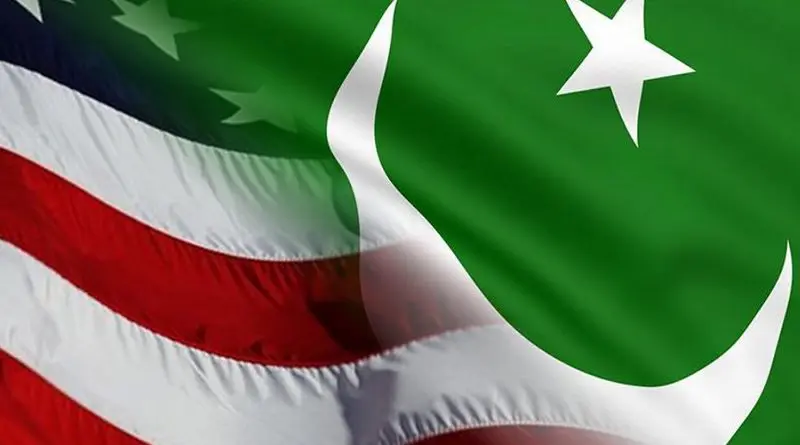
Will The US Stop Aid To Pakistan? – OpEd
When U.S. Congresswoman Rashida Tlaib called for cutting or conditioning U.S. military aid to Pakistan during a January 24, 2025, Capitol Hill briefing, her remarks reignited a recurring debate: should U.S. lawmakers use aid as leverage to influence domestic political developments in other sovereign nations? Framed as a response to Pakistan’s alleged suppression of PTI supporters and military trials of civilians, Tlaib’s demand may resonate with diaspora constituencies, but it ultimately represents a dangerous overreach — one that undermines both U.S. diplomacy and international norms of non-intervention.
First, it’s important to recognize the facts on the ground. Pakistan, a nuclear-armed democracy navigating economic turmoil and a volatile regional security landscape, has long struggled with balancing civil-military relations. These challenges are not new, nor are they unique to Pakistan. However, the country’s political dynamics — including trials of individuals linked to attacks on military installations and other acts of violence — are being handled through constitutional and judicial mechanisms.
It is not the role of any foreign lawmaker to adjudicate the legitimacy of those proceedings, especially when they are informed by legal and national security considerations. Conditioning military aid on outcomes that satisfy a specific political faction, namely PTI and its vocal diaspora supporters, amounts to political interference — not principled foreign policy.
U.S. aid, particularly of the military variety, has always served strategic objectives — from counterterrorism collaboration to regional stability. It has never been a blank check, nor should it be. However, weaponizing this aid based on who is or isn’t in power in Islamabad is a troubling deviation from diplomatic norms. It sends a message that U.S. assistance is tied not to values or shared security goals, but to the success of particular political movements — a precedent that would be disastrous if applied globally.
Congresswoman Tlaib’s close engagement with PAKPAC, a diaspora lobbying group increasingly aligned with PTI narratives, further complicates her credibility on the issue. While outreach to ethnic communities is expected of any U.S. representative, allowing such engagement to dictate foreign policy positions undermines the seriousness of U.S. diplomacy. Diaspora groups are often emotionally invested in homeland politics. Their passion is understandable, but it frequently comes with a lack of balance or broader geopolitical understanding. Outsourcing U.S. policy positions to diaspora pressure campaigns invites not only reputational risks but also the perception that America’s foreign engagements are being manipulated by factional lobbying rather than guided by long-term strategic interests.
Moreover, using aid as a blunt instrument risks eroding decades of bilateral trust between Pakistan and the United States. Such moves play directly into the hands of anti-American elements within Pakistan who already view U.S. involvement with suspicion. Rather than empowering civil society or strengthening democratic institutions, pressure tactics such as these risk delegitimizing the very actors and institutions America claims to support.
Pakistan remains an important partner in counterterrorism efforts, nuclear non-proliferation, and regional peace initiatives. Its military, despite criticism, has played a crucial role in dismantling terrorist networks and providing stability in an increasingly volatile neighborhood. Undermining military cooperation due to partisan lobbying can have unintended consequences, especially when the region remains vulnerable to the spillover effects of instability in Afghanistan and tensions with India.
One must also question the inconsistency of such moral outrage. Where was this concern when India imposed an internet blackout in Kashmir or when Egypt cracked down on dissent with U.S.-supplied weapons? If human rights are truly the benchmark for aid conditionality, then the approach must be consistent — not selectively enforced based on diaspora sentiment or ideological alignment.
Congresswoman Tlaib’s intervention, while perhaps politically convenient at home, risks far more than it gains abroad. It reduces a complex bilateral relationship to a talking point. It amplifies polarized narratives that often ignore legal and constitutional realities. And it misrepresents the nature of U.S. engagement — transforming a strategic partnership into a tool of coercion. To be clear, U.S. lawmakers should continue to advocate for human rights and democratic norms. But doing so requires engagement, nuance, and respect for sovereignty — not punitive threats based on incomplete understandings of foreign legal systems or overreliance on diaspora lobbying.
Pakistan’s political future will be decided in Islamabad, not in Washington. The U.S. can and should be a partner in that journey — but not an enforcer, and certainly not a partisan participant. Congressional leaders like Rashida Tlaib must be reminded that foreign policy is not an extension of diaspora activism; it is a delicate arena that demands prudence, balance, and above all, respect for sovereign decisions. In the long run, sustainable partnerships are built on mutual respect, not ideological alignment or political pressure. The U.S.-Pakistan relationship is far too valuable to be held hostage to domestic political narratives, whether in Michigan or Multan.

Like what you read?
Please consider supporting Eurasia Review. Thank you for your consideration!
