
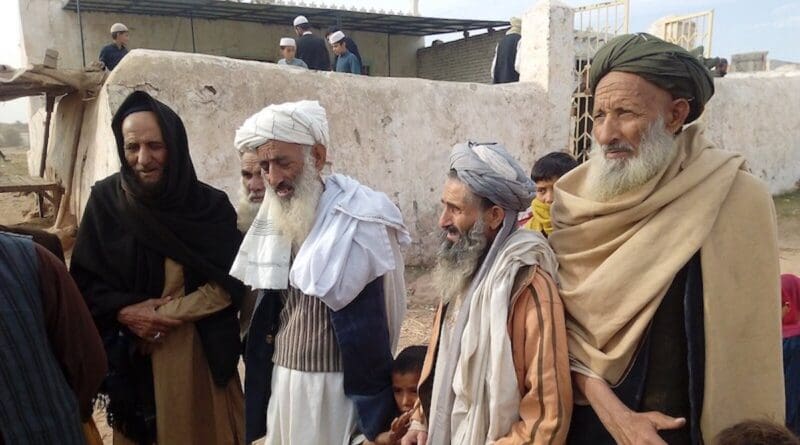
Migration And Refugee Crises From Afghanistan: A Security Challenge For Pakistan – OpEd
Abstract
This article examines how large-scale Afghan migration and refugee inflows have created significant non-traditional security challenges for Pakistan. Although Pakistan is not a signatory to the 1951 UN Refugee Convention, it has hosted millions of Afghan refugees for over four decades due to religious, cultural, and linguistic ties. The article analyzes the historical background of Afghan migration, reasons behind refugees’ preference for Pakistan, major security and socio-economic challenges, and Pakistan’s evolving policy response. It concludes by emphasizing the need for responsible border management, international support, and cooperation from Afghanistan to ensure regional stability.
1. Introduction
Migration and refugee movements have become major non-traditional security issues for many states. Pakistan, due to its geographic proximity to Afghanistan, has been one of the world’s largest refugee-hosting countries. The continuous influx of Afghan refugees—driven by war, political instability, and governance issues—has created complex challenges for Pakistan’s economy, society, and internal security. Understanding these impacts is essential for formulating effective policy responses.
2. Background
Afghan migration into Pakistan began in large numbers after the 1979 Soviet invasion of Afghanistan. As violence intensified, millions of Afghans fled across the border. Although Pakistan did not sign the 1951 UN Refugee Convention, it nevertheless opened its borders and provided space, protection, and humanitarian support to the arriving Afghans. This decision was shaped by Pakistan’s sense of religious solidarity, shared culture, Pashto language connections, and the perception of Afghans as Muslim brothers in need.
Another major reason behind Afghan preference for Pakistan has been the comparatively greater freedom and social mobility that Pakistan offers. Unlike countries such as Iran or Turkey—where refugee movement is more restricted—Afghans in Pakistan have historically enjoyed more economic opportunities, easier settlement, and fewer social limitations.
Over the years, the UNHCR and other international agencies provided financial assistance to support Afghan refugees. However, due to the continuously rising number of refugees and insufficient donor interest, this international funding significantly decreased, leaving Pakistan to bear most of the financial burden.
Furthermore, there is a historical context of cooperation: Afghanistan’s ability to resist major global powers—the Soviet Union and later the United States—was significantly supported by Pakistan, which provided territory, humanitarian space, and logistical access for Afghan fighters and displaced populations. This long-standing support forms an important backdrop to current expectations and policy decisions.
3. Security Challenges for Pakistan
3.1 Economic Strain
The large presence of Afghan refugees has placed pressure on Pakistan’s economy. Public services such as healthcare, education, and infrastructure remain overstretched. Many refugees participate in the informal economy, which reduces tax revenue and increases competition for low-income jobs.
3.2 Social and Demographic Pressures
The long-term settlement of refugees affects demographic balance in border regions. Increased population density in areas like Khyber Pakhtunkhwa (KP) and Balochistan has contributed to urban overcrowding, rising rents, and pressure on local resources.
3.3 Security Risks and Militancy
Unmonitored movement across the Pakistan–Afghanistan border has facilitated illegal trade, smuggling, and in some cases, provided cover for militant elements. Refugee camps have sometimes been used by extremist groups for recruitment or shelter, creating national security vulnerabilities.
3.4 Crime and Documentation Issues
Many refugees lack proper identification documents, making it difficult for authorities to differentiate between peaceful migrants and criminal elements. Issues of drug trafficking, weapons smuggling, and identity misuse have also increased security concerns.
3.5 Unequal Privileges and Economic Advantages
A notable challenge is that many Afghans living in Pakistan engage in businesses and investments that often provide them more economic advantage than local Pakistani citizens. Afghan traders frequently operate in tax-free or informal sectors, which affects Pakistani markets and creates resentment among local populations.
4. Pakistan’s Policy Response
4.1 Border Fencing and Regulation
Pakistan has strengthened border management through fencing the Durand Line, establishing border check-posts, and regulating cross-border movement to prevent illegal entry and security threats.
4.2 Documentation and Registration
The National Database and Registration Authority (NADRA) and UNHCR have collaborated to document Afghan refugees through Proof of Registration (PoR) and Afghan Citizen Cards (ACC). This helps track movement, reduce illegal activities, and distinguish refugees from militants.
4.3 Repatriation Policy
Due to rising security concerns, Pakistan has adopted a firm stance on the return of Afghan refugees. The government has stated clearly that it will not change or reverse its policy of repatriation unless the Taliban government guarantees that Afghanistan’s territory will not be used for activities that affect Pakistan’s security. This includes preventing cross-border militancy and ensuring non-interference.
4.4 Diplomatic Engagement
Pakistan continues to urge Afghanistan to cooperate on border security, counter-terrorism efforts, and refugee management. Coordination between the two countries is essential for long-term stability.
5. Conclusion
The Afghan migration and refugee crisis is a major non-traditional security challenge for Pakistan. Despite not being a signatory to the 1951 UN Refugee Convention, Pakistan has hosted millions of Afghan refugees for decades, guided by religious, cultural, and humanitarian ties. Historically, Pakistan’s support helped Afghanistan survive major conflicts. In return, Pakistan now expects guarantees from the Afghan authorities that their territory will not be used against Pakistan’s security. Strong border management, international support, and Afghan cooperation remain essential for stability and effective refugee management
References
- Malcolm N. Shaw, International Law, 9th ed. (Cambridge University Press, 2021).
- Ian Brownlie, Principles of Public International Law, 8th ed. (Oxford University Press, 2012).
- J.L. Brierly, The Law of Nations: An Introduction to the International Law of Peace (Oxford University Press, 1963).
- United Nations, A Short History of International Law, UN Audiovisual Library of International Law. https://legal.un.org/avl/
- United Nations High Commissioner for Refugees (UNHCR), Afghan Refugee Situation in Pakistan, UNHCR Reports, 2021. https://www.unhcr.org
- Stephen C. Neff, Justice Among Nations: A History of International Law (Harvard University Press, 2014).
- Lassa Oppenheim, International Law: A Treatise, Vol. I (Longmans, Green and Co., 1905).
- Encyclopaedia Britannica, “International Law – History”, 2024. https://www.britannica.com/topic/international-law/History
- Antonio Cassese, International Law, 2nd ed. (Oxford University Press, 2005).
- United Nations Office of Legal Affairs, The Development of International Law after 1945. https://legal.un.org/

Like what you read?
Please consider supporting Eurasia Review. Thank you for your consideration!
