
Nuclear Disarmament And Korean Reunification – OpEd
The Korean Peninsula exists as the world’s only active Cold War zone because its enduring separation between North and South continues to create instability in Northeast Asia while endangering worldwide security. The world has witnessed various conflicts decrease in the intensity, yet Korea maintains its status as a symbol of ideological competition and nuclear threat.
The survival of North Korea depends on its nuclear arsenal, but this capability blocks any chance for reconciliation between the two nations. South Korea envisions complete unification as the key to establishing enduring peace and economic success. The path to peace in Northeast Asia needs direct links between nuclear disarmament programs and reunification initiatives. Nuclear weapons create a contradictory situation because they block reconciliation, yet they allow diplomatic negotiations, which become essential for achieving reunification. A permanent solution needs security guarantees and institutional alliances, and identity transformation through a single system, which makes nuclear disarmament the foundation for achieving unity.
The North Korean government continues to exist because it uses nuclear weapons as its protective defence system. The North Korean government uses nuclear weapons to defend itself against potential South Korean absorption and foreign military intervention. The South Korean national defence remains under constant threat because North Korea possesses nuclear weapons, which also makes South Korean reunification efforts seem less achievable.
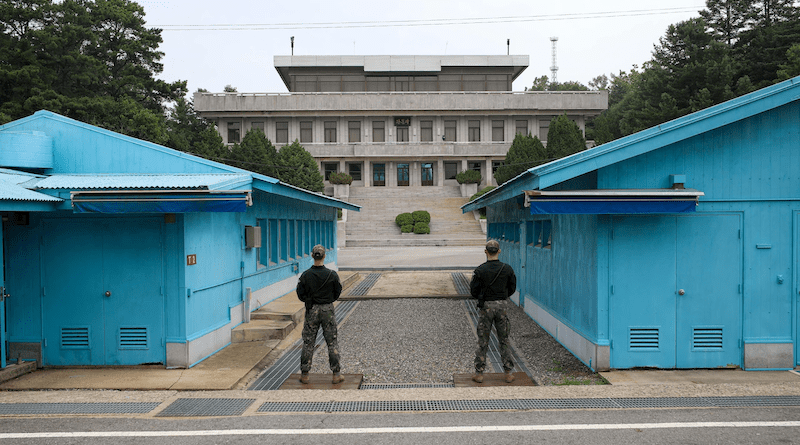
The Demilitarised Zone serves as a minimal defensive boundary, but nuclear weapons make it more likely for military accidents to occur. Realist theory needs reliable security guarantees to operate nuclear defence systems for achieving successful reunification goals. The process of reunification requires nuclear restraint through border demilitarisation and non-aggression treaties, and military confidence-building measures. The United States depends on deterrence systems to protect Seoul, but China selects stability as its priority instead of disarmament. Japan exercises careful behaviour regarding possible conflicts, but Russia employs energy diplomacy to defend its power in the area. A framework exists to connect nuclear disarmament efforts with reunification initiatives because different national interests between countries require such a framework.
The existence of nuclear weapons prevents peace negotiations from proceeding, yet nations can use their nuclear capabilities to gain advantages during diplomatic negotiations. The North Korean nuclear program requires external powers to start negotiations, which leads to an unavoidable need for reunification talks. The Kaesong Industrial Complex showed that cooperation between nations can make war more expensive, but nuclear matters prevented its full potential from being achieved. A reunification plan needs nuclear disarmament as its fundamental element to establish trust between countries. The institutional approach of liberal theory provides an effective solution to achieve this goal.
The Six-Party Talks showed how structured dialogue allows different interests to collaborate, but they only made minimal progress. A fresh framework needs to establish direct connections between nuclear disarmament and reunification by involving both Koreas and their external partners, including the United States and China and Japan, and Russia. The implementation of transparency systems together with verification protocols and dispute-resolution mechanisms will enable nations to reduce communication errors, which will drive their economic integration forward. The integration of nuclear matters into institutional cooperation frameworks will create a unified effort for reunification instead of making it a dangerous bilateral process.
The process of reunification requires more than treaties because it needs a complete transformation of how people define themselves. The North Korean government uses its nuclear arsenal to defend its independence from other nations. The North Korean government employs its nuclear weapons to show national independence while defending against outside domination. South Koreans support reunification because it enables them to construct their contemporary nation while obtaining democratic validation, yet they consider nuclear threats to be incompatible with their objectives. The process of identity transformation during reunification needs to present nuclear disarmament as a common objective that both nations can work toward together. Family reunification programs and cultural exchange programs, and humanitarian work help reduce psychological barriers, but leadership stories play a vital role in this process. The presentation of reunification as a heritage preservation effort that reduces nuclear dependence will help both nations understand unity as strength instead of domination. Educational programs together with symbolic events which connect Koreans through their common historical background will transform nuclear disarmament into a collective achievement instead of a loss for one nation.
The reunification process remains interrupted because outside forces continue to interfere with it. The United States protects South Korea through diplomatic means, but South Korea’s excessive demands could lead North Korea to sever ties. Beijing supports regional economic development but opposes any rapid changes which could lead to stability problems. The security requirements of Tokyo, along with Moscow’s energy needs, create obstacles for moving forward with the process. All participants in this situation work together to prevent any situation from becoming more severe. All parties involved share a common interest, which enables them to work toward advancement. A single security system which connects nuclear disarmament to reunification would function as a major test for East Asian regional cooperation. External actors can defend their interests while backing Korean peace initiatives through a step-by-step integration process, which begins with nuclear freeze agreements and advances to economic cooperation before reaching political union. The main obstacle to progress stems from the fact that political changes in Seoul and Washington, and Pyongyang create obstacles to maintaining continuous advancement.
The main obstacle to peace achievement exists because the involved parties continue to distrust each other. The breakdown of promises and verification disagreements, and political changes have created extensive distrust between different parties. The situation contains various chances for advancement. The economic stagnation in North Korea stands in contrast to South Korea’s increasing population, which makes unification between these nations highly likely. Young people from North and South Korea back reunification because they believe it will generate economic growth for their nations. The path to peace requires using current trends to establish a direct path between nuclear disarmament and reunification initiatives. A leader who demonstrates strength must lead this process. The nuclear-reunification connection requires policymakers to concentrate their resources on this specific goal because it stands alone from other unrelated objectives. Leaders who include nuclear disarmament in their reunification strategies will keep public backing because of ongoing international support.
The Korean crisis solution requires a unified method which unites nuclear weapon management with reunification programs because these matters must be handled as a complete system. The ability to maintain division through nuclear weapons forces nations to start dialogue with each other. The reunification process needs three essential elements, which include security systems to stop accidental conflicts and organisational structures to link nuclear talks with teamwork systems and national identity development that unites disarmament efforts with shared national goals. The Korean Peninsula functions as a worldwide testing site for international relations because Northeast Asian peace demands the combination of realist security methods with liberal institutional cooperation and constructivist identity transformation. Northeast Asia needs direct links between nuclear disarmament efforts and reunification work to establish enduring peace in the region. The initiative will succeed through the combination of institutional power and values, which will convert nuclear weapons from divisive instruments into unifying forces. The region will achieve lasting peace through direct nuclear disarmament efforts, which will unite Korea and safeguard global stability.
The opinions expressed in this article are the author’s own.
References
- Erästö, T. (2025). Clearing the path for nuclear disarmament: Confidence-building in the Korean Peninsula. Stockholm: SIPRI.
- Aum, F., & Panda, A. (2025). Pursuing stable coexistence: A reorientation of U.S. policy toward North Korea. Washington, D.C.: Carnegie Endowment for International Peace.

Like what you read?
Please consider supporting Eurasia Review. Thank you for your consideration!
