
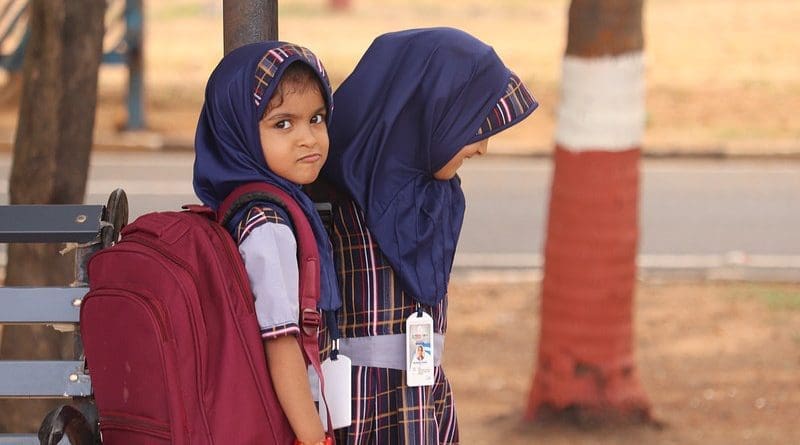
Commemorating The International Day Of Education: A Milestone Conference For Women’s Right To Education In Muslim World – OpEd
Today, as we mark the International Day of Education, we’re reminded that education is vital for human progress and prosperity. Yet the stark reality remains: millions of children worldwide are out of school, and those who do attend face challenges in obtaining high-quality education. Within this global crisis, Afghanistan stands out as a critical case, where girls are prohibited from attending school beyond sixth grade, and education is under direct attack—replaced in many instances by madrassas (religious seminaries).
On a more positive note—and the main focus of this article—earlier this month, the Muslim World League hosted a conference titled “Girls’ Education in Muslim Communities” in Islamabad. It gathered representatives from academies, organizations, and religious committees across Muslim-majority countries, along with prominent scholars from various Islamic sects and schools of thought. The conference delivered a resounding message: women are entitled to education at every age, level, and field of study, on an equal basis with men. It also emphasized the need for women’s empowerment in all aspects of life.
This represents a significant, though delayed, progress. For many years, extremist religious groups in various Muslim-majority countries have utilized religious texts and institutions to obstruct equal access to education, freedom of thought, human rights, and democratic principles. Their influence reached a new height when, for the first time in modern history, these beliefs were formalized into government policy following the Taliban’s return to power in Afghanistan (first in the mid 1990s and now since August 2021), resulting in severe discriminatory regulations against women that were vaguely supported by ambiguous religious justifications.
While some governments in Muslim-majority countries condemned these measures—especially in the case of Afghanistan—their responses often appeared contradictory. On one hand, they issued statements denouncing the Taliban’s policies; on the other, they sought to maintain or expand engagement with the regime to gain political advantage. This inconsistency is rooted in five decades of extremist religious movements misusing and misinterpreting religious texts, framing their ideological views within a religious context to build societies that exclude the majority and enforce compliance through force and brutality. In the face of these chronic challenges—challenges that clash with democratic values of equality—Muslim countries have offered disparate and frequently conflicting reactions. A united, broad-based movement was urgently needed to deliver a clear, concrete defense of equal rights, including the right to education.
That is what makes the recent conference so significant. For the first time, religious authorities from multiple Islamic traditions came together to endorse women’s rights to education and empowerment, explicitly using religious texts to counter the Taliban’s narrative. In Islamic tradition, religious scholars often hold more sway than political rulers in shaping social policies. Collectively, they can set boundaries for policy and practice, and by denouncing the Taliban’s ban on girls’ education and women’s university attendance as un-Islamic, they have issued a powerful challenge to the Taliban’s authority and worldview.
Muslim-majority countries now stand at a crossroads. They must decide whether to continue turning a blind eye to the rise of religious extremism—an escalating problem for the last five decades that has brought crisis, stagnation, and a loss of opportunity—or to forge a united front that rejects extremism, embraces freedom and equal rights, and promotes coexistence in a world already fraught with conflicts, climate change, and poverty.
Education alone is not a panacea, and simply declaring equal rights does not instantly resolve deep-rooted structural issues. Some may doubt whether conferences like the one in Islamabad can bring about genuine, lasting change. Nevertheless, it is an important initial step. We should monitor the progress of these initiatives and assess the tangible outcomes that arise to confront these long-standing challenges. Most importantly, we need to see if these gatherings can exert sufficient pressure on the Taliban to allow Afghan girls to receive an education and end discrimination against women.
This conference prompts critical questions for future policy discussions, particularly about the purpose and nature of education. While ensuring equal access is vital, we must also consider how education can truly empower learners by encouraging creativity, enhancing human potential, and building cohesive societies rooted in equality, freedom, human rights, and democratic values. Simply focusing on access without addressing the core objectives of education and safeguarding it from indoctrination will not achieve its essential purpose.
While this month’s gathering may be an early milestone on the long path to educational equality, its success will ultimately depend on how this collective movement broadens the discourse—not just on access but also on quality too. It must translate into wider consensus, impactful policy decisions, and practical steps on the ground. It is especially heartening to see faith leaders stand in solidarity with marginalized communities—particularly women—and offer a robust counter-argument to extremist rhetoric. By doing so, they not only delegitimize extremist ideologies but also provide a clearer path forward, rooted in genuine religious principles that uphold justice, freedom, and equality.
In short, this initiative by the Muslim World League serves as a pivotal moment in the ongoing battle against extremist narratives. It underscores that education, as a universal right, can and should be protected and promoted by the highest religious authorities. As we celebrate the International Day of Education, let this serve as a call to action to advocate for the right to learn—for every individual, everywhere—and to build a world in which freedom, equality, and shared prosperity flourish for all.
About the authors:
- Enayat Nasir is a Ph.D. scholar in educational policy and leadership at the State University of New York at Albany. He holds a Master of Science in the same field from SUNY Albany and has completed Project Management studies at Cornell University. Enayat is also an alumnus of esteemed programs such as the Fulbright Program, the Swedish Institute, and the World Innovation Summit for Education.
- Rahim Jami is the Founder and Managing Partner of the Education Defenders Network (EDN), an Education Champion, and a Board Member of the Civil Society Joint Working Group (CSJWG) and the Afghanistan National Education Coalition (ANEC).

Like what you read?
Please consider supporting Eurasia Review. Thank you for your consideration!
