
Marching In Circles: An Unfinished Story Of Balochistan’s Protests – OpEd
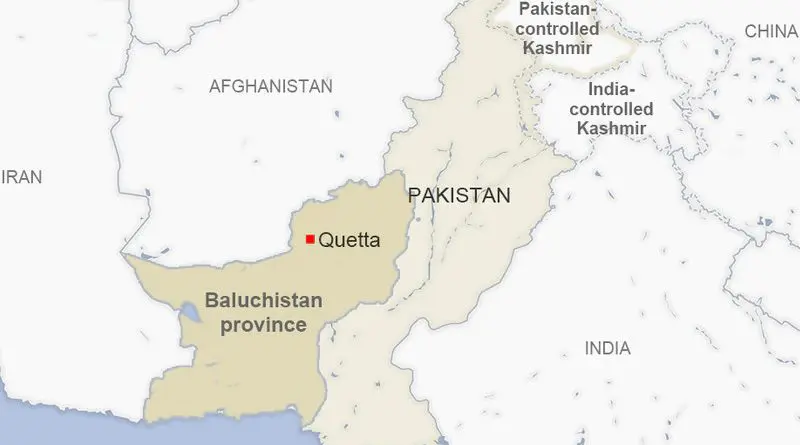
Hidden in the rocky mountainous terrain, the Southwestern province of Pakistan is veiled in long-standing protests. Draped in bright vibrant colors, the women holding banners and chanting slogans fill streets, grounds, and highways. In the past few years, this has become a common sight in Balochistan.
The never-ending struggles of Baloch women, who step out of their houses only for protests, sit-ins, and demonstrations, seem to be stuck in a vicious cycle that consumes generations. Lately, some strong voices have emerged within Balochistan that took the world by surprise. Young girls, in their mid-twenties with strong, powerful voices—Mahrang Baloch and Sammi Deen—have become a beacon of hope amidst the darkness of insecurity, instability, and terrorism that lingers on.
These young women, braving the hurdles, lead protests that, on the front, appear to champion justice and rights, highlighting the underlying complexities of Balochistan. The increasing issue of enforced disappearances has compelled every Baloch to take to the streets. Yet these protests may not tell the whole story. The protests and sit-ins only suggest that there may be an intertwined, broader challenge facing the region. The repeated occurrence of security incidents following major demonstrations raises critical concerns. Incidents such as the Lasbela attack and the Musakhel killings, which took place after the Raji Muchi protests, and the Turbat blast following a sit-in for enforced disappearances indicate a pattern that cannot be overlooked.
The Baloch Yakjehti Committee (BYC), under the young leadership of versatile Mahrang Baloch, organized a long march comprising Baloch women and children who dared to leave their homes and walk toward the federal capital of Islamabad. In the cold winter nights of December 2023, Mahrang led them to Islamabad in anticipation of finding the whereabouts of their loved ones. Yet they were forced to return without achieving their goal. However, just as Mahrang wrapped up the sit-in in Islamabad on 24 January 2024, she announced the next phase of the movement, which was set to begin in Quetta on 27 January 2024. While BYC continued with protests, marching across the province, on the night of 29 and 30 January, the proscribed terrorist organization BLA launched rockets on the sleeping citizens of Mach city in Bolan district of Balochistan. The Baloch Liberation Army (BLA) set siege to the city for three days, seizing entry and exit points in the city, knocking on doors to harass peaceful citizens. The fifth phase of the movement by BYC suddenly came to a halt as attention shifted to the attack and the post-attack clearance operation by the Pakistan Army. After the incident, the people of Balochistan sighed in relief as the protests came to an end and the deadly attack was cleared up with peace returning to the city. However, they were unaware that it was just the beginning.
In April and May, BYC once again began a social media campaign for the fifth phase of the movement to bring awareness among the masses of the state’s atrocities against the Baloch ethnicity. In May, the Committee announced another gathering, this time in Gwadar. The Gwadar gathering was named the Baloch Raji Muchi (Baloch National Gathering), calling the people of Balochistan to join so they may garner local and international attention to the issues. The event was to be held on 28 July 2024, for which BYC provided transportation across the province. The mass mobilization was, however, hijacked by members of the proscribed BLA, who resorted to stone pelting at the security personnel, damaging public property, and attacking members of the civil administration at the venue. Social media witnessed, on many occasions during the procession, some unidentified men with covered faces stopping the buses and writing out “BLA,” associating the caravan movement with the activities of the terrorist organization. The one-day gathering at Gwadar turned into a month-long protest from Gwadar to Quetta. It culminated with the BLA attack on the Frontier Corps (FC) Camp Bela in Lasbela and a killing spree of passengers who were offloaded from a bus in the middle of the night at Musakhel. All the passengers belonged to Punjab and were brutally killed in front of their women and children.
This incident shook the whole nation, with other provinces on the verge of ethnic conflict, especially Punjab, where many cases of vandalism against Baloch shopkeepers and vendors were reported. The state machinery resorted to vowing the eliminate terrorism from Balochistan, making it safe for everyone. However, it came to be known as an empty promise. The Government of Balochistan, along with the Interprovincial Coordination Committee, decided to halt all interprovincial travel and transportation at night, citing security concerns. The highways connecting Punjab to Balochistan were declared unsafe for travel. It seemed as if the terrorists had achieved their objective of successfully isolating Balochistan from the rest of Pakistan, while the law enforcement agencies (LEAs) began counter-terrorism efforts against the perpetrators of such activities. Once again, the arrests made in this regard were termed as enforced disappearances during protests, hindering counter-terrorism efforts.
BYC was once again on the streets, chanting slogans against the state’s atrocities. Forceful road closures intertwined with hostile actions from members of BYC became a common sighting at protests and sit-ins which was concerning. The committee members at one occasion took officials of the civil administration in Awaran hostage by locking the office gates while continuing road closures. The protests and road closures continued in Turbat and Awaran until 4 January 2025, when suddenly, in the afternoon of 4 January, a suicide attack targeted an FC convoy in Turbat, claiming the lives of soldiers and civilians. BLA once again claimed responsibility for this attack, while some social media accounts run by Indian handles claimed it was revenge for Pulwama attack of 2019. Another protest that culminated in a terrorist attack raises questions about the credibility of these protests and ultimately that of BYC.
The ongoing cycle of protests and subsequent incidents raises broader questions about the regional dynamics and potential external influences shaping the landscape. Ensuring stability in Balochistan requires a comprehensive approach that combines security measures with socio-economic development and genuine community engagement. Initiatives such as the China-Pakistan Economic Corridor (CPEC) offer a pathway to progress, but they must be safeguarded from disruption. Ultimately, while the protests in Balochistan reflect deep-rooted concerns, addressing them requires a nuanced approach that recognizes both the legitimate demands and the broader challenges at play. Constructive dialogue, transparency, and development initiatives are key to fostering long-term peace and stability in the region.

Like what you read?
Please consider supporting Eurasia Review. Thank you for your consideration!
