
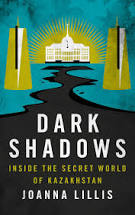
‘Dark Shadows: Inside The Secret World Of Kazakhstan’ – Review
Joanna Lillis‘ Dark Shadows, Inside the Secret World of Kazakhstan (I. B. Tauris, 2018) takes the reader on a penetrating, colourfully written journey into the recesses of a little known Central Asian nations on the frontier of tectonic shifts across Eurasia.
Kazakhstan, a sparsely populated oil-rich former Soviet republic that shares borders with Russia and China that stretch thousands of kilometres, in which demographics amount to geopolitics, walks a tight rope in a world increasingly dominated by leaders who to varying degrees define their states in civilizational rather than national terms.
Russia’s annexation of Crimea and stirring of unrest in two regions of Ukraine coupled with veiled threats uttered by Russian President Vladimir Putin raise the spectre of Kazakhstan’s worst nightmares.
China’s brutal crackdown on Turkic Muslims, including ethnic Kazakhs, in its troubled north-western province of Xinjiang fuels long-standing public suspicion of Chinese ambitions and put the government between a rock and a hard place.
Led for almost three decades until he recently stepped down, former Communist party boss Nursultan Nazarbayev has moulded Kazakhstan in his image: an authoritarian state with some trappings of democracy that increasingly are being curtailed.
Lillis paints a compelling picture of a nation that is still grappling with the consequences of Joseph Stalin’s devastating disruption of its demography and identity as it seeks forge its path in a post-Nazarbayev era against the backdrop of big power jockeying for influence in the heart of Eurasia.
With the keen eye of a journalistic fly on the wall and the ability to turn words into images, Lillis portrays a strategically important country at the crossroads of geopolitics that are likely to shape an emerging new world order.

Like what you read?
Please consider supporting Eurasia Review. Thank you for your consideration!
