
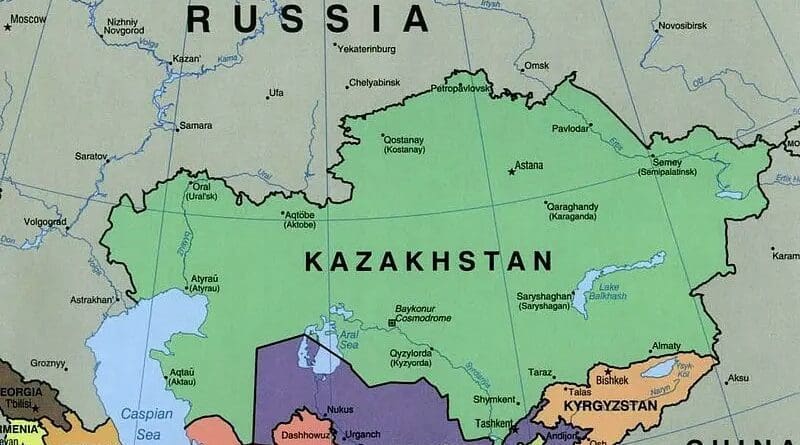
Navigating Power Poles: Kazakhstan’s Multi-Vector Diplomacy And Regional Ascendancy – Analysis
In 1991, the dissolution of the Soviet Union marked a seismic shift in the geopolitical landscape of Central Asia. This transformation, described by President Putin in 2005 as the “greatest geopolitical catastrophe of the century,” presented Kazakhstan with unprecedented challenges, including economic instability and dependence on Russia. To navigate this turbulent period, Kazakhstan’s first president, Nursultan Nazarbayev, implemented a multi-vector diplomatic approach. This policy aimed to establish balanced and pragmatic relationships with multiple global powers while safeguarding Kazakhstan’s sovereignty and national interests.
The essence of the multi-vector policy lies in fostering mutually beneficial cooperation with global powers such as Russia, China, the United States, the European Union, and others without becoming overly dependent on any single actor. By actively engaging with diverse partners, Kazakhstan has sought to assert its regional leadership and economic stability.
Historical Context of Kazakhstan’s Multi-Vector Policy
Before gaining independence, Kazakhstan and the broader Central Asian region were primarily resource extraction zones for the Soviet Union. Kazakhstan, rich in oil, gas, and minerals, also served as a nuclear testing site. The Soviet strategy of dividing ethnic groups and creating administrative boundaries ensured the region remained dependent and fragmented, preventing unified resistance.
The disintegration of the Soviet Union in 1991 thrust Central Asian republics, including Kazakhstan, into uncharted waters. These nations, designed for governance under a centralized Soviet framework, found themselves ill-prepared for independence. In Kazakhstan, the transition to an independent government brought challenges such as hyperinflation following the collapse of the ruble zone, instability linked to neighboring Afghanistan, and issues like drug smuggling and human trafficking. Recognizing the need for a strategic response, President Nazarbayev adopted the multi-vector policy to reduce dependency on Russia and build diversified relationships with other global powers.
The Inner Works of Multi-Vector Diplomacy
Kazakhstan’s strategic positioning and richness in natural resources such as large reserves of oil and gas have made it more relevant in regional geopolitics. Kazakhstan has upheld delicate balance between the major powers through its multi-vector policy. Russia has also remained a player and influencer of key importance in the whole Central Asia region.
Kazakhstan is a member of the Collective Security Treaty Organization (CSTO), meaning its military cooperation is joined with Russia and other former Soviet states. It also collaborates with Russia on regional security matters, especially concerning Afghanistan and Islamic extremism. Kazakhstan which is within the scope of Eurasian Economic Union (EEU), a Russia-led regional bloc that promotes free trade and closer economic relationships. Kazakhstan has treaded carefully in its dealings with Russia, asserting its independence when it matters. For instance, during Russia’s annexation of Crimea in 2014, Kazakhstan did not take sides and has even advocated for regional security that includes cooperation with the West, not just Russia. Kazakhstan’s neutral attitude can also be observed through its position on the ongoing Russia-Ukraine war, which is a clear manifestation of its multi-vector policy.
Kazakhstan has welcomed projects such as the Belt and Road Initiative (BRI) with open arms, using Chinese investments to expand infrastructure and branch out partners. Kazakhstan’s relationship with the EU and the US also reflects its desire to expand partnerships outside of its immediate region, especially in sectors like energy exports and technology. This pragmatic stance has proved critical to maintaining Kazakhstan’s independence and strengthening its role domestically and abroad.
Impact of Russia on the other Central Asian states
Kazakhstan’s successful maintenance of this policy has established a growing divergence with the other Central Asian states, including Tajikistan, Uzbekistan, Turkmenistan, and Kyrgyzstan, which remain deeply embedded in diverse degrees of dependency on Russia. Tajikistan, for one, depends greatly on remissions from migrant workers in Russia that account for more than 30 percent of its G.D.P. and receives plenty of military assistance by way of a large Russian contingent at its 201st Military. Challenges such as drug smuggling and extremism along the Afghan border further deepen Tajikistan’s reliance on Moscow.
However, the Russia-Ukraine conflict has disrupted remittance flows, exposing the vulnerabilities of this dependence. Similarly, Uzbekistan, under President Shavkat Mirziyoyev, has attempted to adopt a balanced foreign policy but remains economically tethered to Russia due to its reliance on Russian energy infrastructure. Despite withdrawing from the Collective Security Treaty Organization (CSTO), Uzbekistan’s limited diversification options and ongoing cooperation with Russia on regional security issues hinder its multi-vector aspirations. Turkmenistan’s dependence on Russia is particularly evident in its natural gas exports, heavily tied to the Gazprom-Turkmenistan partnership, which grants Moscow significant influence over the Turkmen economy.
The country’s avoidance of engaging with Western or regional multilateral organizations further restricts its capacity for multi-vector diplomacy. Meanwhile, Kyrgyzstan’s economic and security reliance on Russia is underscored by remittances from workers in Russia and its alignment with Moscow’s defense policies as a CSTO member. Collaborative military initiatives highlight Russia’s sway, preventing Kyrgyzstan from achieving strategic independence.
Kazakhstan’s multi-vector diplomacy has established it as a regional leader, enabling it to maintain balanced relations with major powers while safeguarding its sovereignty. This approach leverages Kazakhstan’s geographic and resource advantages effectively. In contrast, the economic and security dependencies of other Central Asian nations on Russia underscore the difficulties of implementing a truly balanced foreign policy. As Kazakhstan continues to navigate the complexities of regional and global geopolitics, its multi-vector strategy serves as a model for other nations aspiring to assert their independence in a multipolar world. By fostering diverse partnerships and maintaining strategic autonomy, Kazakhstan exemplifies the potential of pragmatic diplomacy in securing national interests and achieving regional leadership.
Kazakhstan’s Independent Stance in International Relations
Kazakhstan’s approach during the Russia-Ukraine war serves as a compelling demonstration of its independent foreign policy, shaped by its multi-vector strategy. This strategy emphasizes maintaining balanced relationships with multiple global powers while safeguarding national sovereignty and adhering to international law. Kazakhstan’s responses to the conflict highlight its nuanced diplomacy and commitment to neutrality, even when dealing with its most influential neighbor, Russia.
1. Refusal to Recognize Russia’s Annexation of Ukrainian Territories
Kazakhstan has consistently upheld Ukraine’s territorial integrity. It refused to recognize Russia’s annexation of Crimea in 2014 and reiterated this stance during the 2022 annexation of the Donetsk, Luhansk, Zaporizhzhia, and Kherson regions. President Kassym-Jomart Tokayev publicly declared at the St. Petersburg International Economic Forum in June 2022 that Kazakhstan does not acknowledge “quasi-state territories.” This explicit statement underscores Kazakhstan’s firm position against violations of international borders.
2. Neutrality in UN Resolutions
Kazakhstan’s stance at the United Nations further reflects its independent policy. The country abstained from key votes condemning Russia’s actions in Ukraine, opting instead to call for peaceful negotiations and adherence to international law. In March 2022, Kazakhstan abstained from voting on a resolution to suspend Russia from the UN Human Rights Council. These actions signal its reluctance to align fully with Moscow while maintaining a balanced position internationally.
3. Denial of Support for Russian Military Efforts
Despite being a member of the Collective Security Treaty Organization (CSTO), Kazakhstan refused Russia’s request for military support in the Ukraine conflict. Kazakhstan emphasized that its CSTO commitments are strictly defensive, and it did not deploy troops to assist Russia. Additionally, the country declined to help Moscow evade Western sanctions, further highlighting its independent stance.
4. Hosting Russian Draft Dodgers
Kazakhstan’s humanitarian response to Russia’s partial mobilization in September 2022 reinforced its neutral position. Thousands of Russian citizens fled to Kazakhstan to escape conscription, and the Kazakh government allowed them entry and residency. President Tokayev affirmed Kazakhstan’s commitment to humanitarian principles, stating that the country would not deport individuals fleeing conscription.
5. Providing Humanitarian Aid to Ukraine
In a clear signal of neutrality and support for humanitarian principles, Kazakhstan sent multiple shipments of aid to Ukraine. These shipments included medical supplies, food, and other essential goods, demonstrating Kazakhstan’s concern for the Ukrainian population’s suffering despite its economic ties with Russia.
6. Economic Diversification Amid Sanctions
The sanctions imposed on Russia following the invasion of Ukraine pushed Kazakhstan to diversify its trade routes. The country actively pursued alternatives to Russian transit infrastructure by developing the Trans-Caspian International Transport Route (Middle Corridor), connecting Kazakhstan to Europe via the Caspian Sea, Azerbaijan, and Turkey. This move reflects Kazakhstan’s proactive efforts to mitigate risks associated with overreliance on Russian infrastructure.
7. Advocacy for Peace and Dialogue
Throughout the conflict, Kazakhstan has consistently called for a peaceful resolution and dialogue between Russia and Ukraine. President Tokayev offered Kazakhstan as a neutral venue for potential peace talks, reinforcing the country’s image as a mediator committed to stability and international law.
8. Reaffirming Domestic Policy Independence
Kazakhstan’s independence extends beyond its foreign policy. It resisted Russian pressure to align its domestic policies more closely with Moscow, refusing to implement counter-sanctions against Western countries. President Tokayev emphasized the importance of adhering to international law and safeguarding Kazakhstan’s sovereignty, further distancing the country from Russia’s geopolitical agenda.
Kazakhstan’s actions during the Russia-Ukraine war illustrate its ability to maintain an independent and balanced foreign policy under its multi-vector strategy. By refusing to recognize Russia’s territorial claims, abstaining from aligning with Russia at international forums, hosting Russian draft dodgers, and providing humanitarian aid to Ukraine, Kazakhstan reaffirmed its sovereignty and adherence to international norms. These steps showcase the country’s commitment to neutrality, sovereignty, and regional leadership, setting a notable example for other nations navigating complex geopolitical landscapes.
Challenges of Kazak’s Policy
Kazakhstan’s multi-vector policy has been pivotal in maintaining balanced relations with global powers, but it is not without significant challenges. These challenges stem from geopolitical, economic, and regional factors, as well as internal vulnerabilities. Below is an analysis of the major obstacles Kazakhstan faces in implementing its multi-vector strategy effectively:
1. Geopolitical Pressures from Major Powers
- Russia’s Influence: Kazakhstan shares a long border with Russia and has historical, cultural, and economic ties with Moscow. Russia’s assertive foreign policy and dominance in the region, particularly through organizations like the Eurasian Economic Union (EAEU) and the Collective Security Treaty Organization (CSTO), exert considerable pressure on Kazakhstan to align with its interests.
- China’s Growing Dominance: China’s Belt and Road Initiative (BRI) has deepened its economic influence in Kazakhstan, particularly through infrastructure projects and energy investments. This growing dependence risks Kazakhstan being overly influenced by Beijing, limiting its ability to maintain an independent stance.
- Balancing the West: While Kazakhstan seeks closer ties with the European Union and the United States, these relationships can provoke suspicion and countermeasures from Russia and China. Western emphasis on human rights and governance reforms also poses challenges to Kazakhstan’s domestic policies.
2. Economic Dependencies
- Reliance on Energy Exports: Kazakhstan’s economy heavily depends on oil, gas, and mineral exports, which makes it vulnerable to fluctuations in global commodity prices. Russia and China are significant markets for these exports, creating dependency risks.
- Sanctions and Regional Isolation: Western sanctions on Russia due to the Ukraine conflict have disrupted regional trade and affected Kazakhstan’s ability to balance its economic partnerships.
- Limited Economic Diversification: Despite efforts to develop non-resource sectors, Kazakhstan remains heavily reliant on its extractive industries, making it challenging to pivot towards new markets.
3. Regional Stability and Security
- Proximity to Afghanistan: The instability in Afghanistan, particularly after the U.S. withdrawal and the Taliban’s return to power, poses security risks, including drug trafficking, extremism, and cross-border instability.
- Ethnic Tensions and Border Disputes: Kazakhstan’s diverse ethnic composition and long borders with neighboring states can lead to internal and external tensions, complicating its regional relationships.
- Water and Resource Conflicts: Central Asian nations, including Kazakhstan, face disputes over water resources and energy-sharing agreements, adding stress to regional diplomacy.
4. Domestic Challenges
- Political Reforms and Stability: Kazakhstan has faced criticism over its slow pace of political reforms and allegations of authoritarian governance. These issues strain its relations with Western nations and hinder the development of a robust multi-vector strategy.
- Economic Inequality: Despite economic growth, wealth distribution remains uneven, creating social discontent that could undermine national stability.
- Ethnic and Linguistic Issues: Balancing the interests of the Kazakh majority and Russian-speaking minorities is an ongoing challenge, especially given Russia’s interest in protecting Russian-speaking populations abroad.
5. Global Geopolitical Dynamics
- Russia-Ukraine War: Kazakhstan’s neutral stance during the Russia-Ukraine conflict has strained its relations with Moscow. Refusing to support Russia’s annexation of Ukrainian territories and hosting Russian draft dodgers has created diplomatic friction.
- U.S.-China Rivalry: The growing strategic competition between the U.S. and China forces Kazakhstan to navigate a highly polarized international environment, complicating its efforts to maintain balanced relations.
6. Institutional and Logistical Constraints
- Infrastructure Development: Kazakhstan’s vast territory and landlocked position require significant investments in infrastructure to access global markets. Dependence on Russian transit routes and Chinese logistics limits its autonomy.
- Institutional Capacity: Implementing a multi-vector foreign policy requires a well-functioning diplomatic corps and robust institutions, which Kazakhstan is still developing.
Kazakhstan’s multi-vector policy has positioned it as a key player in Central Asia, but its success depends on navigating these complex challenges. Addressing economic vulnerabilities, enhancing regional cooperation, and managing external pressures from global powers will be essential for Kazakhstan to maintain its strategic autonomy and continue leveraging its geographic and resource advantages.
Benefits of Kazakhstan’s Multi-Vector Foreign Policy
Kazakhstan’s multi-vector foreign policy has been a cornerstone of its international strategy since gaining independence in 1991. This approach, rooted in pragmatism and neutrality, has enabled the country to balance relations with global powers, leverage its geographical and economic advantages, and maintain stability in a volatile region. Below is a detailed analysis of the key benefits of this policy:
· Enhanced Sovereignty and Strategic Autonomy: Kazakhstan has maintained balanced relations with major powers like Russia, China, the United States, and the European Union, safeguarding its sovereignty and avoiding over-dependence on any single partner. Despite historical and economic ties with Russia, it has pursued an independent path, resisting undue influence, as demonstrated by its stance on the Russia-Ukraine war. Similarly, while China’s economic presence is significant, Kazakhstan has actively engaged with other partners to maintain a balanced relationship with Beijing.
· Economic Diversification and Connectivity: The multi-vector approach has opened diverse avenues for economic growth and trade, reducing reliance on any single market or partner. The development of the Middle Corridor, connecting Kazakhstan to Europe via the Caspian Sea, Azerbaijan, and Turkey, diversifies export options and reduces dependence on Russian transit routes. By cultivating relations with Western countries, Kazakhstan has attracted investments in energy, infrastructure, and technology, complementing Chinese investments under the Belt and Road Initiative (BRI). These balanced relations allow Kazakhstan to secure competitive deals for its vast reserves of oil, gas, and minerals while ensuring the inflow of advanced technologies for resource extraction.
· Regional Leadership and Stability: Kazakhstan’s multi-vector diplomacy positions it as a stabilizing force and leader in Central Asia. Its neutral stance in global conflicts, including offering to mediate the Russia-Ukraine war, enhances its image as a peacebuilder. Active participation in platforms like the Shanghai Cooperation Organization (SCO), Eurasian Economic Union (EAEU), and Organization for Security and Co-operation in Europe (OSCE) strengthens Kazakhstan’s influence in shaping regional and global agendas.
· Strengthened International Partnerships: Kazakhstan’s foreign policy has enabled it to establish robust ties with diverse partners, ensuring flexibility to pivot to alternative allies if needed. Relations with the EU and the U.S. provide access to markets, technology, and development assistance, while ties with China, Turkey, and South Korea enhance its integration into the Asian economic and political landscape. Kazakhstan exemplifies balanced alliances by collaborating with Russia on security while engaging with the West on economic diversification.
· Security and Defense Optimization: Kazakhstan’s multi-vector policy has reinforced its security framework without becoming entangled in conflicts. By abstaining from military alignments that could provoke major powers, it maintains strategic neutrality and minimizes external threats. Membership in the CSTO provides security guarantees from Russia while allowing Kazakhstan to assert its independent defense policies.
· Diplomatic Prestige and Global Recognition: Pragmatic and balanced diplomacy has elevated Kazakhstan’s international profile. Hosting significant summits, such as the Astana Peace Talks on Syria and the Congress of Leaders of World and Traditional Religions, underscores its role as a trusted mediator. Chairmanship roles in organizations like the OSCE highlight its commitment to global stability and cooperation.
· Promotion of National Development: The economic benefits and global partnerships arising from the multi-vector policy directly contribute to Kazakhstan’s domestic development. Collaborations with China and the EU have modernized infrastructure, enhancing connectivity and trade potential. Partnerships with Western nations have brought investments in education and technology, fostering innovation and creating a knowledge-based economy.
· Mitigation of External Risks: Kazakhstan’s balanced foreign relations mitigate risks arising from regional conflicts or global power rivalries. Its neutral stance on the Russia-Ukraine conflict enables peaceful relations with Russia without alienating Western allies. Careful navigation of Western sanctions on Russia ensures Kazakhstan’s economy and trade remain unaffected.
· Leverage of Geopolitical Position: Kazakhstan’s strategic location as a bridge between Europe and Asia makes it vital for transcontinental trade and energy transit. Its oil and gas exports to Europe, China, and other regions enhance its strategic importance, while participation in initiatives like the BRI boosts its role in global supply chains.
· Cultural and Soft Power Diplomacy: The multi-vector policy enables Kazakhstan to showcase its cultural and historical significance, strengthening its soft power. Cultural exchange programs foster dialogue and mutual understanding with multiple regions. By promoting its Eurasian identity, Kazakhstan highlights its model of coexistence between diverse ethnic, religious, and cultural groups, reinforcing its role as a bridge between East and West.
Conclusion
Kazakhstan’s multi-vector foreign policy is a pragmatic and forward-thinking strategy that has enabled the country to navigate the complexities of global geopolitics effectively. By balancing relations with major powers, fostering economic growth, and maintaining regional stability, Kazakhstan has not only safeguarded its sovereignty but also emerged as a respected and influential player on the global stage. While challenges persist, the benefits of this approach significantly outweigh the risks, providing a robust framework for sustainable development and strategic autonomy.

Like what you read?
Please consider supporting Eurasia Review. Thank you for your consideration!
