
The Perils Of External Interference – OpEd
A few days back Rep. Joe Wilson had tweeted linking the political instability in Pakistan to a deadly terrorist attack in Pahalgam, India. Wilson suggested that the violence in Pakistan is a result of a lack of democracy in Pakistan and that regional stability can only be reached if Pakistanis begin to follow political reforms and the passing of the Pakistan Democracy Act. But this tweet has ignited a debate in kind over its meaning and the broader collateral that comes with rallying political agendas behind such tragical matters.
The tweet is not just a regular political statement as it is an attempt to bring together Pakistan’s internal political problems to a certain security episode in a neighbouring country. Wilson is being reckless and irresponsible making an insufficient amount of evidence when he connects so. To claim that the Pahalgam attack was a direct result of instability in Pakistan is not just speculative; it is extremely dangerous, because the reality of terrorism in South Asia is quite complex. Terrorism to many has many causes, and these factors include regional politics, religious extremism and historical conflicts. Without credible evidence linking Pakistan to the specific attack, it does not help cool tensions between two already volatile nations and is just doing to blame.
Additionally, it is very clear that Wilson’s choice of a tragedy like the Pahalgam attack for his advocacy of the Pakistan Democracy Act is an enormous violation of the sovereignty of a country. This act would restore democracy in Pakistan, and in the process, would bring political reforms there. Yet such external interventions do not always recognize a nation’s local context and nuances of their political climate. An unverified tragedy is used to pass such a law and that may aggravate existing problems or create new ones. Wilson’s approach attaches political agendas to acts of terrorism, making it worse than destabilizing the region, it promotes the democratic principles that he claims to support.
In fact, this is an entire syndrome of Western foreign policy that thinks importing democracy is better than fostering it from within. With this, true democratic progress is always a result of inside a nation. Though led by its people, who in turn are led by their leaders, it reacts to the people’s needs and conditions locally. There is usually unintended consequence from external pressure and sanctions. Wilson’s call for external intervention, in this case will only strengthen Pakistan’s anti-Western sentiment. That democracy cannot be forced and trying to do so usually leads to strengthening of anti-democratic forces who can abuse those external pressures to consolidate their own power.
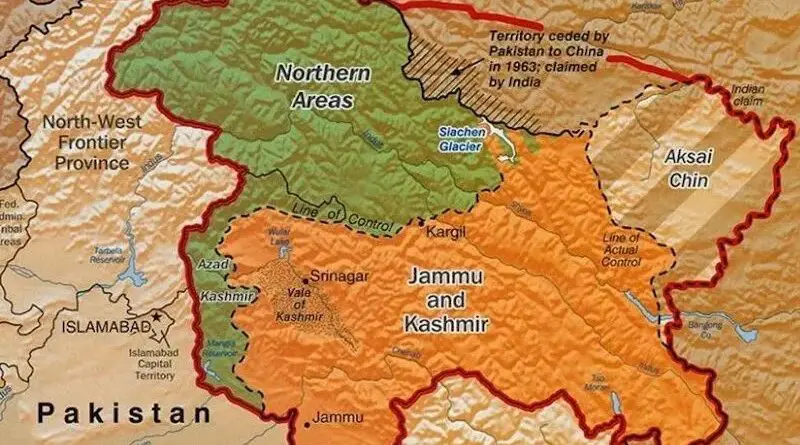
By targeting Pakistan in his tweet as well, Wilson is ensuring that the wider problems which contribute to instability in the region don’t get the attention they deserve. For example, the Pahalgam attack is a complicated tragedy that involves much insight into the political quagmire between India, Pakistan and Kashmir. A significant factor in the instability of the region is India’s handling of the Kashmir issue and other ongoing human rights abuses and security failures. He deflects responsibility by placing all the blame on Pakistan, while he avoids to talk about India’s part in the continuation of the ongoing tensions in Kashmir. The approach not only distorts the narrative, but heavily undermines the process of the dialogue between India and Pakistan, which is required to tackle the issue of the root causes of extremism and violence.
Wilson likewise treads the same ground as weaponizing terrorism for political gain. If he uses the excuse of a terrorist attack to push in legislation, he risks turning a genuinely serious security issue into a political nonsense. In this process, he undermines the integrity of collective efforts to deal with terrorism on a rational basis. Terror has become a challenge to which the world must stand as one, not a virus to be played to narrow domestic political ends. Statement like Wilson’s risk make it more difficult to build trust and increased understanding between governments. At a time when collaboration and shared responsibility are most essential, the region does not need more political polarization.
Evidence is not guessing, and responsible policymaking demands such a foundation. The lack of credibility in this investigation is pretext to action jumping to conclusions that undermines the efforts to build trust between nations and can further increase regional tensions. Rep. Wilson, however, has not yet presented any convincing evidence that connects Pakistan to the Pahalgam attack, and has used this tragedy precisely to push an agenda that may inflame existing tensions between India and Pakistan. Such rhetoric rather serves to intensify the problem instead of advancing peace or stability by increasing distrust and widening the rift between the countries involved.
Such irresponsible rhetoric has very far-reaching consequences. By making unsubstantiated broad claims, Wilson creates an environment for hostility that makes ending the root issues that much harder. This goes against the role of an impartial mediator the U.S. has played for a long time in South Asia promoting peace and stability. Wilson’s tweet sends a message that one can obtain political leverage through the exploitation of tragedy for legislative gain, a responsibility that political leaders will have to answer for in future foreign policy.

Like what you read?
Please consider supporting Eurasia Review. Thank you for your consideration!
