
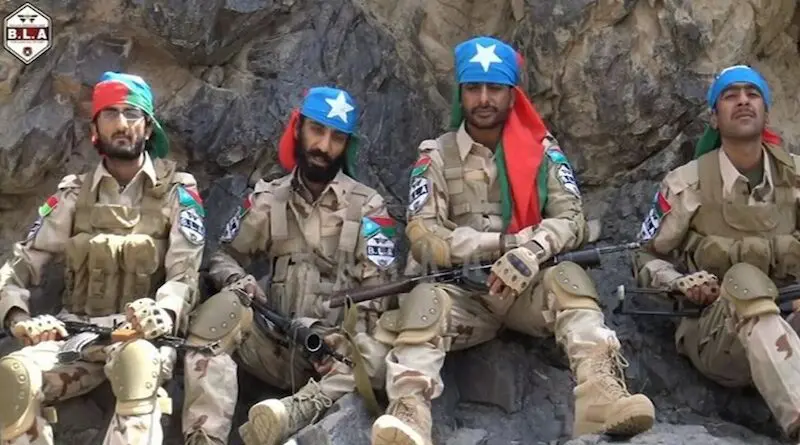
Terrorism Without Borders: BLA Joins Global Blacklist – OpEd
In a long-overdue move, the United States Department of State officially designated the Balochistan Liberation Army (BLA) as a Specially Designated Global Terrorist (SDGT) organization under Executive Order 13224. The decision is more than just a symbolic gesture — it is a direct acknowledgement that BLA, an armed separatist group operating from within and beyond Pakistan’s borders, poses a grave threat to regional stability and global security. The designation closes the gap between BLA’s actual activities and how the international system has, until now, failed to confront them fully.
The BLA’s inclusion in the global terror registry signifies a pivotal shift. For too long, this ethno-separatist group has masqueraded under the veil of “freedom fighting,” while executing high-profile terrorist operations targeting civilians, critical infrastructure, and foreign nationals — especially Chinese workers associated with the China-Pakistan Economic Corridor (CPEC). The international community’s belated response raises crucial questions about the motives behind the BLA’s operations and their undeniable links to broader geopolitical designs.
Originally emerging as a nationalist separatist group, the BLA has transformed into a transnational terrorist outfit with clear patterns of targeting not just the Pakistani state but also international actors. The group’s 2018 suicide bombing targeting Chinese engineers, the assault on the Chinese consulate in Karachi, and the 2019 attack on the Pearl Continental Hotel in Gwadar are not isolated events. They reflect a sustained campaign to sabotage Pakistan’s stability and foreign partnerships — particularly those tied to CPEC.
These attacks are calculated to damage Pakistan’s economic interests, strain its diplomatic ties, and deter foreign investment. While such acts were once brushed off as “internal unrest,” their scale and sophistication have increasingly pointed toward organized external patronage — most notably from India. The revelations of Indian involvement in sponsoring BLA activities, as highlighted by numerous intelligence assessments and confessions, underline the role of proxy warfare in South Asia.
While the global spotlight is now shifting toward recognizing BLA as a legitimate terrorist threat, what remains in the shadows is the question of who enables and benefits from the group’s sustained operations. Pakistan has persistently raised alarms over India’s covert support to BLA — including financing, intelligence, and media amplification. The arrest and confession of Indian naval officer Kulbhushan Jadhav, who admitted to facilitating separatist militants in Balochistan, gave credence to Islamabad’s long-standing claims.
India’s strategic use of proxies to destabilize Pakistan is no longer a theoretical charge — it has now been internationally corroborated. Yet, India continues to weaponize narratives, media platforms, and diplomatic levers to shield its involvement under the pretext of “support for democracy” or “human rights.” The BLA, meanwhile, receives moral and material support under the guise of opposition to state oppression — a hypocrisy that should now stand exposed.
Global Designations: More Than Just Sanctions
The designation of the BLA as an SDGT means more than just blocked bank accounts and frozen assets. It formalizes the group’s international isolation and raises the cost of any form of engagement — overt or covert — with its operatives. The move also strengthens Pakistan’s legal and diplomatic case at global forums like the United Nations, FATF, and the International Court of Justice, allowing it to spotlight the double standards of countries that tacitly tolerate or enable terrorist proxies.
Additionally, this designation sends a clear message to social media platforms and digital intermediaries that continue to host BLA propaganda and recruitment content. Tech giants, now under increased regulatory scrutiny, must act with urgency to dismantle BLA’s online footprint, which has been instrumental in radicalizing youth, spreading disinformation, and glorifying acts of violence.
One of the most dangerous outcomes of the BLA’s operational strategy has been the distortion of genuine grievances in Balochistan. Socio-economic underdevelopment and lack of political representation are real issues — but they are cynically exploited by terrorist groups for legitimacy. Unfortunately, sections of international media often conflate insurgency with rights activism, thereby legitimizing extremist violence and undermining the efforts of Pakistan to address Balochistan’s challenges through democratic and development-oriented means.
With this designation, the mask is finally off. The Balochistan Liberation Army is no longer a “freedom movement” in international parlance — it is a terrorist organization. The world must now choose whether it stands with sovereign nations fighting terror or with those who orchestrate chaos under the guise of nationalism. India’s covert games in South Asia have fueled proxy wars, sabotaged peace efforts, and endangered regional stability. The BLA’s inclusion on the global blacklist is not just a victory for Pakistan but a test of the world’s commitment to a consistent and fair counterterrorism policy. It’s time the globe stopped looking away.

Like what you read?
Please consider supporting Eurasia Review. Thank you for your consideration!
