
Biofuels, Belém, And The Battle For A Fairer Climate Future – OpEd
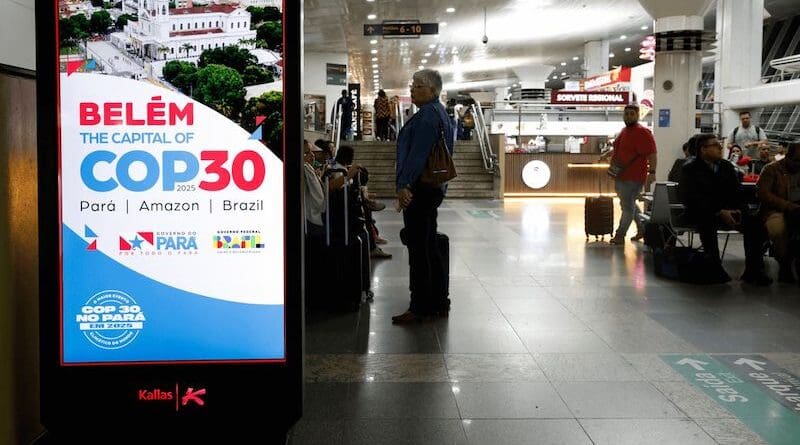
When the world convenes in Belém, Brazil, for COP30, a small but potent molecule may dominate the grand conversations of nations: biofuel.
The International Renewable Energy Agency (IRENA) has hinted that sustainable biofuels, once a technical curiosity, will become a centerpiece of this year’s global climate summit. Yet the deeper story here is not merely about chemistry but about justice. Biofuels stand at the crossroads of innovation, geopolitics, and moral responsibility. If handled well, they could redefine the world’s energy order. If handled poorly, they risk entrenching the same inequities that fossil fuels once did.
For decades, the world has struggled to find a balance between growth and sustainability. Fossil fuels built empires and ignited wars. Now, the same economies that profited from them are racing to decarbonize their past. The call for biofuels, derived from crops, waste, and organic material, offers hope for a circular, lower-carbon future. But beneath the promise lies a warning: who gets to benefit from this new era, and who bears its cost?
A Biofuel Renaissance
IRENA’s announcement that sustainable biofuels will take center stage at COP30 is no small signal. It marks a pivot from vague pledges to practical pathways, the messy, technical, but vital business of how humanity will actually power itself in the decades to come. The numbers are startling. IRENA projects that to stay on track for net-zero by 2050, global biofuel production must quadruple by 2035. That means massive investment in bio-refineries, new supply chains, and agricultural reform.
Critics often scoff that biofuels are “yesterday’s solution,” an inefficient detour compared to solar or hydrogen. But this misses the point. The world doesn’t run on idealism; it runs on infrastructure. Liquid fuels are essential for aviation, shipping, and heavy transport, sectors that cannot simply be electrified overnight. Sustainable aviation fuel (SAF), made from waste oils and plant matter, has already proven capable of cutting emissions by up to 80 percent compared to traditional jet fuel. Even more importantly, biofuels can be produced locally, empowering regions long locked out of the energy conversation.
This is why the upcoming summit in Belém matters so deeply. Brazil, the host, is a biofuel powerhouse and home to decades of ethanol expertise. Its leadership symbolizes not only technical know-how but also the voice of the Global South asserting its right to shape the energy narrative. For too long, the climate agenda has been dictated by the North. COP30 could finally change that.
The Global South’s Green Claim
As biofuels gain momentum, one question burns brighter than any refinery flame: who owns the green future? For developing nations, biofuels offer more than an energy alternative; they promise sovereignty. Imagine rural economies thriving on energy crops, farmers turning agricultural waste into wealth, and nations reducing their dependency on imported oil. This is not a fantasy. It is a feasible path if technology transfer and fair financing align.
Yet equity is fragile. Without proper governance, the race for biofuels could spark land grabs, deforestation, and water scarcity. The global North’s hunger for low-carbon fuel must not become another form of resource extraction in disguise. Sustainability must mean justice, not just emissions arithmetic.
IRENA’s emphasis on the social dimensions of the energy transition is therefore critical. Climate solutions cannot be engineered solely in laboratories; they must be cultivated in communities. Every liter of biofuel should carry not only energy but dignity.
Pakistan’s Green Awakening
Among the nations poised to benefit from this new dawn is Pakistan, a country blessed with sunlight, fertile plains, and unyielding resilience. For years, Pakistan has been cast as a victim of climate catastrophe: record floods, droughts, and heatwaves that expose the injustice of global warming. Yet beneath the headlines lies a nation ready to rise as a producer, not just a sufferer.
Pakistan’s agricultural backbone, sugarcane, corn, and rice, provides ideal feedstock for bioethanol and biogas. Already, pilot projects in Sindh and Punjab are exploring biofuel blending with petrol, while universities research second-generation fuels from crop residues. The potential is staggering. A strong biofuel policy could reduce oil imports, create rural jobs, and cut emissions, all while aligning Pakistan with the green growth vision IRENA champions.
What Pakistan needs now is international partnership: technology transfer, concessional finance, and fair access to global carbon markets. A pro-Pakistan climate policy is not charity; it is strategy. If the world is serious about decarbonization, it must empower nations like Pakistan to lead from the frontlines. After all, those who suffer the most from climate change often hold the keys to its solution.
The New Energy Ethics
The biofuel debate, at its core, is not about fuel; it is about fairness. As nations prepare for COP30, we must ask: what kind of transition are we building? One that merely repaints the old order green, or one that rewrites it altogether?
The world’s energy history has always been one of domination, of oil empires, cartels, and geopolitical leverage. Biofuels offer a chance to redistribute power, to create an energy economy rooted in the soil rather than the stock exchange. But that will only happen if the global community commits to inclusivity: transparent carbon accounting, ethical sourcing, and rural empowerment.
If biofuels are to light the path to net zero, they must also illuminate the moral landscape of climate action. The Global South must not be the supplier of raw green material to the Global North’s conscience. It must be a co-architect of the future.
A Flame Worth Nurturing
As the world gathers in Belém, the scent of sugarcane ethanol and the hum of reform will fill the air. Biofuels are not the silver bullet; they are the bridge, a pragmatic, imperfect, but essential bridge to a cleaner world. The beauty of biofuel lies in its simplicity: it is the transformation of waste into worth, decay into power, and dependency into autonomy.
But for this flame to endure, the world must ensure it burns clean, ethically, equitably, and inclusively. COP30 can be remembered as the summit where biofuels took flight, not just as molecules but as metaphors for human ingenuity. The molecules of methane and ethanol may power engines, but the real fuel of this transition will always be justice.
In that sense, the biofuel revolution is not about what comes out of the refinery. It is about what kind of world comes out of us.

Like what you read?
Please consider supporting Eurasia Review. Thank you for your consideration!
