
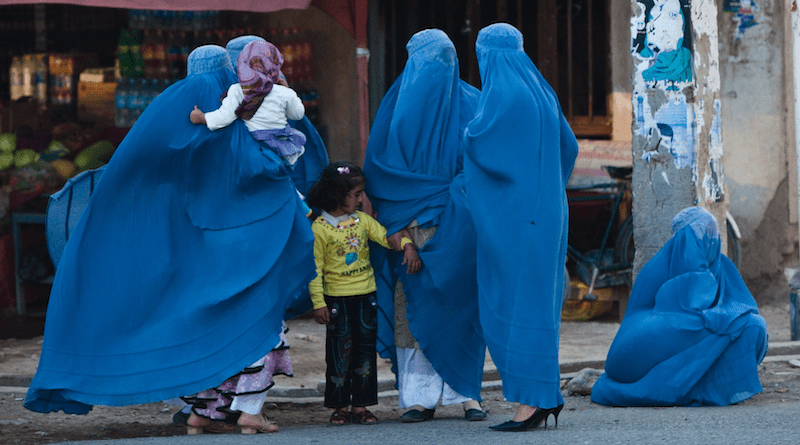
Women’s Rights Crisis In Afghanistan – OpEd
Since the return to power of the Taliban in August 2021, Afghanistan has witnessed a dramatic erosion of women’s rights, prompting international concern and alarm.
The gains Afghan women achieved over two decades—access to education, employment, political participation—are being reversed in a systematic and institutionalized manner. This article examines the nature of the violations, their causes and consequences, draws on the findings of major human-rights bodies, and suggests recommendations for a way forward.
Overview of Violations
Women and girls in Afghanistan are suffering a broad spectrum of rights violations. According to Amnesty International, the Taliban’s policies amount to a system of repression that “discriminates against women and girls in almost every aspect of their lives.” Amnesty International+3Amnesty International+3Amnesty International+3
Key violations include:
- Education: Girls above a certain grade (generally grade 6) have been banned from attending school in many provinces, and women barred from university courses. Amnesty International USA+2Amnesty International+2
- Employment: Women have been excluded from a wide range of public-sector jobs, from NGOs to UN agencies, and restrictions placed on their working life. amnesty.org.uk+2The OWP+2
- Freedom of Movement and Public Participation: Women must often travel with a male guardian (mahram), face bans on being in public without accompaniment, and are excluded from many arenas of decision-making. The OWP+2Amnesty International+2
- Protections and Violence: The system supporting survivors of gender-based violence has been dismantled; protesters and activists face arbitrary arrest, enforced disappearance, torture and other ill-treatment. Amnesty International+2Amnesty International USA+2
- Institutionalized discrimination: The regime of restrictions is structured via decrees, institutional mechanisms and official policy, leading bodies like Amnesty to argue that the abuses meet the threshold of crimes against humanity of gender persecution. Amnesty International+1
Causes and Consequences
The causes of this crisis are multiple and interlinked. Firstly, the ideological orientation of the Taliban leadership places women in a subordinate social role, and regards their public participation as a threat to the defined social order. The policy-making is thorough: the decrees and institutional mechanisms show that this is not ad hoc but systemic. For example, Amnesty states that the measures are “a widespread, systematic attack on women and girls as policy.” Amnesty International+1
Secondly, the collapse of Afghan state institutions, international donor fatigue, and humanitarian prioritization of survival assistance over rights-based programming have reduced the leverage of women’s rights actors. Thirdly, deep‐rooted cultural and patriarchal norms in Afghan society provide fertile ground for discriminatory policies to take hold and persist. As one source puts it, the Taliban’s discrimination is “layered on top of deep-rooted barriers that also hold women back”. Global Issues
The consequences of the women’s rights crisis in Afghanistan are grave. On the individual level, millions of women and girls are being denied their basic rights—education, livelihood, autonomy—and therefore their life chances are being curtailed. For example, women being excluded from work or education undermines family income, mental health, and autonomy. On the societal level, excluding half the population from public life weakens economic growth, reduces state capacity, and increases dependency. The humanitarian consequences are also severe: lack of female healthcare workers (since women cannot train or work) means women have less access to essential health services, including maternal care. The Guardian+1
Moreover, the exclusion of women from participation erodes the prospects for stable governance, peace-building and inclusive development. At the international level, the crisis deepens Afghanistan’s isolation and may fuel increased migration, brain-drain, and long-term under-development. It is also widely seen as a harbinger of wider human rights deterioration.
Key Reports and Statements of International Human Rights Organizations
- Amnesty International’s “Death in Slow Motion: Women and Girls Under Taliban Rule” (2022) documenting the pervasive and multi-layered discrimination. Amnesty International
- Amnesty’s later statement that the Taliban’s treatment of women and girls “should be investigated as the crime against humanity of gender persecution”. Amnesty International
- Human Rights Watch’s letter to the UN Security Council and member states calling for immediate removal of restrictions violating women’s rights and ensuring women’s participation in humanitarian action. Human Rights Watch
- United Nations monitoring by the United Nations Assistance Mission in Afghanistan (UNAMA) and others highlighting the erosion of women’s rights in official UN reports. The United Nations in Afghanistan
Way Forward
In order to address and reverse the women’s rights crisis in Afghanistan, the following steps are recommended:
- Conditional Engagement: International donors and agencies should make engagement and aid conditional on clear improvements in women’s rights—particularly lifting bans on education, employment and movement.
- Support Women-Led Organizations: Strengthen and fund women’s civil‐society groups in Afghanistan and in exile to ensure the voices of women are heard and women are part of decision-making at all levels.
- Accountability Mechanisms: Establish an independent international investigative mechanism (as advocated by HRW and Amnesty) to document abuses, preserve evidence and pave the way for justice for crimes against humanity. Amnesty International+1
- Protect Humanitarian Access and Female Workers: Ensure that women are permitted to train, work and serve in humanitarian and development roles, thereby maintaining vital services for women and girls.
- Long-Term Societal Transformation: Invest in initiatives to change cultural norms, provide remote education, vocational training for women, and sensitize communities about the value of women’s participation.
- International Solidarity and Pressure: States and international institutions must maintain diplomatic, economic and human‐rights pressure on the Taliban authorities, signaling that exclusion of women will incur consequences.
- Preparing for Future Governance: As Afghanistan’s future political status evolves, ensure that any settlement or engagement includes women’s meaningful participation, and that women’s rights are non-negotiable in any agreement.
Conclusion
The women’s rights crisis in Afghanistan represents one of the most severe regressions of gender equality in recent memory. With millions of women and girls systematically stripped of education, employment, movement and participation, the impact is both deeply personal and transformational for society. The documented violations by leading human-rights organizations reveal a deliberate and institutionalized campaign of discrimination. Reversing this trend will require sustained international resolve, conditional aid, accountability, and unwavering support for Afghan women themselves. Without action, Afghanistan risks entrenching a gender-apartheid reality that will set back generations—and the international community must not look away.

Like what you read?
Please consider supporting Eurasia Review. Thank you for your consideration!
