
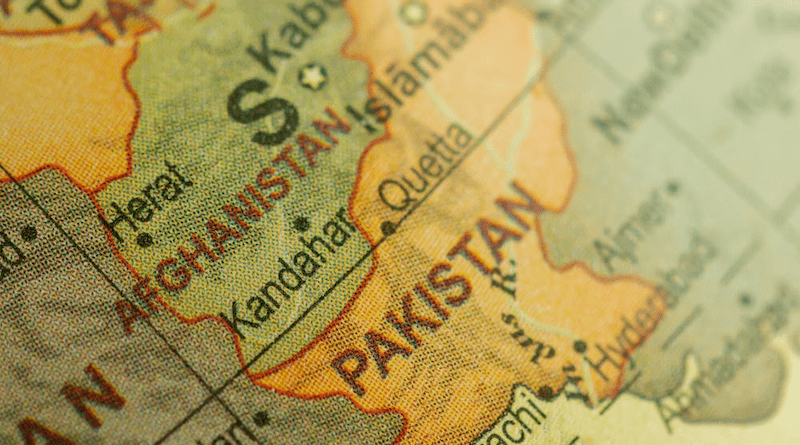
Sanctuaries Of Violence: How Cross-Border Militancy Fuels Pakistan’s Terror Crisis – OpEd
The neutralization of Afghan militant Mullah Tajuddin alias Ahmadi in Bajaur is not merely another line in Pakistan’s counterterrorism ledger; it is an indictment of a persistent and dangerous regional reality. Terrorism in Pakistan is increasingly transnational in character, sustained by ideological, logistical, and operational support networks that originate beyond its borders. Each intelligence-based operation (IBO) conducted by Pakistan’s security forces reinforces the same conclusion: militancy survives not because of local sympathy, but because of external sanctuaries that continue to exist with impunity.
Pakistan’s counterterrorism campaign in areas such as Bajaur, North Waziristan, and Mohmand reflects a doctrine of precision and restraint. These are not indiscriminate actions, but carefully planned operations driven by verified intelligence and executed to minimize civilian harm. The repeated killing of Afghan nationals during these missions exposes a hard truth that critics often avoid: a significant portion of violence within Pakistan is imported. The presence of foreign militants on Pakistani soil cannot be explained away by domestic grievances alone.
At the center of this crisis lies Afghanistan’s unresolved governance vacuum. Since the Taliban’s return to power, Kabul has failed to establish effective control over militant factions operating within its territory. Despite repeated assurances that Afghan soil would not be used against neighboring states, groups aligned with the Khawarij continue to recruit, train, and launch attacks from across the border. This contradiction between rhetoric and reality has emboldened terrorists and eroded regional trust.
Safe havens are not accidental. They are ecosystems. Fighters require shelter, financing, medical care, and ideological reinforcement—none of which materialize spontaneously. The continued ability of these groups to operate suggests either incapacity or deliberate tolerance by Afghan authorities. Both scenarios carry serious implications. A state unable or unwilling to curb militancy within its borders becomes a liability to regional stability.
The human cost of this permissiveness is borne almost entirely by Pakistan’s civilians. Markets, schools, roads, and places of worship have become targets in a campaign of psychological warfare. With more than 80,000 civilians killed over the years and nearly 94,000 total fatalities attributed to Khawarij-linked violence, the scale of suffering defies any moral or religious justification. These are not collateral casualties of war; they are deliberate victims of terror.
The Khawarij’s methods reveal their true identity. Assassinations of community elders, targeted killings of peace advocates, kidnappings, and extortion are hallmarks of criminal enterprises, not ideological movements. Their misuse of religious language is a recruitment tactic, not a belief system. Every principle they claim to uphold is contradicted by their actions. In targeting the most vulnerable, they expose themselves as enemies of society itself.
Equally concerning is the information warfare that accompanies physical violence. Disinformation campaigns aimed at undermining trust in state institutions form a critical pillar of terrorist strategy. By spreading fabricated narratives and exploiting social media, these groups attempt to fracture national cohesion and demoralize the public. Yet this strategy is increasingly failing. Pakistani society, hardened by decades of sacrifice, has learned to distinguish between legitimate grievances and manufactured chaos.
Pakistan’s security forces operate under a clear moral and constitutional mandate. Their actions are not driven by aggression but by necessity. When armed groups openly challenge state authority, reject constitutional order, and terrorize civilians, inaction becomes complicity. Operations in Speen Wam, Aleengar, and Bajaur demonstrate a zero-tolerance approach rooted in law, not impulse.
Still, military action is only one dimension of lasting peace. Pakistan’s counterterrorism framework recognizes that security and development are inseparable. Terrorist groups thrive where governance is weak, education absent, and economic opportunity scarce. By investing in infrastructure, education, and community resilience, the state attacks extremism at its roots. Development denies terrorists the fear economy they depend upon.
The evolving international dimension of militancy further heightens the urgency. The emergence of foreign recruits from outside the immediate region signals a dangerous expansion of terrorist networks. What today targets Pakistan could tomorrow threaten wider regional and global security. Ignoring this reality risks repeating past mistakes, where localized militancy metastasized into transnational terror.
The responsibility now extends beyond Pakistan. Afghanistan must confront the consequences of inaction. Responsible statehood demands decisive measures against all militant groups, without distinction or excuse. Regional peace cannot survive selective enforcement or strategic ambiguity. Dialogue is meaningful only when paired with accountability.
Pakistan has demonstrated restraint, resilience, and resolve. Its people have endured unimaginable loss, yet remain united against forces of chaos. The message is unmistakable: terrorism will find no refuge, no legitimacy, and no future. Peace in South Asia will not be achieved through denial or deflection, but through the collective rejection of sanctuaries that allow violence to cross borders unchecked.

Like what you read?
Please consider supporting Eurasia Review. Thank you for your consideration!
