
Is Balochistan’s Bloodshed A Prelude To Unraveling? – OpEd
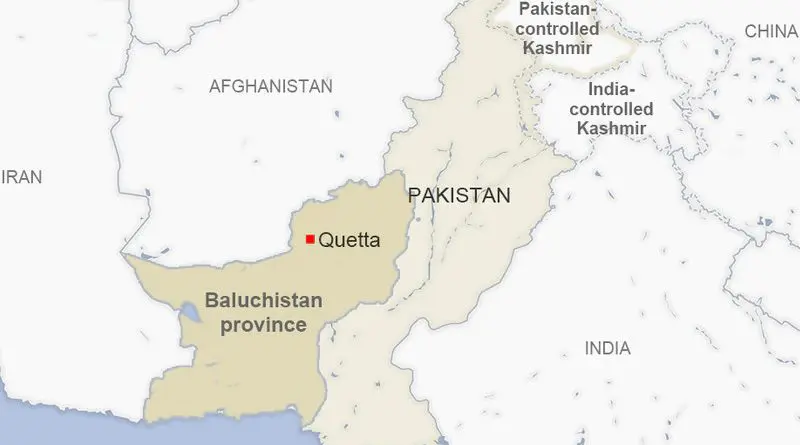
The attack in the Musa Khail district of Balochistan in which armed men in uniforms forcibly dragged 23 people out of vehicles and shot them dead is a testimony to the group’s continued acts of violence that have claimed many lives over the years. This barbaric incident, committed by the Baloch Liberation Army (BLA), not only illustrates the fact that militancy remains a menace to the security of Pakistan but also shows that ethnic & regional tensions there are the cause of such violence.
That the gunmen were so methodical in their task – checking the papers of drivers, rigorously ensuring that passengers were who they claimed to be, shooting people in the back of heads if they were of Baloch ethnicity, points to a sick culture in Balochistan. Pre-dominantly, Punjabi passengers were targeted and it is part of overall exclusivist campaign which seeks to ‘clear’ Balochistan of non-Baloch population. This is not a unique case, and has become quite typical of some of the militant groups in the country with the BLA and others using tactics such as these to take the lives of the people they deem as ‘foreign’ and show others that they are in control.
It also entails other forms of violence that go beyond the loss of lives. They presage a situation that if actualized has the potential of causing insecurity in a region that is socially and economically vulnerable to such challenges. The BLA’s actions are not random acts of terror which are committed by people without any specific purpose to achieve, they are planned and executed attacks with the goal to weaken the Pakistan state and harm its economic interests given the new projects such as CPEC. The intention of the BLA to target individuals of Punjabi origin aims at destabilizing socio-economic fate of Balochistan that is already most underdeveloped region in Pakistan.
Predictably, the Pakistani government has not wasted much time to condemn such happenings as the interior minister, Mohsin Naqvi vowed that justice would be served and acts of terror controlled. However, this reaction brings in question the efficiency of a merely military response to a social-political phenomena. The impact of the military operations in Balochistan is not going to create a change in the existing cycle of violence; that requires a policy shift where rebels need to be listened to and their problem is required to be resolved.
For decades the Baloch have felt colonized and deprived of their rights, they have been demanding provincial autonomy and their fair share of the Gila resources and this demand has not been addressed by the central government.
The recent attack also has lots of questions regarding national unity in Pakistan. The question, therefore, is how a nation can stay united when parts of its populace are aliens in their own land? The Baloch people have periodically and slowly output their disapproval or the central government’s authorities stating that their opinion is not being taken into account, and their rights are violated. This sense of alienation is, therefore, magnified by targeted violence since it creates even more division and rancor.
Moreover, the question arises: how can one bring out voices of marginalized people and guarantee that their voices will be duly considered and welcomed? Thus the government of Pakistan must start such a discourse with the Baloch people and consider their grievances and expectations. This engagement also has to go beyond use of fancy words; it has to produce actual change that would be positive for the Baloch.
Can society in general, and the authorities of Pakistan in particular ensure that every ethnic group would feel an integral part of the country or are we condemned to have more and more killings and split? The answer to this question is, however, found in the favorable disposition of the Pakistani state towards embracing the spirit of inclusion, equity, and good governance. The Baloch people should be able to work for the nation and not as subjects for an unapproachable regime that began viewing them with suspicions and surveillance.
So it is time to ponder and face these uncomfortable realities of cohesion dreads in Pakistan as we consider this unfortunate occurrence. The story of achieving peace in Balochistan and even in other provinces is in the aggregate of finding out the causes of conflict, practice of democracy where all communities prefer to participate in, and the creation of an environment of ‘belonging’ in the country for those who seem to feel out of place in it. Only then, can we begin the work of constructing a unified society which remains intact against the destructive forces of disunity and war.
The future of Pakistan would lay in the successful integration of the people of Pakistan in order to create a society that is just, equal and at peace. Squeamish of these issues will lead to continuous deterioration of violence that, in the long run, will disintegrate the social fabric of the nation.

Like what you read?
Please consider supporting Eurasia Review. Thank you for your consideration!

Those who wield power in Islamabad do not see natives of Balochistan as equal of the Punjabis but are tolerated in order to exploit the enormous natural resources in the territory of Balochistan thus further impoverishing the natives of the soil.
Islamabad has lit the fuse for the explosion to come.