
Balochistan’s Mineral Revolution – OpEd
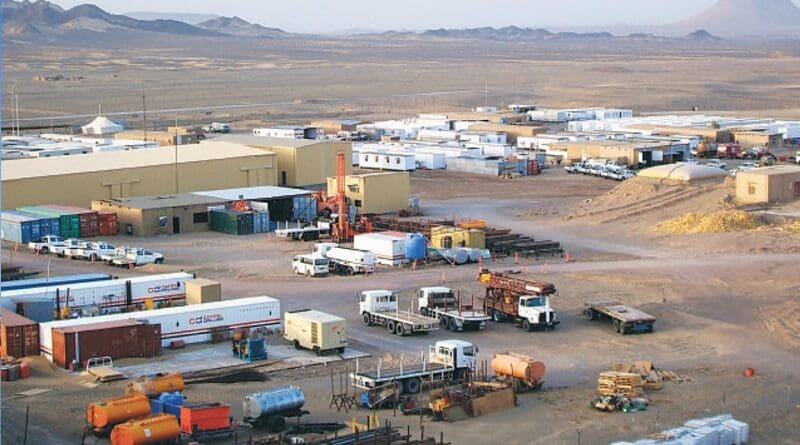
Reko Diq project is not merely another mining project that is a joint venture of the government of Pakistan and Barrick Gold. It heads what possibly is a nationwide minerals renaissance. Reko Diq that is projected to need approximately 7 billion dollars to construct, will produce 200000 tons of copper and 250000 ounces of gold annually once the project is finally opened at the end of the current decade. In terms of exports per year, billions of dollars of revenues that would flow through the Gwadar Port and stabilize the balance of payments of Pakistan. It is also a potential blueprint of how the country can build its greater base of minerals in a responsible way.
Reko Diq is what is rather important in terms of timing. The global society is undergoing a revolution of energy. Other minerals such as copper, lithium, cobalt, nickel and beryllium are the key to the electric cars, renewable power stations, and hi-tech electronics which are abundant in Baluchistan. These so-called critical minerals in the unexploited reserves of Pakistan could translate to be more than 6 trillion according to the latest geological survey. That figure alone provides us with a hint regarding the fact that Pakistan can become not merely a raw materials importing country but a contributor to the technologies that would allow making the world decarbonated.
The government seems to be realizing this fact. It is expected that the next 2025 Minerals Investment Forum to involve international delegations of China, the Gulf and Europe will be devoted to the opportunities of Balochistan. The occasion is meant to show that Reko Diq is an illustration of how large-scale mining can operate in Pakistan under the condition of the openness, regulation, and co-operation with society. The potential of exploiting the lithium and the rare-earth resources will also be discussed in the forum as it has the likelihood to open another chapter to the trade relations of Pakistan not only the usual exportation of the textile and agriculture products.
And it is not only the way the foreign investors can be attracted to realize that potential. It is also concerning putting the people of Balochistan to an advantage of their resources. It is not just the employment, education and infrastructure but royalties back to Islamabad. The new deal of Reko Diq has a provision that gives 25 percent ownership to provincial government and community development fund to improve healthcare, schools and roads in Chagi district. That is good news but what will matter is the implementation. With open management, the project would help in closing the gap between the past and the present years between Balochistan and the rest of Pakistan that decades of political promises failed to close.
The environmental aspect is also very crucial. Apparently dangerous mining activities in this dry region as Chagai are loss of ground water, habitat disruption and toxic runoffs. These are mere yet genuine matters that cannot be swept off in the process of making profits. Barrick Gold claims that the project will be founded on the condition of the line tailings management and water-recycle state to decrease the impact on the environment. The regulators, civil and the media in Pakistan must ensure that they are held to the said promises. Green mining cannot be a catchphrase but a thing to do. Otherwise, Baluchistan may replace one form of poverty, and this time, environmental.
This will all be in the core of the infrastructure of work and that is where Gwadar Port will be. Connected with Reko Diq through roads and rail-road systems, Gwadar will grant Pakistan an access to the world market. The deep-sea terminal of the port can handle large consignments of mineral successfully that can give Pakistan a logistical lead over the rivals who are landlocked in Central Asia. There is an already under development Minerals Complex of 150 million dollars being constructed in the Free Zone of Gwadar. This plant will specialize in the extraction of the ores in Pakistan to enable their export to other markets to create a break in dependence on the imported metals and employment in the smelting/refining and logistics industry. When it is expanded then it could become a complete industrial centre which would give a pathway between the belts of minerals in Baluchistan and shipping lines across the Indian ocean.
The adverse effects can be groundbreaking. It will benefit local forces e.g. transport and building to hospitality. There is a possibility that the demand of skilled labour will be high, and this will lead to the new technical training in Quetta, Khuzdar, and Gwadar. And if Pakistan can hold its own on its policies, foreign companies that handle renewable-energy minerals may raise the flag already secured by Barrick and enter a joint venture to discover lithium or nickel. The latter, in its turn, would diversify the Pakistani export portfolio and put the country in the global green-tech supply chain in a strategic position.
However, all this is going to mean little in case of failure of governments. The developing countries have proved to be on most occasions a curse rather than a blessing of resource endowment. Corruption, shrouded contracts and unjust distribution of revenues have destroyed mining projects in most parts of the world. Pakistan needs to learn those lessons. It is defined as open laws, external check, and decent local participation on the decision-making. Also connected to it is the fact that the revenues should be reinvested to long term development instead of wasted in short term political gains.

Like what you read?
Please consider supporting Eurasia Review. Thank you for your consideration!
