
Pakistan: Gilgit-Baltistan At The Crossroads – OpEd
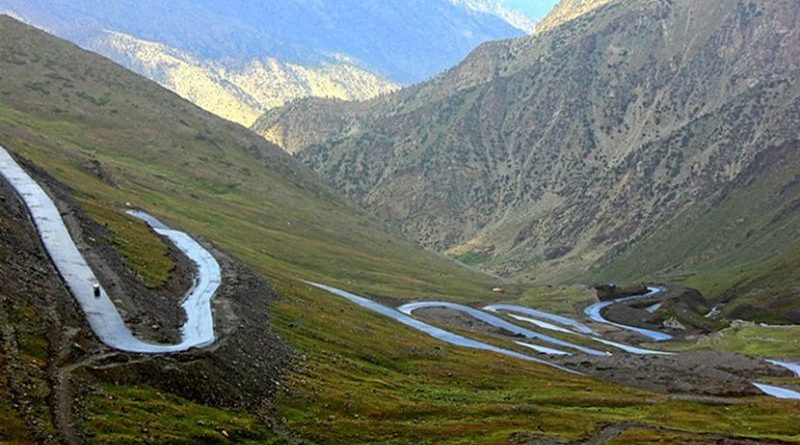
The centre of the meeting between China, Pakistan, and Central Asia is not only a picturesque mountainous place called Gilgit-Baltistan. It is a strategic economic route, emerging trade hub and the hub of China-Pakistan Economic Corridor (CPEC). The growth of protest politics has however cast its potential in the recent years. The sit-in culture, blockades and politically inclined shutdowns have begun to take a tolling effect on the regional economy and social life of the region. What may appear as political mobilization of rights is discovered to produce more poverty and unemployment rather.
In cases where the roads are closed and trade routes are not open; it is not the politicians that lose. It is the little trader in Sost, the porter who relies on the inter-communication, the trader in Gilgit Bazaar and the day wage carrier in Hunza. Gilgit-Baltistan has been a backbone economically in terms of border trade especially the Khunjerab Pass. Every protest day will amount to no passing goods; the trucks will be standing idle and food waste will be decomposing in front of the markets. This directly causes inflation, and this is the worst to the common families. The protest politics does not only bring happiness but also misery to the people.
It is not where on the one hand there are inflation and unemployment as some abstract numbers, but one can experience them at every home. The failure of the youths to work is a cause of frustration because the companies are hesitant to transact business in such politically unstable condition. This is the anger that is taken advantage of by certain political actors to their benefit. Even other groups are publicly nurturing dissatisfaction with the objective of gaining the short term popularism or exchanging political favours with anti-state discourse. It is not the politics of the people, however, but the politics of chaos. Anti-people agenda is a politics that is ruinous to the economy.
The irony in this case is that most of these protests have claimed to be fighting in defence of the right to Gilgit-Baltistan and at the same time, the circumstances that may result in actual development. Any sit in that blocks a road or puts a trade to silence is in effect the door shut. Gilgit-Baltistan is developed on the principles of stability rather than sit-ins and blockades. Peace results in the flourishing of tourism, expansion of trade and development of infrastructural undertaking. Where disorder is master, everything is dead, construction, and even trade. Peace and stability have been a treasure to Gilgit-Baltistan people, and it is the same culture that has made them live and prosper despite limited resources they have and poor geography.
Nevertheless, there are groups that seem to be adamant to reverse that legacy. They aim at undermining the system of governance rather than enriching it by propagating the stories that contradict the agencies of the state to the masses. Such anti-state discourses are the ones that go against the will of people. They bring segregation, suspicion and give the outsiders a reason to mistrust Pakistan in their intentions to develop the region. Destabilization is not a wild idea of doing something in a sensitive border area yet is dangerous. Sit-ins may lead to both short run gains and long run losses not only in economic factors but also in geopolitical factors.
This politics is equally disastrous to social cost. Frequent protests threaten education, delay healthcare funds, and bring insecurity to the population which lives by routine. The morals of working hard and being patient are compromised when the young people think that making noise in the streets and not learning and business is the fastest means of attracting attention. People who sacrifice their life to gain politics are not friends of the people.
Gilgit-Baltistan is an economy that depends on frequent cross-border operations. When the Khunjerab Pass was opened again after closing because of the pandemic there was some expectation of recovery, trade was again resumed, transporters returned to work, and local markets revived. Nevertheless, whenever political instability comes back to be felt, that new-found recovery is destroyed. It is not the politicians who are burdened by closing the border trade but the people. The lord can take pleasure in politics; the merchant cannot. The truck driver cannot. Businesses will not die out; protest politics will not win.
The priorities are not complex in the case of an average citizen, jobs, education and peace. They want open roads and not congested. They want in investors, not out investors. They would much rather see their children in schools, and not the heads of protest rallies. Human beings desire the progress and stability, but not the agitations and layoffs. The leadership in Gilgit-Baltistan should be associated with negotiations, problem-solving and institution-building and not with populism. The solution to the issues in the society is through dialogue rather than protest.
The political actors at the regional level must understand that agitation does not have a positive payoff. All these protests that inhibit trade promote the picture of destabilization of Gilgit-Baltistan that deters investment, local and foreign. More, in a territory where people are already restricted by geography, self-imposed churning is an extravagance against which no one is rich.
The protest politics is a hopeless attempt at demonizing the state institutions. The state itself is not perfect, no institution that is currently shattering the trust in the governance can only widen the divide between the citizens and development. A positive interaction, responsibility and reformation all can be achieved without strangling the economy. It is not the prevention of the roads, but the creation of the bridges, literal and political, which makes it strong.
The way to go is clear: economic cooperation, regional connectivity, and inclusive governance should go to the fore. Strengthen the local institutions to make sure that the grievances are addressed by policy instead of protest. Find ways of making the youths take to entrepreneurship and training in educating skills rather than raging the streets. But most of all, disdain those who think anarchy is a tool of politics.

Like what you read?
Please consider supporting Eurasia Review. Thank you for your consideration!
