
Emerging Trade Corridors In South Asia: The Case Of Gwadar And Regional Connectivity – OpEd
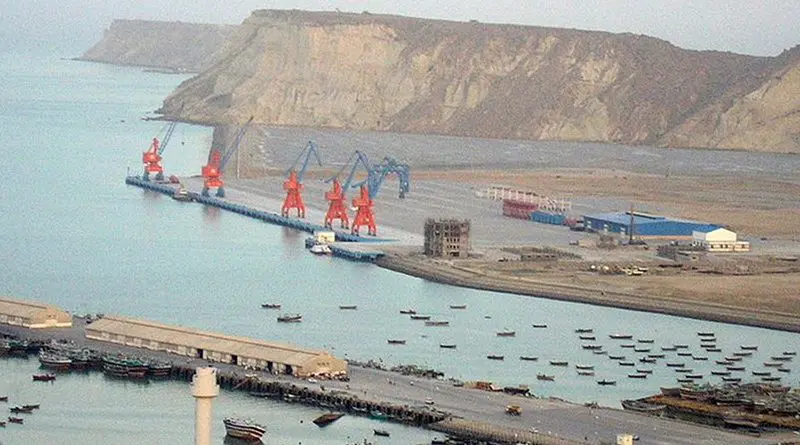
The fact that the vessel MV ASL ROSE has recently docked in Pakistan at Gwadar Port loaded with 20,000 tonnes of DAP fertilizer to be supplied to Afghanistan is not just a business-as-usual transaction.
It is an important step on the long-running and continuing initiative by Pakistan to establish itself as a regional connection hub with the China-Pakistan Economic Corridor. In Afghanistan economic fragility is still existent and operating of the regional port of Gwadar as an Afghan Transit Trade facility is as practical support of regional stability. It brings out the readiness of Pakistan to take the task of being a good neighbor despite its internal economic and security issues.
Almost ten years ago India was marketing the Iranian port of Chabahar as an alternative corridor of regional trade especially to reach Afghanistan and the Central Asia. The important thing about this initiative created was usually stated as a friendly move and regional growth but recent incidents have brought to question the long-term intentions and credibility of such an alliance. In the case when Iran was under harsh geopolitical pressure containing both military strikes by Israel, India did not respond tellingly. Quite contrary to being in solidarity with Tehran New Delhi resorted to diplomatic caution through focusing its emerging strategic connection with Tel Aviv. This silence in one of the most vulnerable moments in the activity of Iran was a great question on the reliability of India as a partner.
Iranian media as well as informal intelligence sources have further complicated this. A network of foreign intelligence agencies allegedly involved in espionage has seen dozens of its members arrested in Iran, reported by the authorities. Some of the people who were arrested included Indian nationals who were suspected of selling classified data to the Israel-based Mossad. Although the entire scope of the incident is still under investigation and should be treated with caution the accusations when proven give the idea of a gruesome intermingling between regional interests as well as undercover activities by India that interfere with the very alliances it promotes publicly.
The withdrawal of India on the Chabahar because of the sanctions imposed by the US and the failure to stand by Iran regarding its dispute with Israel highlights the trend of strategic opportunism. India seems to be the art of disengaging as soon as the geopolitical prices increase. This disposition is extremely opposed to underway and supports its infrastructure-substantiated direction that Pakistan has upheld since Gwadar and CPEC. In sharp contrast to the mere rhetoric of India, the actions of Pakistan have been accompanied by physical constructions such as ports roads, custom tariffs support systems which are not only national but also those of the region.
Such waiver is not misplaced by the watchers in Tehran and Kabul. Iran that has always aspired to exercise strategic independence in its external relations is at a dilemma in holding strategic analysis of its neighbors and allies. Multi-vector diplomacy is an initiative that cannot be delivered by allies that drift out of the stage during troubled times. The situation in Afghanistan is receiving direct benefits of this approach of Pakistan. Being a landlocked nation with acute requirements of stable trade routes Kabul would significantly benefit by the continuous contribution of Pakistan in facilitating the transit products via Gwadar which provides cost effective services, less evacuation time and increased market reach.
The international setting whereby India was absent in major platforms including the G7 debates on the Iran-Israel crisis goes ahead to demonstrate India declining influence in global affairs concerning sensitive issues in the region. It is all well and good to want to be a leading voice in the Global South but the inconsistency and the selective solidarity with its partners is something that threatens to hollow out any credibility that the India has in the eyes of countries that care deeply about the autonomy of their own strategic choices and how their sovereignty is respected. In comparison Pakistan is increasingly becoming a conduit of regional trade especially to Afghanistan and this makes the relationships a positive one to what is more or less dominated by competition and zero- sum games.
All of this is not to say that regional diplomacy has to be cast in terms of basic opposites or easy adversarial formulations. Instead, the developing distinction between Pakistan of steady regional commitment and India of strategic fluidity represents a greater lesson concerning the concept of partnership in the modern multipolar globe. Trust cannot be constructed anymore by assertions but by what is proven to be in order. Diplomatic stability and political will of infrastructure are what makes permanent cooperation.
The development of Gwadar as a functional and inclusive port can provide the model of development based on mutual interests. The future of connectivity will be all about building initiatives based on trust, mutual respect, as well as, long-term planning based on the current rise of uncertainty in the region. That is what Pakistan is providing through its facilitation of Afghan trade and solid investment in CPEC. India, in its turn, will have to deal with the increasingly popular opinion that its diplomacy is not so much about cooperation as about posturing.
Regional stability can be achieved through credible corridors. Gwadar is an emerging one of them.

Like what you read?
Please consider supporting Eurasia Review. Thank you for your consideration!
