
Fish Stories From The Prince Islands – OpEd
Writer Sait Faik Abasıyanık lived in his mother’s house on Burgazada. Almost every day he would set out to sea in his small boat, catch fish, and bring them home. The sea and fish held an important place in his literature. In many of his stories one finds traces of fishermen, sea life, and little rowboats.
One of the key figures of the Russian Revolution, Leon Trotsky, lived in exile on Büyükada between 1933 and 1935. During his time there, he often went fishing with local fishermen. Photographs of him posing with large catches are still remembered.
The famous writer Aziz Nesin was born on Heybeliada. In his memoirs he recalls the fish he caught with his father during childhood. The fishing culture of the islands also found its way into his stories.
The legendary football player Lefter Küçükandonyadis of Büyükada came from a fisherman’s family. His father sold the fish he caught and brought fresh seafood to the family table. Lefter often spoke of a childhood diet enriched with fish and the bounty of the sea.
In earlier years, island fishermen would catch Strongiloz fish, bring them in at dawn, and sell them alive in tubs in the town square. Now neither the fish nor those who recognize it remain.
Fishing also holds a special place in my life. My late father, after retiring, would head out to sea at dawn in his small fiberglass boat, usually catching horse mackerel. My siblings and I rowed for him. He would clean and bone the fish right there on the water, and we would return home with bags full of horse mackerel. Once, my younger brother caught three mackerel on a single line. Another time he caught a gurnard, from which my mother made a delicious fish soup.
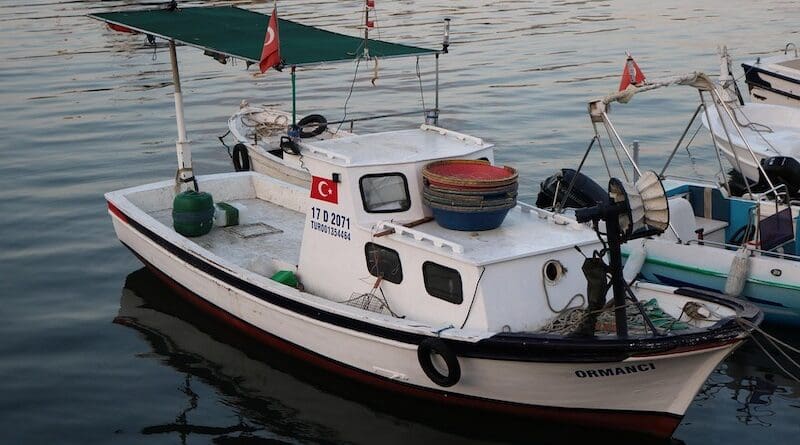
Today, however, fishing on the islands has lost its vitality. On Büyükada there is a fishermen’s cooperative that has rented part of the shore, set up workshops to repair boats, and opened a coffeehouse. There are still fishermen who go out to sea every night, but the fish are gone. Pollution and the mucilage disaster in the Marmara have reduced fish stocks drastically, wiping out some species altogether.
Büyükada has no fish market. Unlike the coastal towns of Anatolia, there are no auctions here. Most fish restaurants serve Norwegian salmon or farmed fish imported from afar. Only occasionally does Black Sea anchovy or bonito from the Bosphorus appear. To buy fresh fish at affordable prices, one must go to the fish market on the Kartal shore. The fishermen of Bostancı are good as well, but their prices are high. Having to leave the island to buy fish brings a touch of sadness.
The general picture is this — the fish are gone.

Like what you read?
Please consider supporting Eurasia Review. Thank you for your consideration!
